NewsFollowUp.com

search

econ charts

pictorial index

sitemap home
Indigenous People's Rights

Progressive Resource / Action Cooperative  Anti-"Chief" Illiniwek initiative, University of Illinois. Abramoff, Norton, Griles, cesspool of corruption links
Related topics:  Latin America        Mercenarygate        BushWatch        Colombia     Halliburton
Indigenous People's Rights
PROGRESSIVE  REFERENCE CONSERVATIVE*
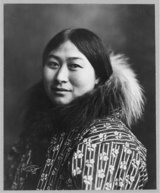
  • Inuit Women, Wikipedia
  • Bureau of Land Management
  • Crazy Horse Memorial Monument, fundraising begins. 
  • Dept of the Interior
  • University of Liverpool, British Association for the Advancement of Science: says original Americans came from Australia.
  • and Britain's Natural Environment Research Council, also coorborates.
  • Bureau of Land Management, protect business profits.
  • Dept of the Interior
  • Free Republic a Conservative News Forum, search Native Americans, 
  • Mineral Management Service manages the mineral resources of the Outer Continental Shelf and collects, distributes mineral revenues from Federal and Native American lands
PROGRESSIVE  REFERENCE CONSERVATIVE*
Wayuu indigenous people, Colombia top
PROGRESSIVE  REFERENCE CONSERVATIVE*
  • search, search, Wayuu, Arawak, Caribbean, indigenous people, oil, grasslands, wetlands, groundwater.
  • Ethnologue  Wayuu, language of Colombia
  • BP British Petroleum and Colombia's Ministry of Defense, to protect oil pipelines. 
  • ChevronTexaco Community News
  • ExxonMobile, search wetlands, grasslands, groundwater, Wayuu
  • Money Central, investing search Defense Systems Limited, subsidiary of Armor Holdings
  • Sandline hotlinks, private armies.
  • Shell
  • Northrup Grumman
  • President Uribe, supports right wing paramilitary against Wayuu.
  •  
Abramoff, Norton, Indian Affairs, Steven Griles, Italia Federice, Powder River Basin, Arctic National Wildlife Refuge, North Slope Oil, Council of Republicans for Environmental Advocacy, cesspool of corruption links
WASHINGTON - AP Interior Secretary Gale Norton resigned Friday after five years in President Bush's Cabinet and at a time when her agency is part of a lobbying scandal over Indian gaming licenses. In a letter to Bush, Norton said the resignation would be effective at the end of March.  "Now I feel it is time for me to leave this mountain you gave me to climb, catch my breath, then set my sights on new goals to achieve in the private sector," she said in the two-page resignation letter.  Norton, who turns 52 on Saturday, said she and her husband "hope to end up closer to the mountains we love in the West."  Bush called Norton a strong advocate for "the wise use and protection of our nation's natural resources."  "When Hurricane Katrina devastated the Gulf Coast region, she played a leading role in my administration's efforts to restore badly needed offshore energy production," he said.  The leading Republican and Democrat on the Senate Indian Affairs Committee have said that e-mails show that Steven Griles, Norton's former deputy, had a close relationship with disgraced lobbyist Jack Abramoff.  Another one-time Norton associate, Italia Federici, helped Abramoff gain access to Griles in exchange for contributions from Abramoff's Indian tribe clients, Sens. John McCain, R-Ariz., the committee chairman, and Byron Dorgan, D-N.D., have said.  A former Colorado attorney general, Norton guided the Bush administration's initiative to open Western government lands to more oil and gas drilling.  As one of the architects of Bush's energy policy, she eased regulations to speed approval of drilling permits, particularly in New Mexico, Colorado and Wyoming's Powder River Basin.  She also was the administration's biggest advocate for opening the Arctic National Wildlife Refuge on Alaska's North Slope to oil drilling  The first woman ever to head the Interior Department, Norton was a protege of James Watt, the controversial interior secretary during President Ronald Reagan's first term in office. Watt was forced to resign after characterizing a coal commission in terms that were viewed by some as a slur.  Before joining the administration, she was one of the negotiators of a $206 billion national tobacco settlement in a suit by Colorado and 45 other states. She was Colorado's attorney general from 1991 to 1999.  After working for the Agriculture Department for a year, Norton was named an assistant solicitor in the Interior Department in 1985, focusing on conservation and wildlife issues.  In 1996 she sought the Republican Senate nomination in Colorado but was defeated by Wayne Allard, who now holds the seat. Later she co-founded the Council of Republicans for Environmental Advocacy, a group that has become embroiled in the Abramoff lobbying scandal.  Abramoff pleaded guilty in January to federal felony charges related to congressional influence peddling and defrauding Indian tribes in Louisiana, Michigan, Mississippi, New Mexico and Texas of millions of dollars.  The tribes were either seeking casino licenses or trying to prevent other tribes from opening competing casinos, and Abramoff on occasion represented both sides on the same issue, charging each hundreds of thousands or millions of dollars. The Interior Department oversees Indian affairs, including tribes' gaming activities.  In e-mail exchanges that have been made public since his plea, Abramoff mentioned having an inside track at the department, and his clients donated heavily to the Republican environmental advocacy group Norton helped establish.  Norton met Abramoff in her office at least once and attended a dinner at which he was present, but aides have described the meetings as nonsubstantive.  Much of Norton's work at Interior was satisfying demands from governors and local officials in the West to have more of a role in how the federal government's massive land holdings are used and preserved.  The Interior Department oversees the government's ownership of one-fifth of the nation's land. Norton led the Bush administration's push for "cooperative conservation" — shifting more of the responsibility for land management and recovery of endangered species to states and local communities.  Norton also presided over the nation's park system and oversaw offshore oil and gas leases.  "There never will be a perfect time to leave," Norton said in her resignation letter to Bush. "There is always more work to do.
 
Australia to Apologize to Aborigines Sign In to E-Mail or Save This Print Reprints Share Del.icio.usDiggFacebookNewsvinePermalink

By TIM JOHNSTON Published: January 31, 2008 SYDNEY, Australia — The new Australian government of Prime Minister Kevin Rudd will apologize for past mistreatment of the country’s Aboriginal minority when Parliament convenes next month, addressing an issue that has blighted race relations in Australia for years. ... In a measure of the importance Mr. Rudd attaches to the issue, the apology will be the first item of business for the new government when Parliament first convenes on Feb. 13, Jenny Macklin, the federal minister for indigenous affairs, said Wednesday.

Ms. Macklin said she had consulted widely with Aboriginal leaders, but it was still not clear what form the apology would take. However, she said the government would not bow to longstanding demands for a fund to compensate those damaged by the policies of past governments. ... The history of relations between Australia’s Aboriginal population and the broader population is one of brutality and neglect. Tens of thousands of Aboriginals died from disease, warfare and dispossession in the years after European settlement, and it was not until 1962 that they were able to vote in national elections.

But the most lasting damage was done by the policy of removing Aboriginal children and placing them either with white families or in state institutions as part of a drive to assimilate them with the white population. ... A comprehensive 1997 report estimates that between one in three and one in 10 Aboriginal children, the so-called stolen generations, were taken from their homes and families in the century until the policy was formally abandoned in 1969. ... “A national apology to the stolen generations and their families is a first, necessary step to move forward from the past,” Ms. Macklin said. ... “The apology will be made on behalf of the Australian government and does not attribute guilt to the current generation of Australian people,” she said.

Marcia Langton, professor of Australian indigenous studies at the University of Melbourne, said the apology was a good first step, but she added that it was hard to see where the government’s program would go from there. ... “There can’t be any next step without a compensation fund,” Ms. Langton, who is also one of Australia’s most prominent Aboriginal advocates, said Wednesday.

She said she suspected that the apology was aimed more at pleasing the core voter base of Mr. Rudd’s Labor Party than Aboriginal people themselves. ... “It’s difficult not to be cynical,” said Ms. Langton. The previous government of Prime Minister John Howard, which was convincingly beaten in elections last November, had refused to apologize to the Aboriginal community for past wrongs.

“There are millions of Australians who will never entertain an apology because they don’t believe that there is anything to apologize for,” Mr. Howard told a local radio station last year. ... “They are sorry for past mistreatment but that is different from assuming responsibility for it,” he said. ... Many of Mr. Howard’s critics believed that he was unwilling to apologize because it would open the flood gates to potentially massive claims for compensation. ... Ms. Langton estimated that some 13,000 members of the stolen generations still survive.

Aboriginal and Torres Strait Islanders make up some 2.5 percent of the overall population, but many eke out an existence on the margins of society. ... Life expectancy for Aboriginal people is 17 years lower than the rest of the country; they are 13 times more likely to be incarcerated; three times more likely to be unemployed; and twice as likely to be victims of violence or threatened violence. .. Successive governments have been wary of intervening in Aboriginal affairs, and many blame policies implemented in the 1970s as part of a drive to empower indigenous Australians for further marginalizing them.

The permit system, which bars outsiders from visiting Aboriginal communities without the permission of community leaders, has come in for particular criticism. It was designed to preserve indigenous culture, but critics say it has created ghettos and is partially responsible for an environment in many communities where alcoholism, violence and child abuse have become endemic.

A report issued by the government of the Northern Territory last year uncovered widespread evidence of child neglect and sexual abuse. The report triggered a wide-ranging and controversial intervention by the Howard government in the territory, which included removing the permit system from the Northern Territory and mandating that half of welfare payments could only be spent on food.

The Rudd government has committed itself to reviewing the intervention, but it has yet to come up with a comprehensive plan. Many indigenous Australians are distrustful of government interference in their lives, and although the plan for an apology has been broadly welcomed as an important symbolic step, designing acceptable practical measures will be more difficult.


free hit counter javascript