| |
|
|
|
|
|
| |
related
topics  |
related
topics |
related
topics |
|
|
|
|
|
|
.....
| |
|
|
Chicago, False Flag Terrorist
Attack
top
 |
|
PROGRESSIVE |
REFERENCE |
CONSERVATIVE |
-
2012Connect, 2012er, false flag terrorist attack in America
-
AbovetopSecret gfh Al-Qaeda terrorists have threatened to unleash a
“nuclear hellstorm” on the West if Osama Bin Laden is caught or
assassinated. (done)It would appear that the next false flag operation would
strike America's Heartland and the city of Chicago. What kind of "terror
attack" do you think will happen in the city of Chicago, if there is one?
There are more Nuclear Power Plants in the State of Illinois than any other
state in the Nation.
-
Bollyn the
fraudulent war on terror.
-
BuffaloRange Get Ready For Another 911 in Chicago..."Dirty Bomb," at
the SEARS Tower Obama needs another 911 to win in 2012
-
CatBirdSeat
-
Disclosure Project Is New York Dirty Bomb Drill A FALSE FLAG To Hide
Japans Radiation Levels? The drills will consist of preparing and readiness
for the worst case scenario , another terror attack on a red Homeland
Security scale. Police Commissioner Ray Kelly said "This is an actual
exercise,radiological material is actually used,". "This exercise is managed
by a consultant,"
-
Dprogram.net false flag, Vancouver Olympic games,
-
Echkelon Emanuel's head the
Chicago Office of Emergency Management and Communications is Gary Schenkel,
a 29-year veteran of the Marine Corps. According to the December 23, 1999,
Chicago Sun-Times, Schenkel, a sharpshooter,
-
Indymedia, Chicago, In his exhaustive research and writings, David
Ray Griffin provided convincing evidence that 9/11 was an inside job and
that bin Laden died of natural causes in mid-December 2001. fake shoe
bomber; underwear bomber; Times Square bomber; -- an earlier one there;
shampoo bombers; Al Qaeda woman planning fake mass casualty attacks on New
York landmarks; Oregon bomber; armed forces recruiting station bomber;
synagogue bombers; Chicago Sears Tower bombers; FBI and other building
bombers; National Guard, Fort Dix and Quantico marine base attackers;
-
Infowars Predictive Programming
-
IslamicIntelligence Israeli False Flag Operation 'Dirty Bomb': Zionist
jewish mafia in Europe playing first roles' German television reported that
the German intelligence service, the BND, had entered into secret
negotiations with Mogilevich whereby the latter would supply information on
his rivals in Russia. He has a similar arrangement with French intelligence.
He has close connections to the Mossad, which destroyed his criminal file
(Friedman, 245-247).
-
OpinionMaker
Wag the Dog, Madsen reprint
-
Pilots for 911Truth forum A
52-year-old Highland Park father is one of two U.S. citizens
charged with agreeing to sell missiles and other weapons to
the Taliban for their use against American troops in
Afghanistan, according to a complaint unsealed by federal
prosecutors in Manhattan last week. Oded Orbach, born
in Israel, was among seven men arrested in an international
sting operation by the Drug Enforcement Administration. Paid
informants posing as Taliban representatives conspired with
the men to ship narcotics through West Africa — with a
portion intended for the United States — and to use the
proceeds to buy weapons for protecting Taliban-owned heroin
labs in Afghanistan, authorities said.
Tribune
-
RebelNews reprint Madsen
Camp
FEMA
- Tarpley, Webster Tarpley
Toronto, May 30-04 – Intelligence patterns monitored over the US Memorial
Day weekend now point conclusively to an imminent new round of ABC
(atomic-bacteriological-chemical) terror attacks in the United States, Great
Britain, Canada, and possibly other nations. These attacks could include
nuclear detonations, radiological dirty bombs, poison gas and other chemical
weapons, or biological agents, to be unleashed in such urban settings as New
York City, Los Angeles, Chicago, Washington DC, Vancouver BC, or London.
and YouTube,
and
YouTube staged,
-
Veterans Today Gordon Duff Rumors of an upcoming terror attack to be
blamed on Iran are moving around the world, “backchannel chatter.” The
primary suspect is Israel who is said to have a number of small “suitcase”
type nuclear weapons, some primarily “dirty bombs,” possibly supplied
secretly by a previous US administration. These devices are in the “40 ton”
range, highly radioactive, extremely small and can be engineered to leave
the signature of a primitive device. They were originally engineered for use
against Soviet armor and troop concentrations in Europe if a massed attack
on NATO were to occur. Current conventional systems have made this type of
weapon obsolete.
-
Veterans Today Who would have believed it? Only days after a warning of
an Israeli “false flag” bombing against the US “in the works” a massive car
bomb is discovered in Time Square! Better yet, though no intelligence
organization in the world could discover anyone claiming responsibility for
this embarrassing failure, SITE Intelligence, a group rumored as the “voice
of the Mossad” has placed the blame on the Pakistani Taliban.
- notes: A U.S. citizen born
in Brooklyn and raised in Chicago, Padilla later was prosecuted not in the
dirty bomb case but for conspiring to kill people overseas. He was sentenced
to 17 years and four months in prison. In February, a federal judge
dismissed a lawsuit in which Padilla said he was illegally held and tortured
while in U.S. custody. After his arrest, Padilla was declared an "enemy
combatant" and held in a Navy jail in South Carolina for more than three
years. His lawyers charge that he was waterboarded.
WGNTV
-
Wonkette You feel that chill outside? No, of course you don’t. The
weather is getting warmer and warmer right now. Why? Ex-communist and
ex-Nazi Pleiadians and Lizard People, that’s why. Galaxy mother /
BlogTalkRadio personality / future Fox News anchor Colleen Thomas has gone
onto the YouTube from her well-appointed home to tell us that this country
is going to explode today from dirty bombs because President Obama, in
league with these evil forces, left us behind. Make sure your human meat is
not overcooked by these bombs,
-
YardArmsSwinging state owned banks.
- notes: election strategy
Doing whatever they can to get the least viable general election candidate
for the Republican nominee. Determining battleground states and the testing
messages they think will help secure those states in Obama's favor. They
will likely be all over the cable news channels defending and supporting the
President's efforts. Creating plans to win re-election in case the economy
falters (specifically if unemployment doesn't materially improve), the US
suffers a terrorist attack or address other unforeseen events.
|
-
Summary,
-
Chicago, Obama re-election false flag dirty bomb
- Predictive
Programming
- Telegraph.UK:
Wikileaks
- USA Today
- Training Exercises
- Obama re-election
polls
- 100's of websites
focusing on false flag attack
-
Cheney's Planning and Decision
Aid System and 9/11
- Rich false flag
history
- Movie: "Source
Code"
- X-Files, 911
- Simpsons clues
-
9/11 books
- 9/11 was
Bush/Israel inside job.
-
Gordon Duff
-
WayneMadsenReport: On
April 1, 2011, Hollywood released a movie "Source
Code" The movie's theme is that a "lone wolf"
terrorist builds a
nuclear dirty bomb
and is planning to detonate it in a white van
parked in downtown Chicago with an estimated
death count of 2 million people. Before the
terrorist detonates the bomb, he
blows up a morning Chicago
commuter train after it departs the Glenbrook
station, killing all aboard. The
train bombing and dirty bomb are said to be one
of a series of attacks in Chicago.
more below
-
Wayne Madsen Report
below
- .... on March 4,
2001, Fox aired an episode of the X Files
spin-off, "The Lone Gunmen,"
(YouTube) in which the actual scenario for
the 9/11 attacks was revealed. In the episode, a
Boeing 727, en route to Boston, was hijacked by a
shadowy group of U.S. government plotters intent on
crashing the plane into
the World Trade Center
- Telegraph
Wikileaks: Al Queda is Planning a Dirty Bomb
-
USA Today:
... bin Laden aimed to
hit big U.S. cities, trains on 9/11 anniversary
- List of False Flag Attacks
|
-
AssociatedContent 2008 Yahoo, In Wednesday's debates, once again
the possible relationship between democratic candidate Barack Obama and
"weatherman" William Ayers was brought up. William Ayers is a professor of
education at the University of Illinois-Chicago. Ayers was linked to the
Weather Underground Organization. This organization had claimed
responsibility for bombings between 1970 and 1974. In 2001, Ayers published
his book Fugitive Days: A Memoir and made comments on September 11 that he
did not regret his bomb-setting days - and that he felt that he was not
enough of an activist.
-
Bangor Daily News According to an FBI field intelligence report from the
Washington Regional Threat and Analysis Center posted online by WikiLeaks,
an organization that posts leaked documents, an investigation into the case
revealed that radioactive materials were removed from Cummings’ home after
his shooting death on Dec. 9.
-
Bukisa, Obama assassination bible codes
-
BivForNewYork $54 billion is slated for the nuclear power industry in
next year's budget, quite a bit of it rest assured for Illinois and Exelon
the largest nuclear power company in USA with headquarters in Chicago.
Illinois has the most reactors in USA, boasting eleven. Rahm Emanuel, the
new mayor of Chicago and former Chief of Staff to Obama, helped put the deal
together that born Exelon in 2000 while putting $16.2 million in his pocket
as an investment banker. Exelon was fourth largest contributor to Obama in
Senate race in 2004 and more in his 2008 election. David Axelrod has also
been a paid consultant for Exelon. Two of Obama’s biggest fundraisers during
his presidential run, Frank M. Clark and John W. Rodgers, are Exelon
executives. Exelon’s lead lobbyist, Elizabeth Moler, served as deputy
national co-chair for the Obama campaign, said that “we are proud to be the
President’s utility."
-
ChicagoBreakingNews Emergency drills may close Chicago-area roads, June
2010
- Chicago Tribune A
52-year-old Highland Park father is one of two U.S. citizens charged with
agreeing to sell missiles and other weapons to the Taliban for their use
against American troops in Afghanistan, according to a complaint unsealed by
federal prosecutors in Manhattan last week.
-
Examiner Radiology Physicians Respond to “Dirty Bomb” Threats ...
Dr. Charles Kitley, of the Madigan Army Medical Center in Tacoma, Washington
notes that “when we think of disasters we normally acknowledge the role of
the emergency physician as first responders. The new reality however
suggests that this is a very dangerous world with in which a radiological
attack or incident can occur. This new reality has catapulted radiology
physicians to play an ever increasing role as first responders.”
-
FLETC
The Land Transportation
Antiterrorism Training Program (LTATP) was developed by the United States
Department of Transportation and the Federal Law Enforcement Training
Center. It is currently a joint effort by Transportation Security
Administration and the Federal Law Enforcement Training Center to combat
terrorist activities aimed at the nation’s mass transit environment. June
17, 2011
-
LA
Times blogs Because Gyllenhaal, flanked by "Source Code" co-stars
Vera Farmiga, Jeffrey Wright and Michelle Monaghan, was the man of the hour.
In the film, he plays Air Force Capt. Colter Stevens, who is on a top-secret
mission to save Chicago from a dirty bomb by going back in time -- via a
parallel universe called the Source Code -- to discover who blew up a
Chicago commuter train (the first in a series of planned terrorist attacks)
-
PakAlertPress The Blackwater/Xe involvement in terrorist attacks
in Pakistan have been confirmed by the former head of the Inter Services
Intelligence (ISI), General Hamid Gul, according to another source familiar
with the current Xe covert operations. Blackwater has been accused of
smuggling weapons and munitions into Pakistan.
-
ThePriceofLiberty In 2007, the White House quietly issued National
Security Presidential Directive 51 (NSPD-51), to ensure 'continuity of
government' in the event of what the document vaguely calls a 'catastrophic
emergency.' Should the president determine that such an emergency has
occurred, he and he alone is empowered to do whatever he deems necessary to
ensure 'continuity of government.' This could include everything from
canceling elections to suspending the Constitution to launching a nuclear
attack. Congress has yet to hold a single hearing on
NSPD-51."
-
Survival and
Prosperity dirty bomb
-
TheEconomist Reports have surfaced that the United States is negotiating
with a group of Arab nations about supporting a possible United Nations
Security Council presidential statement critical of Israel and possibly
taking other similar steps in exchange for Arab agreement to withdraw a UNSC
resolution and deeming Israeli construction in the West Bank and East
Jerusalem illegal. It is also not clear whether the U.S. would veto a
resolution on settlements should it be brought to the UN Security Council
-
Uaff Over the
last few years it has become increasingly obvious that Hollywood, Mainstream
Television and the music industry have all been used as avenues to
disseminate esoteric, occult and manipulative messages to the unsuspecting
public. There are dozens of websites dedicated to the revelations coming
from this sector of alternative research. search: Simpsons, Matrix, 26, 10,
6, 11 and 1994 article where Beavis and Butthead are shown as Al Qaeda about
to fly planes into the towers
-
Wikipedia Task
Force 373.
-
YouTube
-
YouTube Chicago
Code
-
Yahoo India
London, Feb 20(ANI): Double
murder-accused US official Raymond Davis has been found in possession of
top-secret CIA documents, which point to him or the feared American Task
Force 373 (TF373) operating in the region, providing Al-Qaeda terrorists
with "nuclear fissile material" and "biological agents," according to a
report.
-
YouTube False Flag
anthrax attack
-
Zimbio The questioning begins here Tuesday of some 100 prospective
jurors in the terrorism trial of Pakistani-born Tahawwur Hussain Rana for
aiding Pakistan based Lashkar-e-Taiba (LeT) in the November 2008 Mumbai
attack ... US District Judge Harry Leinenweber. ... Lawyers for Rana
have said picking a fair jury in spite of what they called persistent biases
against Muslims in the US would be a challenge. Rana is a Chicago
businessman charged with providing a cover to his Pakistani-American high
school friend David Coleman Headley for scouting targets for the Mumbai
terrorist attack, ... Chicago, May 23: Pakistani-American David
Headley, who has pleaded guilty, may possibly talk about what Pakistan's
government knew about the 2008 Mumbai terror attack by Pakistan-based
Lashkar-e-Taiba (LeT) when he testifies during the trial of Pakistan-born
Tahawwur Rana.
|
-
ABC News
Ashcroft said Abdullah al Muhajir, also known as Jose Padilla, of
Chicago, trained with al Qaeda and was planning an attack in the United
States. ... The probable target of al Muhajir's alleged
plans to detonate the bomb was Washington, D.C., sources told ABCNEWS.
Deputy Secretary of Defense Paul Wolfowitz, appearing at a news
conference with Deputy Attorney General Larry Thompson and FBI Director
Robert Mueller, said officials could not say with certainty that the
nation's capital was the likely target, although he said that al Muhajir
"did indicate knowledge of the Washington, D.C., area."
-
ABC News Obama campaign headquaters in Chicago
- Blackwater, Xe, Only
recently did the US State Department designate the Tehrik-i-Taliban Pakistan
(TTP), also known as the Pakistani Taliban, a terrorist group. The group is
said by the State Department to be an off-shoot of the Afghan Taliban, which
had links to “Al-Qaeda” before the 9/11 attacks on the United States. TTP’s
leader is Hakimullah Mehsud, said to be 30-years old and operating from
Pakistan’s remote tribal region with an accomplice named Wali Ur Rehman. In
essence, this new team of Mehsud and Rehman appears to be the designated
replacement for Osama Bin Laden and Ayman Zawahiri as the new leaders of the
so-called “Global Jihad” against the West. However, it is Xe cells operating
in Karachi, Peshawar, Islamabad source:
PakAlertPress
-
Cafferty File, CNN Would terror attack
on U.S. make you more or less likely to vote for Pres. Obama?
Tensions remain high three weeks after the raid that killed Osama bin
Laden in Abbottabad. But Kerry says the U.S. and Pakistan have agreed to
cooperate on future terror targets, and Pakistani officials have committed
to finding new ways fight terror within that nation's borders.
-
CBS Chicago Threats Claim Nuclear Bombs Hidden All Over U.S. March
29, 2011 10:04 PM ...
People who got
them called the FBI and CBS 2′s Kristyn Hartman learned, the Bureau’s
Chicago office is leading the investigation. FBI Special Agent Andre
Zavala said, “Yes, they alarmed a lot of people.” Attorney Tracy Rizzo
was alarmed. A number of days ago, an envelope, with a Chicago postmark
and a hand-written address to her private investigations firm, came in
the mail.
-
Conservatives 4 Palin President Obama’s Re-Election Plan: Brainwash And
Buy The American People
-
DailyPaul
-
Debka File This task
was first revealed by DEBKA-Net-Weekly 132, the Nov. 17, 2003, whose
sources reported that already then, in October of that year, Shukriumah
was the quarry of a secret manhunt in the US and Canada. He was employed
at the time as a nuclear engineering student at MacMaster University's
nuclear 5-megawatt research reactor in Hamilton, Ontario, Canada before
suddenly disappearing.
-
FoxNews Emanuel Rahm Emanuel was elected mayor of Chicago, retiring
Richard J. Daley. The other major candidates -- former Chicago schools
president Gery Chico, former Sen. Carol Moseley Braun and City Clerk Miguel
del Valle
-
FreeMarketDuck daho Statesman editors publish whitewash of
Weatherman bomber Bill Ayers to save Barack Obama… then, up pops the FBI
and Illinois Gov. Blagojevich…
-
FreeRepublic Threats Claim Nuclear Bombs Hidden All Over U.S.
-
Israel Project
Wikipedia
-
New York. CBSLocal The NYPD and 70 other law enforcement agencies across
our region will test their ability to detect radiological materials and
prevent an attack orchestrated by four fictional terror cells intent on
targeting New York City with a “dirty bomb.”
-
Patriot Statesman Terrorist Attack Fails To
Kill 162 Innocent Civilians On Flight From Chicago. ...
Rageit Almurisi holding a passport from Yemen and an American Green
card, which if valid, would have made him eligible to become a United
States citizen, was on American Airlines Flight 1561 with 162 civilian
passengers, when he began a Mother’s day muslim terror attack!
-
PECAN People Envisioning a
Conservative Nation, Wag the Dog, Madsen reprint.
-
Spiegel.de TF373
- TSA and VIPR
Presentations, Terrorism in a Land Transportation Environment, Transit
Terrorism - Suspicious Activities and Behaviors, Transit Asset
Protection, Site Visit, WMD in a Land Transportation Environment,
Planning and Response to Transportation Events, Special Event Security
Planning, Bombs and Explosives in a Land Transportation Environment,
Elements of Suicide Bombers Tactics, HAZMAT for Freight Operations,
Contemporary Threats to Land Transportation, Case Studies for Land
Transportation, LTATP Practical Exercise
- Vancouver, Olympics, false
flag terrorist attack, Infowars WeAreChangeVancouver takes you on a Police
State Security tour of Downtown Vancouver BC a week before the Olympic
Games. Throughout history, criminal elements inside governments
have carried out terror attacks against their own populations as a pretext
to enslave them and start wars.
-
WGNTV A U.S. military document posted on the internet Monday by
WikiLeaks reports that former Chicago gang member Jose Padilla met with
the mastermind of the Sept. 11 attacks, Khalid Shaikh Mohammed, in 2002
and was ordered to find a terrorist target in Chicago.
-
Wikileaks The report posted on the
WikiLeaks Web site states that “On 9 December 2008, radiological
dispersal device components and literature, and radioactive materials,
were discovered at the Maine residence of an identified deceased
[person] James Cummings.” ... It says that four 1-gallon
containers of 35 percent hydrogen peroxide, uranium, thorium, lithium
metal, thermite, aluminum powder, beryllium, boron, black iron oxide and
magnesium ribbon were found in the home. ... Also
found was literature on how to build “dirty bombs” and information about
cesium-137, strontium-90 and cobalt-60, radioactive materials. The FBI
report also stated there was evidence linking James Cummings to white
supremacist groups.
- notes: “February 28, 2010,
is the Jewish feast of Purim. It commemorates the slaughter of the Grand
Visier named Haman and all of his 10 sons, together with 75 thousand
Persians (present-day Iranians) for an alleged conspiracy against the Jews —
an event recorded in the Old Testament’s Book of Esther. Celebrated by the
Jewish community around the world, Purim is Jewish calendar’s most joyous
holiday. On that day, Israelis go on a pilgrimage to the grave of 2nd
century’s Rabbi Simon who has advocated extermination of Gentiles (Jewish
Press 9.6.1989).” Cobalt-60 is used in radiotherapy for treating
cancer and welding steel. A US report last year recommended monitoring this
material along with Caesium-137, Strontium-90 and Plutonium to effectively
counter nuclear terrorism. Unlike a nuclear bomb, a dirty bomb does not
involve nuclear fission and can be used like a conventional weapon.
|
-
Yahoo India London,
Feb 20(ANI): Double murder-accused US official Raymond Davis has been found
in possession of top-secret CIA documents, which point to him or the feared
American Task Force 373 (TF373) operating in the region, providing Al-Qaeda
terrorists with "nuclear fissile material" and "biological agents,"
according to a report. ... Russia's Foreign Intelligence Service (SVR) is
warning that the situation on the sub-continent has turned "grave" as it
appears that open warfare is about to break out between Pakistan and the
United States, The European Union Times reports. .... The SVR warned in its
report that the apprehension of 36-year-old Davis, who shot dead two
Pakistani men in Lahore last month, had fuelled this crisis. ... According
to the report, the combat skills exhibited by Davis, along with
documentation taken from him after his arrest, prove that he is a member of
US' TF373 black operations unit currently operating in the Afghan War
Theatre and Pakistan's tribal areas, the paper said. While the US insists
that Davis is one of their diplomats, and the two men he killed were
robbers, Pakistan says that the duo were ISI agents sent to follow him after
it was discovered that he had been making contact with al Qaeda, after his
cell phone was tracked to the Waziristan tribal area bordering Afghanistan,
the paper said. ... The most ominous point in this SVR report is "Pakistan's
ISI stating that top-secret CIA documents found in Davis's possession point
to his, and/or TF373, providing to al Qaeda terrorists "nuclear fissile
material" and "biological agents", which they claim are to be used against
the United States itself in order to ignite an all-out war in order to
re-establish the West's hegemony over a Global economy that is warned is
just months away from collapse," the paper added. (ANI)
-
-
Predictive Programming
-
Infowars Predictive
Programming In January of this year the London Telegraph began
featuring several graphics under the name operation blackjack. The
images themselves are artistically inferior, depicting major
‘terrorist’ attacks both in Europe and the continental United
States. But the artistry- or lack of it- is less interesting than
the intent. In the vulgar display we witness a plethora of horrific
events across the globe, igniting not only utter chaos and
devastation but also a “Union of North America” (UNA), created to
combat the calamities and consolidate an Anglo-American government
with extraordinary authority over its people.
-
YouTube
Predictive Programming of Mind Control by Media
-
YouTube CAUGHT: Pentagon-scripted TV News Interviews
-
YouTube FOX
EXPOSED: The Pentagon is Alright!
-
YouTube EXPOSED: Media ignore Pentagon Pundits scandal
|
-
A Real 9/11 Commission
will Help Free America Now!by Paul, J. Landis; You're Not Stupid! Get the
Truth: A Brief on the Bush Presidency by William John Cox; Debunking 9/11
Debunking: An Answer to Popular Mechanics and Other Defenders of the
Official Conspiracy Theory (Paperback) by David Ray Griffin; The Deliberate
Dumbing Down of America: A Chronological Paper Trail ; The 9/11 Commission
Report: Omissions And Distortions, by David Ray Griffin; The End Of Oil, The
Next 9/11 and The Deception Of A Nation.; The Grand Chessboard: American
Primacy and Its Geostrategic Imperatives, Inside the Company: CIA Diary,
Author: Philip Agee; Confessions of an Economic Hit Man, John Perkins
(Author);1984 by George Orwell on Audio CD
-
The unit became prominent when the clandestine operations of the unit were
brought into the public domain by the release of the Afghan War Diary on
Wikileaks on 25 July 2010[1]. It has been claimed that the unit is stationed
at Camp Marmal, the German field base in Mazar-e-Sharif.[2] The leaked
information shows that Task Force 373 uses at least three bases in
Afghanistan, in Kabul, Kandahar and Khost. Although it works alongside
special forces from Afghanistan and other coalition nations, it appears to
be drawing its troops primarily from the U.S. Special Forces, among others
the 7th Special Forces Group, 160th SOAR, Navy SEALs, & MARSOC Marines. It
is loosely based on the JSOC task forces such as Task Force 121, Task Force
145, Task Force 20, Task Force 6-26, and Task Force 88.[3]
-
WMR
August 25, 2005 -- U.S. Attorney for Northern Illinois Patrick Fitzgerald
has struck a deal with former Chicago Sun-Times publisher David Radler.
Radler, a former executive of Hollinger Corporation and the defunct Canadian
firm, Ravelston Corporation, is going to plead guilty to fraud charges on
Sept. 15. Observers point out that Radler has likely struck a plea agreement
with Fitzgerald in return for his testimony against former Hollinger owner
Conrad Black (Lord Black) of the UK. Hollinger owns a number of neocon
newspapers, including the Daily Telegraph (UK) and the Jerusalem Post. Arch-neocon
Richard Perle served as head of Hollinger Digital and was involved in
questionable money movements between Hollinger and his Trireme Partners, a
venture capital firm in which Perle, Henry Kissinger, Boeing Corp., and
Gerald Hillman, a Perle business associate who was named a member of the
Pentagon's Defense Policy Board while Perle was its chairman. Perle
attempted to get Saudi investments in Trireme through his old friend, Saudi
billionaire Adnan Khashoggi. Kissinger and former Illinois Governor and 911
Commission member Jim Thompson served on Hollinger's board and may also be
subjects of interest in Fitzgerald's probe. There is no doubt that
Fitzgerald's investigation of Hollinger will saoon meet his other
investigation: the leak of Valerie Plame Wilson's name and that of her
non-official cover (NOC) Brewster Jennings & Associates firm to Chicago
Sun-Times columnist Robert Novak.
-
Debka Cobalt-60 can be used for making dirty bombFive people
suffering serious burns were hospitalized in West New Delhi this week from
contact with radioactive material in a Delhi scrap market identified as
Cobalt-60 which may be used for making a dirty bomb. Indian police cordoned
off the 200 market stores and sealed nearby establishments up to a
one-kilometer radius. Scrap dealer Deepak Jain and his helpers lost
consciousness when they cut a piece of scrap metal. A white fluid oozed out
causing the burns, Jain's hair fell out and within minutes his skin turned
black. His workers suffered and nausea. All five are battling for their
lives in hospital, setting off a security scare in the Indian capital, with
prime minister Manmohan Singh briefed on the incident before leaving for
Washington to attend the nuclear security summit which opened Monday, April
12. Nuclear scientists from the Baba Atomic Research Center and Narora
Atomic Power Plant identified the material and are working around the clock
to investigate its source. more
|
|
|
|
|
|
|
| PROGRESSIVE |
REFERENCE |
CONSERVATIVE* |
- Ann Dunham, developed microfinance programs under
Peter Geithner, father of Tim Geithner,
more
- Ayers, William Ayers
-
BlackListedNews
son
For an official-esque, sanitized timeline of Obama’s life, see here.
It adds an explicit chronology and gives a skeletal overview
-
Carter, Jimmy Carter,
a Trilateral Commission puppet,
Wikipedia
-
CitizenWells 4/ 2011 NAYAK’S RECENT INVOLVEMENT “A
mysterious “Individual D” in the ongoing Illinois political scandal to
auction off President-elect Barack Obama’s vacant U.S. Senate seat has now
been identified as Raghuveer Nayak, a millionaire Chicago area Indian
businessman whose voice turned up on FBI wiretaps and bugs of Democratic
Gov. Rod Blagojevich. ... Nayak is “Individual
D” in the criminal complaint outlining the case against the governor,
according to an exclusive story in Monday’s Chicago Tribune. Nayak is heard
on the tapes being squeezed by Blagojevich to raise campaign money in return
for naming Rep. Jesse Jackson Jr. to Obama’s vacant seat.
... Nayak, one of a savvy band of local moneymen who help fund
the state’s Democratic political machine year-in-and-out, is now reportedly
negotiating with federal prosecutors for immunity in return for his
testimony.”
-
CotoCrew Wordpress
- CPUSA
Communist party, Obama more
likely an existentialist, tut, gramps,
-
DavidIcke Rubin was Treasury Secretary to
Bill Clinton and was followed in that post by Larry Summers (Bilderberg
Group, Trilateral Commission, Council on Foreign Relations) - another
insider appointed to Obama's team of 'change'. Summers is a fanatical
supporter of 'free trade' (freedom to exploit) and 'globalization' (global
dictatorship) and he wrote a memo in 1991, while chief economist to the
World Bank, saying that the bank should dump toxic waste in poor countries
- Davis, Frank Marshall Davis
more Obama like a
son to him, see communism,
- Death list, Obama death list, Obama
body count, Donald Young, Nate Spencer, Larry Bland, all black, gay, and
TUCC, Wright, and also John Stoger, Cook County Board President, and Orlando
Jones, both conveniently dead, both targets of corruption inquiry,
-
DeepPoliticsForum list of Trilateral Commission members, offices.
- Dohrn, Bernadette Dohrn
-
EndGame The
Corporate Consensus: A Guide to the Institutions of Global Power, Part 2
-
EIR The most important of such "Jews who are not
Jews," are the Rothschilds, who launched Soros's career. They are members of
the Club of the Isles and retainers of the British royal family. This has
been true since Amschel Rothschild sold the British Hessian troops to fight
against George Washington during the American Revolution.
- Existentialism, FMD disciple of
Frantz Fanon, proto-fascist, Mussolini, prelude to fascism, Sartre, Camus,
Heidegger, Nietzsche,
- Fanon, racist terrorist Luddite
-
Globallabor blog
-
Global Research Bilderberger, Obama Manchurian Candidate, groomed for
presidency.
- Indonesia, Obama moved there in 1966,
just as Suharto was consolidating power, CIA backed Suharto coup against
leftist Sukarno, see mass murder by Suharto of Indonesian Chinese, Baperki
Party, 1966,
more
-
HuffingtonPost Frank
Marshall Davis had
published little poetry between 1948 and his final volume, Awakening, and
Other Poems in 1978, but there was a revival of interest in his work during
the Blacks Arts Movement of the 1960s. His porn book
Sex Rebel:
Black was published in 1968 by Greenleaf Classics, a busy smut-house which
churned out stroke books at a steady pace; and while Sex Rebel: Black might
be a 100% died in the wool truthful autobiography, it may also very well be
that the pseudonym, Bob Greene, took over Frank Davis Marshall, allowing him
-- to lesser extent than Linda Albert writing as JT LeRoy -- to express
things otherwise left unsaid.
-
Indymedia,
New Orleans Rosen is also tied to Ted Olson, Coca Cola copyright
controversy and a scandal now developing which will link Rosen to Rahm
Emanuel and the Mossad in the sale of and transfer of PROMIS Software
involving the alleged Russian spy Robert Hanson and the Chicago Mercantile
Exchange and laundered profits to both Israel and the Russian Federation...
-
Infowars Ireland The Clear and Present Blackmail
Threat ... Leading secret alternate life styles, Obama and his chief of
staff provide classic blackmail threats. Considering Obama’s choice for the
Supreme Court, Elena Kagan, who is reputedly a semi-open lesbian, the
question must be posed how much Obama’s and Emanuel’s own covert life styles
led to the decision to nominate Kagan ...
-
iSteve.blogspot
...and the Luo prince and Kenyan Vice-President Oginga Odinga, who sent
his son Raila Odinga (the current Prime Minister, who claims, dubiously, to
be Obama's first cousin) to college in East Germany and negotiated a huge
arms deal with the Soviets.
-
LameCherry blog /i-did-not-have-sestak-with-that-man,
Clinton blackmailing Obama,
-
Lucianne The GOP
was convinced that Vera Baker, a former campaign fundraiser for Obama’s
Senate race, had an affair with Obama and was then sent to Martinique to
hide out during the election
- Lukacs, Hungarian Marxist
philosopher, postmodernism,
- Malcolm X, Richard Wright, DuBois,
Baldwin, Ralph Ellison, Langston Hughes, and feelings of abandonment,
missing his parents, read Black Moods, Tidwell was expert on Frank Marshall
Davis, Living the Blues, socialist realist, bisexual, black cultural
nationalist,
-
-
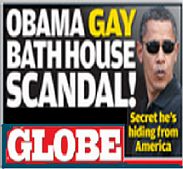
MindBodyPolitic Obama bisexual allegations surface....
Giannoulias was a vice president and senior loan officer for his father’s
bank, Broadway Bank, from 2002 to 2006. Broadway Bank made real estate loans
to Antoin “Tony” Rezko, the chief of Rezmar Corporation. (from WMR)
-
Moment.net Reggie Love, a former Duke basketball
and football player and unsuccessful National Basketball hopeful, currently
serves as Obama’s personal trainer and White House “special assistant” — he
has been called Obama’s “body man”
- Mujaheddin, covert program to
support, well underway during Obama's stay in Pakistan,
more
-
Blagojevich tapes prove Bush
illegal wiretaps.
-
NationalMultMedia.blog The tape recorded conversations involving
Emanuel and Blagojevich have been illegally withheld by Fitzgerald from a
Federal Grand Jury investigating Emanuel in Illinois.
-
National Enquirer, Frank Biden, owes $880,000 in civil case, hit and run
accident, Nicole Albano and Lorraina Albano father Michael Albano was killed
by a speeding Jaguar Biden was in the passenger seat and was shifting
gears, there were two females in the back seat, Turton pleaded guilty to
felony hit and run. . ...on a suspended license.
-
NoGW Obama, Scum in
Office and Zionist Wolf in Sheeps Clothing
NoGW CIA
-
OpEdNews The George W. Bush White House ordered electronic surveillance
of Barack Obama during the 2008 presidential election in an effort to gather
information that could be used to blackmail the new administration into
ignoring Bush-era crimes. According to a new article at the Wayne Madsen
Report (WMR), Obama and prospective chief of staff Rahm Emanuel were
included in surveillance that led to the indictment of former Illinois
Governor Rod Blagojevich. The operation apparently yielded damaging
information about Team Obama, including Emanuel's ties to the Chicago gay
community. But the Obama administration took steps to ensure that the
information gathered under Bush-appointed U.S. Attorney Patrick Fitzgerald
would focus on Blagojevich and not them.
-
Overlordsofchaos the world in
run by Jews. Freemasons, empires, secret masters, zionists, Israelis, one
world religion, new world order, Rothchilds, Christians, Spartans, Sparta,
pedophilia, child abuse, Catholic Church, priests.
- Palmer, Alice Palmer,
thrown off ticket via Obama actions,
- Podesta, John Podesta, former Clinton chief of
staff and co-chair of the Obama transition team.
-
PrisonPlanet Madsen is vindicating Sinclair, forum Wayne's report
is a pay for view service and the following is a small excerpt from it.
Wayne writes that not only is Obama gay but it names favorite clubs and a
gay dating service run by Rev. Wright that Obama and another young man in
the congregation used. The other young man was later murdered. According to
WMR, Rahm (the boy ballet dancer) Emmanuel is also member of the gay club.
-
RawStory Obama, Gianoulias
-
Rense Our
blockbuster Special Report reveals shocking charges of a link between gay
murder victim Donald Young and Obama
Jeff Rense Radio interview
with Larry Sinclair appears in 3 parts on YouTube.com the
intro, part 1,
part 2
-
Rense, Webster Tarpley
Sinclair had come to the National Press Club to detail his charges that the
self-proclaimed Democratic presidential nominee Barack Hussein Obama had
indulged in two homosexual encounters complete with crack cocaine in early
November 1999, that Obama was complicit in the December 2007 assassination
of Donald Young, the gay choirmaster of Jeremiah Wright's Trinity United
Church of Christ, and that's Obama's resident perception monger, David
Axelrod, had paid the pornographic website Whitehouse.com $750,000 to
organize a campaign of character assassination against Sinclair, culminating
in a faked polygraph test.
-
RumorMillNews reprint WMR ...same bath house article
-
Rush, Bobby Rush, defeated Obama
in state rep race,
-
notes Rezko was known as the money man or
cashier to see about state jobs through the governor's office. He's known
Obama since the early '90s, tried to hire him, did hire the law firm Obama
worked for, became partners with the owner of that firm, advised Obama on
buying his Hyde Park home and sold him a slice of the adjacent lot. Giannoulias
-
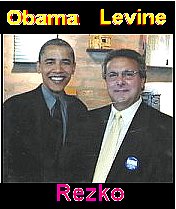 family bank financed the deal.
LA Times
family bank financed the deal.
LA Times
-
ScribD Here are 10 of the key “British”—that is, Rothschild — operatives
now ensconced in the Obama administration (more can be expected): Susan
Rice—ambassador to the UN; Michael McFaul—head of the Russian desk at the
National Security Council; Elena Kagan—solicitor general of the United
States; Anne-Marie Slaughter—State Department policy planning staff; Neal
S.Wolin—deputy counsel to the president for economic policy; Ezekial
Emanuel—senior counselor at the White House Office of Management and Budget
on health care policy; Lawrence Summers—head of the National Economic
Council; Peter Orszag—director of the Office of Management and Budget; Peter
Rouse—senior advisor to the president; Mona Sutphen—deputy chief of the
White House staff. and
Globe page copies
-
Sikh Archives Obama
Lifetime Member Of A Chicago Gay Club? Its editor is Wayne
Madsen, a former US Navy officer, Washington, DC-based investigative
journalist, author and syndicated columnist, with an impressive c.v.
-
SourceWatch mob-connected Giannoulias ...Before he promised to raise
funds for Obama, Giannoulias bankrolled Michael 'Jaws' Giorango, a Chicagoan
twice convicted of bookmaking and promoting prostitution.
-
StewWeb PRESIDENT Barack Obama is caught up in a
new gay sex and drug scandal - and his loving wife is heartbroken, sources
tell GLOBE in a blockbuster world exclusive. Find out all the details of the
letter Michelle Obama received from the MAN (Larry Sinclair) who claims to
be her husband's lover, Clinton
Blackmailed Barack Obama
-
Tarpley.net There are indications scattered across the internet that
(Frank Marshall) Davis was bisexual. Officially he was married to Helen
Canfield David of Chicago, reportedly a woman of some social standing.11 If
Obama’s mentor of those years in fact had homosexual proclivities, this
would be significant in explaining the later bisexual features of Obama’s
life.
- Tarpley
Part
1 US, Russia, China, World War III and
book
- notes Culture Of Corruption: Barack Obama, Rezko,
Blagojevich, Kennedy ... It appears that Obama friend
Valerie Jarrett, an incoming senior White House adviser, is the person
referred to repeatedly in court documents as “Candidate 1.” That individual
is described as a woman who is “an adviser to the president-elect” and as
the person Obama wanted appointed to the Senate seat. Court papers say that
Candidate 1 eventually removed herself from consideration for the Senate
seat.
Hillaryis44
-
VodPod bisexual-obama-secrets-exposed-by-puerto-rico-tv-station
- notes: Obama, family, polygamy, Grandfather worked
for the British, Kandu, Tanganyika, Nairobi, worked as a butler, cook,
worked for leading imperialist politicians, bought land, beat his wives,
moved to Alego, ancestral home, rejected Jesus / Christianity, exposed to
Islam, converted, took on the name Hussein, Sarah, third wife, devout
Muslim, opposed to marriage of Ann Dunham, high statistical correlation
between interracial marriage and proximity to the Communist Party, Obama Sr.
abusive polygamist, egomaniac, bigamist, Obama Sr. and Ann Dunham met and
married in Hawaii, pregnant, he abandoned them, 1961, to accept Harvard
offer, perhaps leads to need for validation, bisexual behavior, Ann Dunham
became Ford Foundation operative, loan sharking, Johnny Walker Black Label,
no Koran,
- notes: The Woods Fund of Chicago, with Ayers and
Obama on the board for several years before 2002, appears to function as a
funding conduit for certain US-controlled or US-influenced factions of the
highly factionalized and crisis-ridden Palestine Liberation Organization and
Palestinian Authority. Whether these US-manipulated factions are violent or
moderate is less important than the fact that they represent CIA tentacles
inside the PLO. The fact that various Palestinian or PLO factions are
controlled by foreign states is, or ought to be, well-known. The Soviets had
some of these factions. The Israelis were known to control a part of the
central committee of the Abu Nidal Organization, run by Sabri al-Banna, the
son of the pro-British and later pro-Nazi founder of the Moslem Brotherhood.
Ariel Sharon helped to create Hamas, and so forth. The French and the
Vatican are not far behind.
- Tarpley.net
‘Obama met Rezko soon after graduating from Harvard
Law School. Rezko was well connected in Chicago’s African-American
community, in part because he had worked with Jabir Herbert Muhammad, the
son of Nation of Islam founder Elijah Muhammad, V. Obama’s Heart of
Darkness: Rezko, Auchi, Alsammarae, and Chicago Graft 189 when he was
managing the career of boxer Muhammad Ali, according to a May 2005 profile
in the Chicago Tribune. Rezko moved into real estate and political
fundraising, often a combustible combination in Chicago. Rezko offered Obama
a job with his real estate company soon after they met, around 1991, but
Obama declined. When Obama decided to run for the state Senate in 1995, ....Newton
Minnow,
- more search terms:
money behind Crown Chicago dynasty behind Obama, Sara Lee, Material Service,
Freeman United Coal, Freeman Energy, Century-America, Tishman Speyer,
Industrial Insurance, Aspen Skiing, Citation Oil & Gas, Crown Theaters,
Chicago Sweeteners, Eltek ASA Great DAne Trailers, Lakewood Homes, Lennar,
Crown Golf, Wireless One, Active Screw, Plasco, Ojai Resort, Bush Hog,
and Obama,
- Muckety relationships:
College summit, C. Fred Bergsten, Han Sung-joo, Paul A. Volcker, Erik
Belfrage, Mark Ndesandjo eugene Kang, Karen Elliott House, Clinton Bush
Haiti fraud, Maya Soetoro-Ng, Yes We Can video Matthew Santos Appalachian
Leadership and Education Foundation Clinton Global Initiative, Chrisopher Pl
Lu, Melody C. Barnes, Katie Johnson Allan I. Gotlieb Indra K. Nooyi
Robert F. Bauer, Yotaro Kobayashi, Hope Fund, Samantha Power, Martin
Nesbitt, James Reynolds Jr. Marvin Nicholson, Robert B. Barnett, Vinal K.
Thummalapally, Illinois Board of Elections, Appalachian Leadership and
Education Foundation, Davis Miner Barnhill & Galland, Martha L. Nimow,
Cassandra Q. Butts, Laurence Tribe Fisher House Foundation, Sidley Austin
LLP, Jonathan T. Molot, Crystal Nix Hines, Thomas J. Perrelli Nancy L.
McCullough, Karen Kornbluh, Punahou High School, Tobacco Regulation Bill,
American Indian College, Peter M. Rouse, Emil Jones, Woods Fund, Laura
D'Andrea Tyson, Jean Rudd, Harry S. Truman
- trial notes:
Immediately following the Blagojevich verdict, federal prosecutors promised
to quickly retry the case, leading The Washington Post to speculate whether
the Obama White House would be dragged into the mess this time around… if
U.S. Attorney Patrick J. Fitzgerald has his way, there will be a new trial.
New attempts by the prosecution to build a case against Blagojevich. New
efforts by the defense to subpoena Chief of Staff Rahm Emanuel and senior
adviser Valerie Jarrett to the stand.
WIBW
- notes: Sheldon Sorosky,
Blago lawyer, Rezko has challenged his own conviction, saying Supreme Court
limited a law used in his prosecution.
-
In the 1959 book "The
Manchurian Candidate"
by Richard Condon — which has been made into two movies — an American
soldier is captured during the Korean War, taken to Manchuria in China, and
brainwashed into being an unwitting assassin for the communists.
-
Notes: Obama, 2012, Chicago base of reelection campaign, will cost one
billion dollars, established campaign office in Chicago, Gibbs, Axelrod,
Messina, fund raising, WH political director, Patrick Gaspard,
Electoral College Vote,
-
CitizenWells NAYAK’S RECENT INVOLVEMENT “A mysterious “Individual D” in
the ongoing Illinois political scandal to auction off President-elect Barack
Obama’s vacant U.S. Senate seat has now been identified as Raghuveer Nayak,
a millionaire Chicago area Indian businessman whose voice turned up on FBI
wiretaps and bugs of Democratic Gov. Rod Blagojevich. ...
Nayak is “Individual D” in the criminal complaint outlining the case against
the governor, according to an exclusive story in Monday’s Chicago Tribune.
Nayak is heard on the tapes being squeezed by Blagojevich to raise campaign
money in return for naming Rep. Jesse Jackson Jr. to Obama’s vacant seat.
... Nayak, one of a savvy band of local moneymen who help fund
the state’s Democratic political machine year-in-and-out, is now reportedly
negotiating with federal prosecutors for immunity in return for his
testimony.”
|
-
Summary,
-
Obama, Gay
-- Fitzgerald suppressed evidence of this in Blagojevich trial.
-
WayneMadsenReport, vindicates Larry Sinclair, gay lover of
Obama below
-
 Madsen
- Sinclair interview excerpt
file Aug 7, 2010
Listen to MP3 Madsen
- Sinclair interview excerpt
file Aug 7, 2010
Listen to MP3
-
Obama family
CIA
connections
more
-
Obama / Emanuel lifetime
members of gay bathhouse Man's Club
-
FreeRepublic, on Larry Sinclair Book
-
Norcal Blog, ...the coming Obama scandal
-
Yahoo Answers Is Obama Bi-sexual? Did 3 people of his church
get murdered because they knew this?
-
MediaMatters,
Tamara Holder and Hannity suggest Fitzgerald is "protecting"
Obama in Blagojevich investigation
see video
-
or Obama:
Zionist Puppet ?
Search
terms: Israel Zangwill, NAACP, Israel Cohen, "The Melting Pot",
"A racial program for the 20th Century"
-
Amazon book
Barack Obama & Larry Sinclair:
Cocaine, Sex, Lies & Murder?
more
below
-
Tarpley, Obama, community organizing sham, Obama slum lord,
-
Snippits and Slappits.blog Why Obama is being blackmailed.
-
Jeremiah Wright, TUCC,
operated gay matchmaking service, members included Donald Young,
Barack Obama,
-
Ann Dunham (Obama's mother)was a Suharto
operative during CIA backed Suharto coup against
leftist Sukarno
more
-
RealZionist News
Brzezinski, Zionist Bankers control Obama
-
Global Research Bilderberger, Obama Manchurian Candidate, groomed for
presidency.
-
WMR:
'play condo'
owned by Rep. Rosa DeLauro
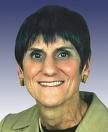 wired, Emanuel, Obama, Bill Clinton on tape
in trysts and other 'extracurricular activities'.
below
and
NoGW
wired, Emanuel, Obama, Bill Clinton on tape
in trysts and other 'extracurricular activities'.
below
and
NoGW
-
Stewweb
Fitzgerald cover-up that Emauel
blackmailed Blago, to appoint Jarrett to Illinois Senate seat, see James Warren,
Tribune, Jesse Jackson Jr,
-
Obama met Rezko soon after graduating from
Harvard Law School. more
-
Wikipedia
Tony Rezko
-
Emanuel known as 'Sugar Daddy', to gay
lovers
-
 WMR has learned that the Purple Hotel ...weekday afternoon
parties were attended by Rezko, Levine, and Obama.
More
WMR has learned that the Purple Hotel ...weekday afternoon
parties were attended by Rezko, Levine, and Obama.
More
-
Lolo Soetoro, Obama's step father called back to Jakarta, to
serve as an officer in the Indonesian army, to help launch CIA-backed genocide
of Indonesian communists,
more
-
Obama family
CIA connections
-
Citizen Wells
Tony Rezko trial, key witness Stuart
Levine, along time drug user, explained how he regularly entertained male
friends in Springfield, the IL state capital, as well as in the Chicago
area....MORE
-
List of Obama lovers below
-
OpEdNews The George W. Bush White House ordered electronic surveillance
of Barack Obama during the 2008 presidential election in an effort to gather
information that could be used to blackmail the new administration into
ignoring Bush-era crimes.
-
NoGW Obama,
Scum in Office
-
Valerie Jarrett has
been subpoenaed by Blagojevich's defense team?
more
-
Politifi
Rahm Emanuel, DeLauro free
rent tax dodge, (WMR:
wired apartment, blackmail?)
more
from
MoeLane
-
Obama made homosexual
contacts at basketball games
-
CitizenWells
Obama, down low,
gay, Blago, Fitz, Rezko
-
MindBodyPolitic, Obama
bisexual Allegations Resurface,
-
FireDogLake
Is Bush Blackmailing the Obama White
House? more below
-
Blagojevich
trial audio tapes show Obama / Emanuel gay evidence,
Fitzgerald wants them suppressed. more below,
-
Man's
Country, Chicago Bath House,
Obama, Emanuel, members,
-
Frank Marshal Davis
page
-
American Free Press
The murders of Donald Young,
more
Larry
Bland, Nate Spencer, all gay, members of Obama's church, TUCC,
GBMNews Donald Young pics
-
Frugal Emanuel / Massa, Congressional Showers?
-
TheObamaFile Is Obama Gay? Sidetracks on Showtunes nights, Little Jim’s
or Northend on Halsted, or the Lucky Horseshoe at Belmont a
-
Clinton / Bush crime families
above
-
Obama family
CIA connections
-
Yahoo Answers
-
YouTube
Larry Bland murder
-
AOL News (Blagojevich) The ex-governor says, for example,
that Obama has "pertinent information" about Tony Rezko and
tapes below
-
Silicon Investor
I find it interesting that Joe Biden's son has Larry Sinclair
arrested on 6/18/08 and Joe publicly starts talking about his
interest in the VP job four days later, 6/22/08. What a hell of
a coincidence.
-
to see why this story does not spread like a wildfire.
six-jewish-companies-own-96-of-the-worlds-media
-
Alexi Giannoulias
search terms: family mob
bank,, Broadway Bank seized, Michael 'Jaws' Giorango, Mark Kirk, Mike
Rogers, Larry Craig, Mark Foley, Rezko, East Bank Club, State Treasurer,
Judy Baar Topinka, Mangieri, Broadway Bank helped bankroll Obama campaign,
Daley, Illinois Sudan Act,
more
-
go to
Michelle page
, First Lady, Ernst and Young, surrendered,
law license, sealed, Disciplinary Board, Valerie Jarrett, real
estate.
-
ChicagoBreakingNews Witness in Blagojevich trial accused of shoplifting
November 6, 2010 8:00 AM | No Comments A prominent businessman in Chicago's
Indian community and an appointee of Rod Blagojevich who testified at the
former governor's trial faces a felony retail theft charge in connection
with a shoplifting accusation at a Far North Side home repair store, police
said tonight. search terms: Rajinder Bedi, Jesse Jackson Jr., Obama
transistion team, Home Depot
-
Jeremy
Bernard, a senior staffer at the U.S. Embassy in Paris, has been
named the new White House social secretary and special assistant to
President Obama. more
-
Huffington Post
Larry
Sinclair
|
-
AbovePolitics
Possibly homosexual tryst, drug abuser, goes to a
black supremecist church, likes Marxist liberation theology, has his own
crooked land and stock deals to worry about.
- ACORN, endorsed Obama in
his Illinois Senate race, funded by Woods Fund, Joyce Foundation, uses race
as divide-and-conquer strategy, Obama on board of directos,
- Airlift Africa, China, Russia and US
competition to control Africa, attended by Barack Obama Sr.
more
- Alsammarae, Aiham
Alsammarae, Iraqi politician, search terms Allawi, Baath Party, opposed to
Chalabi, Paul Bremmer, CPA, Green Zone safety,
Wikipedia
-
Amazon book Barack Obama & Larry Sinclair: Cocaine, Sex,
Lies & Murder? more
-
American Thinker on Vera Baker, alleged affair
with Obama, no flagrante delicto, limo
- Annenberg Challenge, failed local control Chicago
school reform effort, $110million, Ayers and Obama on board of directors.
local school councils, artificial tactic for political wrecking and
manipulation by ff and tc. Ken Rolling, director, evaluation by
Dorothy Shipps,
AOL News The ex-governor says, for example, that Obama has "pertinent
information" about Tony Rezko that he has never shared before. Rezko, a
former fundraiser for both Blagojevich and Obama, was convicted in 2008 for
using his relationships to receive kickbacks in state contracts.
Amazon
Apollo Alliance, on whose board Jones sits with
Podesta, Carol Browner and Al Gore. This is a coalition of radicals,
leftwing union leaders and corporate recruits, which had a major role in
designing Obama’s green economy plans
Atlantean Conspiracy secret
societies, globalist one world system, Illuminati, end of the world,
apocalypse, Jesus, God,
August Review stop the New World
Order, socialistic fascism ruled by elite few.
Auchi, see relationship with Rezko,
BarackObamaVideos.net Is Obama bisexual?, TUCC murders?
Before Its News, Obama's CIA Pedigree, reprint WMR Obama’s mother
worked for the CIA under non-official cover (NOC) in Indonesia while married
to Lolo Soetoro Mangunharjo, a retired colonel in General Suharto’s
CIA-backed ranks.
Benjamin Fullford typepad
Black Voices notes The
Culture of Corruption by the Obama Administration is just rolling along as
now Democrat Joe Sestak has reported that he was offered the job of the
Secretary of the Navy by Rahm Emanuel of the Obama Administration through
Bill Clinton to not run against Arlen Specter
Blago retrial, Rezko
sentencing delayed, so he could testify at Blago retrial, or testify
in William Cellini, Blago first trial convicted in 1 of 24 charges,
Brzezinski, see Columbia U. Obama,
1981-83,
Cellini, William Cellini,
Springfield insider, accused of shaking down a Hollywood producer, for Blago,
for state business, on trial,
CitizenWells It is a fact that Barack Obama
has used drugs. It is also a fact that Obama had associates such as Stuart
Levine that were regular drug users with other men. It is also a fact that 2
gay men in Obama’s church, Donald Young and Larry Bland, were murdered late
in 2007. Donald Young was the choir director.
more
Class
Racer reprint WMR same bath house article
Columbia University, Zbigniew
more
Brzezinski was a professor of Obama,
Daley, Richard Daley, mayor
of Chicago, close relationship with Obama,
DLC, Down Low Club, or
Democratic Leadership Council, right wing policy advisers, promotes military
buildup, freetrade, union busting, privatization of Social Security, NAFTA,
Davis Miner Barnhill, Rezko's
attorney firm,
Davis, Allison Davis, Illinois State
Board of Investment, see Rezko, Operation Board Games, prosecution of Rezko
fraud schemes,
DeepJournal
comment: Obama was a poli-sci major with his speciality in international
relations and a thesis topic that was Soviet nuclear disarmament. Now that
has Brzezinski written all over it. In those years Brzezinski was on the
campus at Columbia, he was the head of the Institute of Communist Affairs,
an anti Soviet think tank.
Democratic National
Committee,
Dianej.wordpress
Obama’s college years are
pretty much a mystery – 1981, 1982 and 1983 especially ...
We also know via New York’s Percy Sutton, Dr. Khalid Al Monsour was raising
money for Obama and it is this man that asked Percy Sutton to write a letter
to secure Obama’s admission into Harvard.
Digg wondering if Barack Hussein Obama blackmailed Edwards into
withdrawing AND endorsing him. This seems VERY likely...
Dodge County Jail,
Wisconsin, where Rezko housed. Dec. 16, 2008, Rezko complained of conditions
he faced in solitary confinement , downtown Metropolitan Correctional
Center., is voluntarily serving jail time, he has no personal contact with
family members, only seen through glass partition.
Dohrn, Bernadine,
European Union Times Tarpley, ...war candidates are dominating the
Democratic primaries. There is a danger they may be stolen by the Brzezinski
clique of eastern European revanchists who run Obama from behind the scenes
Pfleger, Father Pfleger,
Catholic,
Federal Election
Commission,
Foro.Univision, reprint of WMR article, Is Obama gay? ... WMR
attempted to interview Blagojevich’s senior defense lawyer Sam Adam ... the
tapes, if played, would highlight the corruption of not only Obama, Emanuel,
and other member of Obama’s Chicago “brain trust” but also Fitzgerald
himself.
Gawker Obama's Gay Lover Can't Pass Polygraph Larry Sinclair, Barak
Obama's alleged former gay sex partner, was paid $10,000 by WhiteHouse.com
to take a polygraph test, which he failed. Turns out the weird ugly rambling
toothless gentleman from YouTube might not be telling the whole truth when
he claims he gave Obama a blowjob in 1999!
HillBuzz ...Man’s Country in Andersonville, which is a place both
Obama and Rahm Emanuel frequented in the past. Obama until 2002 or so, and
Emanuel through 2008 ...
Ivillage reprint WMR bath house...
Jag
Hunter
James4America
Joe.My.God blog puma site HillBuzz, the
Hillary Clinton PUMA site founded by gay political gadfly Kevin DuJan, has
got the wingnut blogosphere all aquiver over a claim that some mysterious
MSM journalist is at last investigating their ridiculous claim that the
president and Rahm Emanuel were once regular patrons of the Chicago-area
bathhouse, Man's Country.
Jones, Emil Jones, greased
the wheels in Obama Senate campaign
Katz, Marilyn Katz, SDS
Public Relations person, see Ayres
Khalidi, Rashid Khalidi, recipient of
largess from CAC, see Woods, scholar at University of Chicago, Middle East
Advisor, Palestinians,
LarrySinclair.com Larry Sinclair.com Will Jeremiah Wright ever be
asked about his role in the murder of Donald Young???? These are question's
that Wright must be asked and required to answer.
LinkRink Is Rahm
Emanuel Gay?
Man's
Country Chicago Man's Country Chicago is a clean, safe place to hang
out, meet guys who share the same interests as you, socialize, make friends,
watch porn and play!
MK Ultra video
Sirhan, The Manchurian Candidate, & CIA Mind Control Experiments (Part 2 of
3)
Moment.net Reggie Love, a former Duke
basketball and football player and unsuccessful National
Basketball hopeful, currently serves as Obama’s personal trainer
and White House “special assistant” — he has been called Obama’s
“body man”
NesaraNews
NoquartersUSA.net
Obamaers
Obama Chicago election headquarters,
RezkoWatch blogspot In an exclusive interview with the Chicago
Sun-Times, FBI "mole" John Thomas, "who's expected to be a key prosecution
witness against indicted developer and political fund-raiser" Antoin "Tony"
Rezko, is talking. ... recorded converstions.
SDS Students for a
Democratic Society, see Ayers, Dohrn, Carl Davidson, Fidelista,
SKSboards
reprint Madsen, gay bath house story
Silicon Investor
I find it interesting that Joe Biden's son has Larry Sinclair arrested on
6/18/08 and Joe publicly starts talking about his interest in the VP job
four days later, 6/22/08. What a hell of a coincidence.
Soetoro, Maya Soetoro, Obama's sister,
parents: Lolo Soetoro and Ann Dunham,
Tillman, Dorothy Tillman, legal
extortion,
Universal Seduction, reprint WMR
Yahoo Answers Any of you heard of Larry Bland,
Nate Spencer, Donald Young, or Larry Sinclair? All are homosexuals. Three
are from Trinity United Church pastored by Obama's dear "uncle" Rev. Wright.
Those three including Donald Young, the former choir director, are DEAD.
They all died within 40 days of each other starting in November 2007.
|
-
1313 gang, Spellman Fund helped set it up, social engineering in favor
of financier interests, totalitarian control, from the vision of Charles E.
Merriam, and Louis Brownlow, nerve center of American public administration,
played key roles in creating UN, UNESCO, UNRRA, financial oligarchies,
Metro, Metropolitan government,
-
9/12 Project The choir director of Senator Obama’s controversial church
is found murdered execution-style, and there’s NO national media coverage!
-
A Conservative Lesbian Just 13 days passed between Obama telling the
A-list homosexuals assembled at a Human Rights Campaign fundraising dinner
in Washington, D.C., on October 10 that he will get “don’t ask, don’t tell”
repealed so that homosexuals can serve openly in the U.S. military ...
notes We spent a good amount of time on
the ground in Uptown, Boystown, Andersonville, and Hyde Park yesterday with
this reporter, also telling him everything we knew about Trinity United
Church of Christ and the Down-Low Club it operated under Jeremiah Wright’s
supervision / matchmaking
-
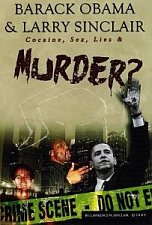 Barack
Obama & Larry Sinclair Cocaine, Sex, Lies and murder. Barack
Obama & Larry Sinclair Cocaine, Sex, Lies and murder.
-
AIPAC,
-
Amazon Obama Nation to his long-term and close
associations with former Weather Underground heroes William Ayers and
Bernadette Dohrn
-
American Free Press The bombshell may involve the murder of Donald
Young, a 47-year-old choir master at former Rev. Jeremiah Wright’s Trinity
United Church of Christ—the same congregation that Obama has attended for
the past 20 years. Two other young black men that attended the same
church—Larry Bland and Nate Spencer—were also murdered execution style with
bullets to the backs of their heads—all within 40 days of each other,
beginning in November 2007. All three were openly homosexual
-
American Enterprise Institute
-
American
Turkish Council,
- Ariel Capital, Loop Capital, Holland
Capital and Capri Capital, “sharply increased their donations” to Obama’s
State Senate campaign fund....
Tarpley,
- Armey, Dick Armey,
Freedomworks, Tea Party leader, see also Jim DeMint, FoxNews,
-
Atlah, reprints Madsen
Obama gay blackmail
- Ayers, Thomas Ayers, father
of .... Ayers, on board of General Dynamics,
-
BarackObama.com Ronald
Reagan,
-
Barnhardt ...there were two men who
attended Trinity UCC with Obama who were openly homosexual and linked to
Obama sexually, who were murdered execution-style within a matter of weeks
immediately before and after Obama's announcing his run for president in
2007.
- BIC, founded by Eldridge Haynes,
liberal democrat, 1 Dag Hammarskjold Plaza, Manhattan,
Wikipedia headquaters at 1 Dag Hammarskjold Plaza, Manhattan, recruit
those on the left, round tables, Selassie, Restrepo, Ongania, Franco,
Medici, Sugarto, MI-6
-
BigJournalism Barton-Thomas was not called as a witness in the
Rezko trial
-
Bilderberg
-
Bout, Victor bout, arms dealer,
tied to 9/11 in planting WMD evidence in Iraq before the war, and tied to
Fitzgerald, Blagojevich, Rezko in Blago trial.
- Brzezinski, Zbigniew, Carter's National
Security Advisor, hated, unpopular, Dr. Strangelove, 1981-1983, Volcker
placed as head of Federal Reserve,
-
Brookings Institution
-
Business
Council
-
Business
Roundtable
-
BusinessWeek, Obama second
term? campaign via email, YouTube video,
-
Canada Free
Press not really a Manchurian candidate but a classic Mohammedan
Candidate?
-
Cato Institute
- Chicago 1313 gang, University of
Chicago, see Spelman Trust, Merriam, Brownlow, total control of society,
financial oligarchy, collectivism based on Wall Street finance
capital, not the proletariat,
- CIA,
Airlift Africa, gain influence over 280 students to counter Russian and
China influence programs, program admin was Mboya, friend of Obama Sr.,
helped in CIA overthrow of Nkrumah, 1966.
more
-
Citizens for a Sound Economy
-
Conference
Board
-
Council on Foreign Relations
- Council on Foreign Relations,
- CountryWide Bank,
sweetheart mortgages, Kent Conrad, Northe Dakota, Chris Dodd,
- Business International Corporation,
Wikipedia CIA cover organization.
-
Canada Free
Press, Obama Fanon Davis, Obama smoked cigarettes.
- CIA, Obama family history with CIA,
BIC, Financing Foreign Operations, Business International Money Report,
Barry Soetoro, Lolo Soetoro, Columbia tuition debt paid by BIC,
-
CNN Obama 2012 re-election bid, "It begins with us," bundlers will raise
$500 million, leaving the campaign to raise another $500 million and amass a
record-breaking $1 billion war chest.
- Commission on Subversive Activities
to the Legislature of the Territory of Hawaii,
-
Columbia University Institute for Communist Affairs, anti-Soviet
think tank, Sadik Siddigi,
- Committee of 300 Wikipedia
-
Commieblaster pic Obama, Berlusconi, Gordon Brown, Communist
China's President, Hu Jintao; Socialists International member and South
Africa's President, Kgalema Motlanthe; Prince Saud Al Faisal of Saudi Arabia
(country source of fifteen 9/11 terrorists); Ethipoian socialist, terrorist
and NEPAD head, Meles Zenawi; Turkey's domineering, anti-secularist and
Islamic Extremist Prime Minister, Recep Tayyip Erdogan; and Thailand's Prime
Minister and Democrat, Abhisit Vejjajiva,
- CFR
-
Rep. Rosa L. DeLauro (D - CT) Introduced
legislation to make it illegal to grow vegetables in your own garden
(HR875). Her husband, Stanley Greenburg, worked with Monsanto .. ...
educate yourself HR875
-
Daily Paul Barack
Obama is a deeply troubled personality, the megalomaniac front man for a
coup by the intelligence agencies
-
Democratic Leadership Council,
Down Low Club, Obama a member of both.
-
East-West Center, University of Hawaii,
Ann Dunham met Soetoro here, affiliated with the CIA, Howard P. Jones,
chancellor, also ambassador to Indonesia, during Sukarno overthrow, PKI, see
Untung,
more
-
European
Roundtable of Industrialists (ERT)
-
Federal Reserve System,
-
Fox4KC
Leading secret alternate life styles, Obama and his chief of staff provide
classic blackmail threats. Considering Obama’s choice for the Supreme Court,
Elena Kagan, who is reputedly a semi-open lesbian,..."
-
FoxNews, Fox Entertainment
Group, Glen Beck, Mormon, Rupert Murdoch News Corp, owner, hired Roger Ailes,
founding CEO, promote conservative views, created to compete with NBC, ABC,
CBS. Bret Baier,
-
FreeDominion As for the green movement, the environment will
always by the cause of the wealthy liberal elite, supermodels and Hollywood.
When you are out of work and have a family to feed, Slappy the squirrel can
go to hell.
-
FreeRepublic, on Larry Sinclair Book
-
Frontpage The Manchurian Candidate By: David Horowitz
- Ford Foundation, CIA front,
more
see Dwight Hopkins, ff
operative, black liberation theology,
-
Free
Republic Call me evil, but as unbelievable as this media has been all
along and given Obama such a messianic veneer... I would SO love for a gay
affair with the pot smoking, munchie needing, lover of White Castle, KUMAR
(of all freaking people!) to bring him down.
- Gamaliel Foundation, satellite of the
Ford Foundation, The Developing Communities Project, Obama. no real friend
of the poor, considered being a slum lord.
-
GDMP
- General Dynamics, see James
Crown, Obama support, Colonel Harry Crown, pillars of the industrial
military financier complex,
-
Heritage
Foundation
-
Hoover
Institution on War, Revolution and Peace
-
HotAir The Manchurian President: Barack Obama’s Ties to
Communists, Socialists and Other Anti-American Extremists.
-
Hudson
Institute
-
Human Events,
Alsammarae, Iraqi corruption, Ann Coulter
- IMF,
more
-
International Chamber of Commerce
-
JohnDeNugent white separatist, reprints WMR Obama Man's Country article.
-
Frugal
notes Did Obama’s Chief of Staff Rahm Emanuel, while naked, actually
confront and argue about budget voting with former New York congressman Eric
Massa in the congressional showers —
- Gamaliel Foundation, a Ford Foundation satellite,
- Geithner, Peter Geithner, father of Tim Geithner,
bank bail out guy, oversay microfinance programs worked on by Ann Dunham,
more
-
Hannity
forum I was browsing around and found this article on JAMES (Just
Americans Making Ethical Statements).
James4America talks about
Obama and Rahm being members of a Chicago gay bath house, called "Man's
Country" This is hillarious...
- Joyce Foundation, Obama on board,
social engineering, mind control, grants,
-
LA Times Nation 2008 Obama, Rezko Under cross-examination by Rezko
attorney Joseph Duffy, star prosecution witness Stuart Levine, a
Chicago-area lawyer, is admitting to conspiracy, extortion, bribery, fraud
and other bad acts while he “served” at the Illinois public school teachers
pension fund board.
- Maytag, destroyed by Crown
family, Galesburg,
- mengaji, devout muslim worship,
education,
- Mboya, Tom Mboya, administered
African Airlift, Luo tribe mentor, and friend of Obama Sr. ...mission:
obstruct Russians and Chinese in Africa
more
also helped to rally pro-US
pan-African support for CIA's overthrow of Nkrumah in Ghana in 1966
-
NewsMax Obama manchurian candidate David Horiwitz, there are
general elections, primaies, local, only white male property owners could
vote in the 18th and 19th century, women's suffrage changed that, felons
still can't vote, Republicans make incredible efforts to disenfranchise
blacks, students, felons, Latinos, the poor,
-
NewsMax Federal prosecutors' decision to "protect" Obama
administration officials by not calling them to testify against former
Illinois Gov. Rod Blagojevich is "absolutely" responsible for the
prosecution's stunning failure to get convictions on 23 of 24 counts, a Fox
News legal analyst who closely followed the trial tells Newsmax.
-
New York Times, Obomber, Libya, failed to enact the public option in
healthcare reform, due to lobbyist pressures, seeking Oval Office, 'Change',
Guantanamo still open, select rulers, not monarchs, suffrage, always male
dominated, vail of representation a hoax, redistricting, gerrymandering all
leave elections as dangerous hoaxes on naive, uninformed populations, data
mining, Electoral College a total joke,
- Northern Trust,
loaned Obama $1.32 million for restored Georgian mansion, Susan Crown, close
relative, vp Henery Crown and Company, important Obama backer, Yale trustee,
-
- Occidental College, bong hits, cocaine,
-
TheObamaFile Is Obama Gay? Sidetracks on Showtunes nights, Little Jim’s
or Northend on Halsted, or the Lucky Horseshoe at Belmont and talk to guys
who’ve lived the scene, been there, done that, and will admit to being
lifelong fans of Man’s Country.
- Pakistan, Obama, partridge hunting
sith the Soomros related to unknown CIA business,
- Palin, Sarah Palin, 2012
candidate,
- Palwenty, Rubio, Gingrich,
Bush?
-
Politico,
Ties to Blago threaten Dems
- Power of
Prophecy Texe Marrs Surrounding Obama in the White House and in
Washington, D.C. is a frightening array of Jewish radicals and Zionist
agents of influence. Jewish controllers—including White House Chief of Staff
Rahm Emanuel and chief political advisor David Axelrod—monitor and guide
Obama in his work of destruction. Behind them all is a hidden cabal led by
the powerful Rothschild family
- Punahou School, elite
-
RAND
-
RandysRight Republicans will abandon Kirk not because he is gay,
oddly enough, but because he is a liar and a hypocrite
-
Schlussel, Debbie ederal Sources: Fitzgerald Held Off Blagojevich
Bust to Protect Obama Election Chances; Did Obama Fail Ethics Requirements
of Illinois Bar?
- Skull and Bones, see Austin Goolsbee,
Obama campaign
-
Stop the ACLU Obama and Rahm at Man's Country

-
TheAbsurdReport Sinclair is saying that he and Barack Obama had
sexual relations with one another in the back of his limousine and in a
hotel room back in November of 1999�at the same time that Barack Obama was
serving the state of Illinois as a state senator. Larry Sinclair is also
claiming that Barack Obama obtained crack cocaine for himself and some
powdered cocaine for Sinclair.RealTruthAboutAlexi
Michael Giorango pled guilty in 1989 of "helping
direct a south suburban bookmaking ring that used threats of bombings,
beatings and robbery to collect unpaid debts." more search terms: tax
violations, bookmaking, Chicago Heights, gambling boss, Dominic Barbaro,
'The Circuit', nationwide gambling ring, Lorraine Hotel, Miami, Demitri
Stavropoulous, Chief Loan Officer, 1201 S Western, 2601 Associates, Sun &
Ocean Properties, Highland Park Real Estate, Development Corp.
-
TheRightSideofLife Obama timeline
- University of Hawaii, Barack Obama
Sr. was first African student
more
-
Transatlantic Business Dialogue (TABD)
- Trilateral Commission,
founded by Rockefeller
and Brzezinski, Samuel Huntington, recruiting young political talent which they
could develop, groom, indoctrinate, brainwash,
Wikipedia
- University of Chicago, Milton
Friedman, economics,
-
Union of
Industrial and Employers'
-
Confederations
of Europe (UNICE)
United Nations
-
University of Chicago 1313 gang, Spelman Fund helped set it up, social
engineering in favor of financier interests, totalitarian control, from the
vision of Charles E. Merriam, and Louis Brownlow, nerve center of American
public administration,
- USAID, CIA front,
more
-
U.S. Chamber of
Commerce
-
USAToday
Amid budget talks, government shut down, record levels of debt, campaign
team will file papers, March, will seek second term, attend Democratic Party
fundraisers, Ronald Reagan,
-
U.S.
Export-Import Bank
-
U.S. Federal
Reserve Bank
U.S.
Overseas Private Investment
-
Corporation
(OPIC)
-
USA*Engage
-
Vanity Fair, Obama admitting systematic drug use,
-
Washington Post Do the two leading Democrats running for president think
homosexuality is immoral? That question arose this week after Sens. Hillary
Rodham Clinton (N.Y.) and Barack Obama (Ill.) seemed slow to criticize
remarks by Gen. Peter Pace, the chairman of the Joint Chiefs of Staff, that
"homosexual acts between two individuals are immoral."
-
Washinton Post Along the way, Rezko allegedly funneled tens of thousands
of dollars in bogus real estate fees to Blagojevich's wife, Patti, who is
named as a conspirator but has not been charged. Rezko also allegedly
delivered a series of $10,000 payments to the governor's then-chief of staff
Lon Monk, who has pleaded guilty and will testify for the government.
-
Washington Post Weiner also shared his thoughts on Massa's alleged naked
argument with White House chief of staff Rahm Emanuel in the showers at the
House gym, which Emanuel has denied, saying: "I have very few hard and fast
rules. One of them is not to have sword fights in the morning with Rahm
Emanuel."
-
Washington Times, Obama another four more years, amidst government
shutdown threat, red, white and blue, cost $1 billion, presidential run,
- Woods Fund, (money to Obama) Chicago,
family owned coal mines, provided coal to Commonwealth Edison, Thomas Ayers,
the father of terrorist Bill Ayers, was a principle.
-
World Bank -
International Monetary Fund
-
World
Business Council for Sustainable Development
-
World
Economic Forum (Davos)
-
WorldNetDaily Larry
Sinclair Sinclair, who lives in Duluth and describes himself as "gay,"
claims he "personally engaged in sexual activity and personally used illegal
drugs in November 1999" with the man who is now the leading Democratic
presidential candidate. He claims the activity took place in the back of
Sinclair's limousine and occurred again, later, in his hotel. Sinclair also
says he personally no longer uses drugs.
-
World
Trade Organization (WTO)
-
WorldNetDaily is it possible he's a Manchurian candidate –
harboring an ominous secret agenda few understand, a man destined to wreak
havoc on America should he become president?
-
Yahoo Answers Is Obama Bi-sexual? Did 3 people of his church get
murdered because they knew this?
-
ZackJonewIsHome The BOPAC Report,
|
|
|
|
|
|
|
|
|
| |
|
WMR: "Wag
the Dog" is a training film for the Obama
White House ... May
9-10, 2011 |
| President Obama
anxiously kept the media and the world waiting
on the evening of May 1 for what later turned
out to be his announcement that he ordered a US
Navy SEAL team to attack the compound of Al
Qaeda leader Osama Bin Laden in Abbottabad,
Pakistan. Obama claimed that the SEALs had shot
and killed Bin Laden in a firefight.
The reason for
the delay of Obama's announcement, according to
WMR's sources, had nothing to do with national
security but to alert Obama's student supporters
at George Washington and Howard universities in
Washington, DC to marshal a group of Obama
supporters to gather at Lafayette Park in front
of the White House in a "flash mob" to stage a
pep rally for Obama after his announcement. The
"Wag the Dog"-inspired demonstration was planned
by Obama's political adviser David Plouffe.
MS-NBC's dutiful
bleating Obama sycophant, Rachel Maddow, showed
a flash mob gathered in Lafayette Park shouting
"USA! USA!" while she proceeded to lambast
Pakistan for providing sanctuary to Bin Laden
and other top Al Qaeda leaders. Of course,
Maddow, was merely parroting the new neocon line
that Pakistan must be the next nation to be
rendered like a kosher chicken in the Maddow
kitchen.
Plouffe, of
course, arranged for brand new American flags to
be distributed to the college students for the
widely-televised "impromptu" demonstration. The
new, just unfolded American flags appeared
faster than the new Libyan royalist flags showed
up in Benghazi, Libya after the uprising against
Muammar Qaddafi.
The Obama vs.
Osama television show continued into the
weekend, with the Pentagon releasing a video,
said to be captured, along with tera-bytes of
other computer data, from Bin Laden's ramshackle
lair in Abbottabad. But the White House
originally said that Bin Laden's compound was a
$1 million dollar "mansion." Obama's
counter-terrorism adviser John O. Brennan, the
former CIA official who helped craft the
agency's kidnapping, rendition, and torture
program, was responsible for much of the White
House bombast, which later had to be recanted by
White House press secretary Jay Carney. It was
Brennan's firm, The Analysis Corporation, that
had rifled through Obama's passport files at the
State Department in January 2008. It now appears
that it is Brennan who is Obama's current CIA
control officer, the latest in a series of CIA
handlers who have "run" Obama since his days at
Occidental College in Los Angeles.
It is now
apparent that the phony "hit" on Osama was known
to only a few White House, CIA, and Pentagon
officials, particularly the Air Force, which
appears to be under the control of the cabal
that is waging a devious information war on
behalf of a continued war agenda by the Obama
administration. Just two hours after Obama was
said to have authorized the "hit" on Bin Laden,
RAI television of Italy caught Obama handing a
piece of paper to Air Force General Burke E.
"Ed" Wilson at Cape Canaveral, Florida where the
President landed after touring tornado-ravaged
Alabama. After slipping Wilson the piece of
paper, the general hands another piece of paper
back to Obama. The fact that Obama was using a
courier system, keeping whatever was on the
pieces of paper away from the official White
House communications systems, including the
extremely limited access Planning and Decision
Aid System (PDAS) that is used to support the
operational capabilities to the Joint Staff at
the Pentagon and and Combatant Commanders (COCOMs),
indicates that Obama, the Air Force cabalists,
and the CIA did not trust other elements of the
Department of Defense and even the White House
Communications Agency to be aware of the plans
for Pakistan. Anyone with access to the White
House communications systems would have
"all-source" and "multi-compartmented" access
and requisite security clearances. It is
noteworthy that PDAS was used by Vice President
Dick Cheney and a limited group of other
officials to communicate during the 9/11
attacks.
A White House
staff photograph issued after the assault on Bin
Laden showed Air Force Brigadier General
Marshall B. "Brad" Webb operating a laptop,
which was said to be involved with providing a
live video feed of the attack on Bin Laden's
compound from the SEAL team in Pakistan. Webb is
the assistant commanding general of the Joint
Special Operations Command (JSOC) at Fort Bragg,
North Carolina, also home to the Army's Civil
Affairs & Psychological Operations Command,
which, in the past, has supplied interns who
helped craft news stories for CNN's Atlanta
headquarters and National Public Radio in
Washington.
Senior
administration officials gathered in the White
House Situation Room were shown intently looking
at scenes of the attack on a video screen.
Later, it was revealed that the live video feed
had gone down prior to the photograph being
taken. WMR has learned from news photographers
in Washington that the Situation Room photograph
was carefully stage-managed by White House
staff. Standing among the senior administration
officials was the gaunt figure of Brennan, a man
who exudes as much warmth as the "cigarette
smoking man" in the X-Files.
Webb is a 2008
graduate of the Center for Creative Leadership
(CCL) in Greensboro, North Carolina. As
previously reported in WMR's exposé of Obama and
his fmaily's past ties to the CIA, the CCL,
according to CIA files, was linked to the CIA's
Political Psychology Division, renamed the
Political Psychology Center in 1984 by another
individual with Obama, Webb, and Brennan in the
Situation Room, Secretary of Defense Robert
Gates. In 1984, Gates was the deputy director
for intelligence of the CIA.
CIA records show
that past graduates of CCL training programs
include former National Security Agency (NSA)
director Admiral Noel Gayler, and William
Verity, Jr., the former chairman of the U.S.
Chamber of Commerce and a director at Business
International Corporation (BIC) in Manhattan.
BIC, a known CIA front company, employed Obama
for about a year after his graduation from
Columbia in 1983. Verity became Secretary of
Commerce in the Reagan administration after
Malcolm Baldrige was stormed to death by his
horse during a rodeo. CCL is also linked to the
Tavistock Institute of London, the "group think"
organization that specializes in the type of
flash mob operation that took place outside of
the White House on the evening of May 1, in
addition to operations that support "sock
puppet" inundation of Internet sites that
question official government story lines.
The Tavistock
Institute has long been linked with the CIA's
MK-ULTRA and Projects BLUEBIRD and ARTICHOKE
mind control and brain-washing operations,
conducted by the CIA's top scientist for such
matters, Dr. Sidney Gottlieb. Much of the
records about MK-ULTRA and other CIA programs
was destroyed on the order of CIA director
Richard Helms in 1972. BLUEBIRD documents
describe what the CIA was trying to accomplish
with behavioral modification in the early 1950s:
"Can we 'alter' a person’s personality? Can we
devise a system for making unwilling subjects
into willing agents and then transfer that
control to untrained agency agents in the field
by use of codes or identifying signs?" In other
words, the movie "The Manchurian Candidate," was
not purely a fictional account within the CIA's
research and scientific community. One of
Helms's five favorite universities for the CIA's
behavioral science program was the University of
Hawaii, the alma mater of Obama's mother, Kenyan
father, and Indonesian step-father.
Obama and
Brennan will undoubtedly gain further control
over the Pentagon when Leon Panetta, an Obama
loyalist, transfers from the CIA to the
Secretary of Defense office. Another Obama
loyalist is Air Force chief of staff, General
Norton Schwartz, who may be tapped to become
Vice Chairman of the Joint Chiefs of Staff.
Neocons in Washington affectionately call the
general, "Nortie" Schwartz. The former Air Force
Secretary's chief adviser, John P. Wheeler III,
was an integral part of the Air Force
chain-of-command through his work on the Air
Force's cyber-warfare and related information
warfare programs. Wheeler continued his
cyber-warfare work at MITRE Corporation after
leaving the Pentagon.
Wheeler would
have also worked with Dr. Lani Kass, a former
Israeli Air Force officer who skyrocketed into a
major position in the Air Force hierarchy.
Whatever Wheeler knew about the de facto
alternate Air Force chain of command went with
him to the grave. Wheeler's body was discovered
in a Wilmington, Delaware landfill on New Year's
Eve last year. Although ruled a homicide,
Wheeler's widow has accused Wilmington and
Delaware law enforcement law enforcement
officials of dragging their feet in the
investigation of her husband's death. Delaware's
Attorney General also happens to be the son of
Vice President Biden, Joseph "Beau" Biden III.
The Lies of
Abbottabad
The entire story
of the raid on Abbottabad has been a series of
lies and half-truths:
-- Bin Laden was
first said to have resisted with weapons. It was
later revealed that Bin Laden offered no
resistance. Bin Laden, or the man who may have
served as his double in U.S.
intelligence-produced video tapes since 2001,
was also reported to have offerred to surrender
before he was shot and killed. -- According to
Brennan, Bin Laden was said to have been buried
at sea in accordance with Islamic traditions.
Yet, Islamic scholars and clerics said if
someone dies on land, they must be buried on
land. -- Obama administration officials stated
that Pakistan was not informed of the operation
beforehand. Yet Abbottabad residents reported
that Pakistani government officials ordered
residents of the military cantonment town to
turn off their lights and remain indoors at the
same time U.S. and Pakistani helicopters were
first spotted by residents in the area. -- SEAL
team members and the CIA were not able to get a
voice recording of "Bin Laden" before he was
killed. Nor could a height be determined of Bin
Laden because the strike force had no tape
measure. After Brennan stated there was a 99.9
percent certainty that from DNA and other
forensics that the man killed was Bin Laden, a
military official at Bahram Airbase in
Afghanistan, where the "Bin Laden" body was
transported, said the degree of certainty was 95
percent. In other words, certainty decreased,
not increased, after a more thorough post-mortem
examination at Bagram. The comparative DNA used
to identify Bin Laden was said to have been
obtained from Bin Laden's sister, after she died
from cancer. However, Rep. Mike Rogers, chairman
of the house Intelligence Committee, later said
DNA samples were used from a number of Bin
Laden's relatives. -- Facial recognition
technology used on Bin Laden's corpse at Bagram
drove the degree of certainty down to 90
percent. -- Brennan stated that US forces also
killed Bin Laden's son Khalid in the attack. The
White House later said it was another Bin Laden
son, Hamza, who was killed. Bin Laden's wife,
Amal al-Sadeh, was reported by the White House
to have been shot and killed while trying to
shield Bin Laden. The story was later changed to
her being shot in the leg while lunging at one
of the SEAL team members. -- Obama refused to
release photos of Bin Laden's body, the burial
at sea (from which a determination of the height
of Bin Laden could be made since the body was
said to have been buried in a simple shroud from
a lower deck of the USS Carl Vinson, or the
actual military assault on the compound. -- The
compound was originally reported to have been a
$1 million mansion. The photographs after the
attack show a much less stately abode, one that
has been estimated at worth $250,000 or less.
Local residents reported they never heard the
occupants of the compound speak Bin Laden's
native Arabic but only Pashto.
And why would a
primarily Pashto-speaking household have a cable
or dish satellite television feed that offered
only Arabic-language news channels in a
primarily Urdu- and Pashto-speaking community? A
close look at the elderly "Bin Laden" channel
surfing his television shows only Arabic
language stations being offered for favorite
selection, except for the rock music station
DJTV from France, BBC World, and Al Jazeera
English.
In addition to
Al Jazeera Arabic, Bin Laden's channel surfing
favorite options starting from 001 include BBC
Arabic, Al Arabiya, Iqraa TV from Saudi Arabia,
Al Hiwar from London, ANB TV from Lebanon, Dubai
TV, Al Emarah from the UAE, MBC Maghreb, France
24 Arabic, Future TV from Lebanon, Al Anwar TV
from Kuwait, Deutsche Welle Arabic, Al Alam from
Iran, Sharjah TV, Qatar TV, Saudi 1 TV, Kuwait
TV, Libya TV, Sudan TV, Oman TV, LBC Lebanon,
and Al Wakrah TV from Qatar (Sports). Pakistan
TV (PTV) offers an Arabic service but it was not
one of Bin Laden's favorites. In fact, Bin
Laden's channel options are more in keeping with
those offered in the Gulf states, perhaps Qatar
where the U.S. Central Command has a large base
that includes psychological warfare elements.
What's next?
Hint: You won't like the answer
After neocons
and Obama faux liberal Democratic media dragoons
began to blame Pakistan for harboring Bin Laden,
these same circles began calling for sanctions
on Pakistan, as well as seizing Pakistan's
nuclear weapons so that they could not fall into
the hands of "Al Qaeda" or Bin Laden
sympathizers.
The dubious
WikiLeaks had previously provided an indication
of the staged raid on and killing of Bin Laden.
On April 25, five days before the raid on
Abbottabad, The Daily Telegraph (UK), known to
pander to neocon interests, published an article
stating that according to State Department
cables it obtained from WikiLeaks, enhanced
interrogation of 700 detainees at Guantanamo
revealed that Al Qaeda would unleash a "nuclear
hellstorm" on the West if Bin Laden were ever
captured or assassinated. Five days later, after
Bin Laden was killed, there were immediate
concerns raised by neocons, many reflecting
media talking points originating from Tel Aviv
and New Delhi, about the security of Pakistan's
nuclear arsenal. The report had the added effect
of legitimizing Brennan's rendition and torture
program, since the information allegedly was
derived form the use of torture. The case was
being made for the "ticking nuclear bomb"
scenario previously used to convince doubters of
torture whether they would still be opposed to
the technique if it meant that a ticking nuclear
bomb could be located and disarmed.
The CIA and its
predecessor, the Office of Strategic Services
(OSS), have long been involved in
helping to
produce movies in Hollywood to further the
propaganda and mind control goals of the U.S.
intelligence community and the Pentagon. Frank
Wisner Sr., the creator of Project MOCKINGBIRD,
pressed a number of Hollywood moguls into
service to support the Cold War propaganda
efforts of the CIA. Among those recruited for
MOCKINGBIRD were producers Daryl Zanuck of 20th
Century Fox, Howard Hughes of RKO, and Cecille
B. DeMille of Paramount, as well as director
John Ford. "Predictive programming" was a major
component of MOCKINGBIRD's propaganda
operations. Many of Steven Spielberg's and Jerry
Bruckheimer's movies point to the strong
possibility that Wisner's Cold War operations in
Hollywood continue to this day.
In fact, since
1996, the
CIA has maintained an Entertainment
Liaison Office that interfaces with Hollywood on
film production. The office's first director was
Chase Brandon, a 25-year veteran of the CIA's
Clandestine Service who also happens to be a
cousin of actor Tommy Lee Jones.
Alan Watt
defines "predictive programming" as "the power
of suggestion using the media or fiction to
create a desired outcome."
The WikiLeaks cables
about an Al Qaeda nuclear attack was not the
only predictive programming operation that
occurred in April.
It should be
recalled that on
March 4, 2001, Fox aired an
episode of the X Files spin-off, "The Lone
Gunmen," in which the actual scenario for the
9/11 attacks was revealed. In the episode, a
Boeing 727, en route to Boston, was hijacked by
a shadowy group of U.S. government plotters
intent on crashing the plane into the World
Trade Center and blaming it on an anti-American
despot to drag the United States into war and
increase weapons sales. The plot was called
"Scenario 12D." The Boeing had its autopilot
commandeered from the ground. Unlike the actual
9/11 events, the control of the plane was
restored at the last minute to the pilot. "The
Lone Gunmen" series was canceled in June 2001.
On April 1,
Hollywood released a movie, filmed in Canada and
without the support of the Chicago Film Office,
Chicago Police Department, or Illinois Film
Office, called "Source Code." Film credits do
thank the Chicago Sun-Times and Chicago Tribune,
both owned by neocon interests, for their
assistance. David Axelrod, Obama's former
political adviser who is currently running
Obama's re-election campaign, is a former
reporter and columnist for the Tribune. Axelrod
reportedly continues to exercise political
influence over the newspaper.
The movie's theme
is that a "lone wolf" terrorist builds a nuclear
dirty bomb and is planning to detonate it in a
white van parked in downtown Chicago with an
estimated death count of 2 million people.
Before the terrorist detonates the bomb, he
blows up a morning Chicago commuter train after
it departs the Glenbrook station, killing all
aboard. The train bombing and dirty bomb are
said to be one of a series of attacks in
Chicago.
Although the
doubled-decked commuter train is called "CCR -
Chicago Commuter Rail" - in the film, it is
clearly a Chicago Metra commuter train. The bomb
is detonated by two cell phones attached to a
bomb. The plot is discovered by a top secret
remote viewing program, code named "Beleaguered
Castle" run out of Nellis Air Force Base,
Nevada. One of the series of playing cards that
is used to put the remote viewer in trance state
is the Queen of Spades. In the film, "The
Manchurian Candidate," the trigger card is the
Queen of Diamonds. One of the passengers on the
targeted commuter train, a professional
comedian, is heard telling a joke about "Barack
and Michelle."
The remote
viewing program in "Source Code" is called
"Beleaguered Castle." The Chicago Water Tower is
often called "The Castle."
Among the
computer files seized from Bin Laden's compound
was intelligence that indicated that in February
2010, Al Qaeda was making plans to attack
America's rail system. Attacks on rail hubs and
rail lines and bridges were said by Homeland
Security officials to be in the "aspirational
phase."
Chicago appears
to replacing New York as the "aspirational"
target for the next false flag terrorist attack,
one that will all but assure Obama's
re-election.
Obama's former
chief of staff, the mercurial Rahm Emanuel, will
be sworn in as Mayor of Chicago on May 16.
Emanuel's team will include a number of
individuals who would relish the idea of a false
flag terror attack in America's "Second City."
"Al Qaeda"
files, Hollywood predictive programming, and
dubious WikiLeaks cables setting the stage for
an attack involving Chicago's rail transit
system.
After spending
$45 million in federal funds on the Project
Shield, designed to cover Cook County with
stationary and mobile security cameras, the
cameras have been found not to work, according
to a February 16 article in the Chicago
Sun-Times. The FBI is supposedly investigating
the security debacle.
Emanuel's police
superintendent is Garry McCarthy, the deputy
commissioner of operations of the New York
Police Department under Mayor Rudolph Giuliani.
Before he became the police chief of Newark, New
Jersey, McCarthy threatened two Palisades
Interstate Parkway policemen for issuing his
daughter a parking ticket in 2005. McCarthy and
his wife were arrested after they confronted the
officers who issued their daughter the ticket.
McCarthy was also handcuffed during the
confrontation withe the two officers. McCarthy
and his wife were later convicted for
obstruction of traffic during their melee with
the police officers. McCarthy's bombast
certainly matches that of Emanuel.
Emanuel's head
the Chicago Office of Emergency Management and
Communications is Gary Schenkel, a 29-year
veteran of the Marine Corps. According to the
December 23, 1999, Chicago Sun-Times, Schenkel,
a sharpshooter, "was one of 80 Marines spending
three days in Chicago touring bridges and sewers
as they studied how to work in urban combat
zones" in 1998. The Chicago operation was part
of the Marine's "Urban Warrior Advanced
Warfighting Experiment." Schenkel took part in
similar exercises during the late 1990s in
Oakland-Alameda, California; Jacksonville,
Florida; New York City; and Charleston, South
Carolina. Schenkel headed up the Federal
Protective Service (FPS), part of the Department
of Homeland Security, in the George W. Bush
administration. During his tenure as chief of
the FPS, agents of the Government Accountability
Office were able to sneak bomb making components
into federal buildings with security levels just
below those implemented for the White House.
William Daley,
the brother of outgoing Mayor Richard Daley, is
serving as White House chief of staff.
Presidential adviser Valerie Jarrett, who was
born in 1956 in Shiraz, Iran. Her father,
William Bowman, a geneticist and pathologist, is
believed by some Iran experts to have been a CIA
clandestine services officer. The Bowmans moved
from Shiraz to London in 1961 and to Chicago in
1963. Shiraz was a hotbed of support for Iranian
Prime Minister Mohammed Mossadeq, ousted by the
CIA in 1953 in Operation Ajax.
Dr. Bowman was
reportedly part of a U.S. program that sent
Americans to Iran to help with economic
development, a program that is similar to the
CIA program that saw Obama's mother, Stanley Ann
Dunham, providing economic assistance and
training to Indonesians following the 1965 CIA
coup against President Sukarno. In the case of
Bowman, he and the Americans were likely
providing more than assistance to Iranians.
Shiraz was not only a center of support for
ousted Prime Minister Mossadeq but also a major
center of activity for Iran's Tudeh (Communist)
Party, which called for nationalization of
Iran's oil industry. A decade before Stanley Ann
Dunham was helping to finger Indonesian
Communist Party (PKI) members for Indonesian
army death squads, Bowman, possibly assisted by
his wife, were in a location where Tudeh and
pro-Mossadeq forces could also be identified for
the dreaded Iranian secret police, the SAVAK,
which set up shop with assistance from the CIA
and Mossad in 1957. Nemazee, a supporter of the
Shah, was born in India to Iranian parents and
was a resident of Washington, DC in the late
1940s and early 1950s.
Bowman's cover
was the Nemazee Hospital established in Shiraz
by Mohamed Nemazee. On August 29, 2009,
Nemazee's son, Hassan Nemazee, chairman of
Nemazee Capital and brother-in-law of Britain's
ambassador to France, was arrested for
defrauding Citibank and other banks of $292
million in loans. Nemazee Capital also had a
past partnering agreement with AIG, the
CIA-linked insurance giant that Obama arranged
to bail out with federal money. Namazee was
convicted last year of fraud was sentenced to 12
and a half years in prison. Hassan Nemazee was
nominated by President Clinton to be U.S.
ambassador to Argentina but Clinton suddenyl
withdrew the nomination amid congressional
opposition. Hassan Nemazee was a major donor to
the presidential campaigns of John Kerry,
Hillary Clinton, and forked over $50,000 to
President Obama's Inaugural Committee.
On April 14,
2011. WMR reported on a flurry of suspicious
maritime liens filed agianst the U.S. Department
of Treasury by leading Chicago and Illinois
officials: "WMR has discovered that although
less than 100 maritime liens had been filed in
Cook County since 1985, since March 28 of this
year, 11 maritime liens have been filed in Cook
County against the U.S. Treasury Department.
Such a
development could be easily explained away,
except when examining the names of the maritime
lien filers in the order that they were filed.
It is not known who some of the individuals are
who filed the liens since March 28, but they are
also listed:
W. Smith
(unknown affiliation) Lisa Madigan (Attorney
General of Illinois) C. Wallace (unknown
affiliation) Richard Michael Daley (outgoing
Mayor of Chicago) Chicago Police Deptartment
Thomas G. Byrne (Commissioner of the Chicago
Streets & Sanitation Department; ex-Chicago
Police Department) Catherine Hennessy
(affiliation unknown, possibly Chicago Police
Department) Pat Quinn (Governor of Illinois)
Milton R. Sees (former Illinois Department of
Transportation Secretary) Jesse White (Secretary
of State of Illinois) Ernie Dannenberger
(Director of Vehicle Service Department of the
Illinois Secretary of State's office)
Filing maritime
liens against the US Treasury Department might
indicate the future movement of U.S. Navy and/or
Coast Guard vessels into Chicago's ports.
However, the question looms: As Rahm Emanuel
prepares to take over as mayor of Chicago, why
was there a sudden flurry of maritime liens
filed by top city and state officials a few
weeks after Emanuel captured the mayor's seat in
the election?"
According to the
"intelligence" gleaned from the captured "Al
Qaeda" computer files from Abbottabad, attacks
on the U.S. rail system were planned for
September 11, 2011, the tenth anniversary of the
plane attacks on the United States. A
handwritten note from February 10, 2010,
mentions the possibility of rail attacks on a
train on a bridge on the the 10th anniversary of
the September 11, 2001.
Chicago should
remain ever-vigilant against its new mayor and
his cronies, suspicious Israelis masquerading as
art students, office/furniture movers, kiosk
vendors, and those who speak fluent Arabic and
who claim to be security consultants, as well as
suspicious financial transactions, and security
training exercises planned for the city,
especially those involving the Chicago Transit
Authority and Metra. The London 7/11 attacks on
London transit targets were conducted during an
anti-terrorism exercise. One thing that can be
said about the architects of false flag
terrorist attacks is that they seldom stray from
their master playbook.
|
|
|
Obama
Re-election Chicago 2012 top
|
|
PROGRESSIVE |
REFERENCE
|
CONSERVATIVE |
- 911Truth
... Daniel Hopsicker’s excellent works, “Welcome
to Terrorland: Mohammed Atta and the 9-11 Coverup in Florida” and “Barry
and ‘the Boys’” in paperback, and the video, "The Secret History:
Mohammed Atta and the Venice Flying Circus." and “9/11 Dust
& Deceit at the World Trade Center”. 911, WTC, imploded, thermite
explosives
- ActUp,
Oral History Project, books: My American
History: Lesbian, and Gay Life During the Reagan/Bush Years
- AfterDownStreet
Now War is a Crime.org, Lila Garrett, David Swanson,
This is what an Antiwar Candidate looks like .... Bush interrogated in Omaha, same day as Hawkins,
Von Mauer mall shootings, Christmas, 2007. search terms:
double-tapping, two bullets in the head, dump body in the ocean, Mission
Accomplished, Corporatism, Fascism, Criminal Prosecution,
Accountability, Human Rights, Military Industrial Complex, Torture,
Veterans
- AlexJones, Alex Jones
YouTube Bombshell Barack
- Alternet
Vitters diaper fetish
- Amnesty
International
- Anti-war
Gordon Thomas, 9/11 and the Mossad
CIA Rendition flights, tail number
list
pic, large file
Valparaiso,
Indymedia report on Amnesty
International work
- American
Prospect, How the DLC does it.
- BradBlog Cheney
Palfrey, Dick List?
- Big
Brother's Watching one
of world's largest collection of FBI files
- Broydrick notes: spotted in Wisconsin,
brilliant detective of the week, 414-719-1399,
- BuzzFlash
Susan McDougal
  Click on pick to go to NFU GOP Dirty
Tricks page and go to GOP dirty tricks
page
Click on pick to go to NFU GOP Dirty
Tricks page and go to GOP dirty tricks
page-
CitizenWells Larry Sinclair has an update on
the Chicago Police investigation into the death of TUCC gay choir
director, Donald Young. Obama supporters are getting desperate to
discredit Larry Sinclair and his allegations of drug use and gay sex
with Obama in November 1999 and alleged contact by Donald Young shortly
before he was murdered.
more
- CIA
Electronic Documents Release Center
catalog of CIA materials released thru FOIA
- Capital
Hill Shop Steward Political action, Worker Info,
Health, Safety, search
- Center for Policy
Alternatives, non-partisan, strengthen state
legislatures to lead and achieve progressive change.
- Center
for American ProgressCitizens
for Ethics Wilkes
/ Michael indictment pdf
- Congressional
Black Caucus, Conscience of the Congress
- Conservative
Sex Scandals.com Vitter forced to testify, subpoena, spill salacious
details, breach-of-contract lawsuit, Pamela Neble (escort) broke contract,
prostitution,
- Dark
Government "Every time an NSL has been challenged
in court, the FBI has backed off, said Melissa Goodman, an
ACLU staff attorney. “That calls into question how much
the FBI needed the information in the first place, and
finally, whether the FBI needs this kind of sweeping and
unchecked surveillance power.”
- Deep
Journal, CIA, Woolsey, Committee on the Present
Danger, heads group of neocon advisers to McCain.
also Randy Schoenberg, Senator Kyl, Lieberman, IRG as
terrorist organization, regime change, Syria, Iran,
project American military might, McCain is 'rational
conservative', goose-stepping, right wingers
- Demcracy
Now "one of the tapes is believed to have shown
CIA agents waterboarding the Al Qaida operative Abu
Zubaydah
-
Democrats.com
connecting the dots, news
-
Democratic Underground forum: scandal after scandal, collapse the
administration, injunction lifted, records released en masse, to
investigators and journalists, truth,
-
DemsOnline
dem activism, discussion boards
- Electronic Privacy
Information Center
- Federal
Anti-Activist Intelligence Network
- Friends
Committee on National Legislation FCNL Quaker organization, 1943,
of Religious Society of Friends, 501(c)4 special interest lobby
- Flocco
GOP Echelon
 Vulture Capitalist, ...beware. ... $$$
to limited hangout news websites. His
$$ support of 'left' sites do
affect the news. No reporting on reopening 911 investigation, Russian
Israeli mob, 'left' gatekeeper, and see Carnaby
CIA murder in Houston.
Vulture Capitalist, ...beware. ... $$$
to limited hangout news websites. His
$$ support of 'left' sites do
affect the news. No reporting on reopening 911 investigation, Russian
Israeli mob, 'left' gatekeeper, and see Carnaby
CIA murder in Houston. - FOI
Freedom of Information Center University
of Missouri-Columbia
- Covert
Action Quarterly Mindspring
- FAS
Human Intelligence and Covert Action
on the Web
- FourWinds10
Bush interrogated
- Henneghan and MySpace
- Independent
Press Association
- Indymedia,
Bush, Thompson, Gannon, Omaha
- Infowar
World Bank, IMF, FBI
- Kennedy, John F.
assassinated, TRUE COLORS,
- FollowtheMoney
- FreePress,
radio, video,
- Independent
Judiciary join the fight for an independent
- terms: Andropov Institute, KGB, FSB director, destroyed compromising
materials, underage sex with boys, Yuri Skuratov secretly video-taped,
Variant Drakona
- Kennedy, John Kennedy,
assassinated, Robert Kennedy, Sirhan Sirham,
- League of Women Voters
- Liberal-International
facts & figures, international member list.
- Literal
Politics search
-
Larry Sinclair.org (Daley) comes from the same “big Banks”
that Barack Obama has spent the past two years attacking, J.P. Morgan
Chase. Not only did J.P. Morgan Chase receive $25 Billion dollars in
tax-payer bailout funds, Daley’s J.P. Morgan Chase also holds contracts
with the U.S. Government in the administering of Food Stamp and other
state and federal public assistance benefits. Daley served as Commerce
Secretary during Clinton’s second term as well. Bill Daley is no
stranger to politics or the Chicago thug tactic’s to this day used by
his brother Richard Daley, Chicago’s Mayor.
 Buy
Wayne Madsen's book Overthrow a Fascist Regime on $15 a Day. Buy
Wayne Madsen's book Overthrow a Fascist Regime on $15 a Day.- Madison
Institute, the
- Muhajabah,
Blog, Muslim Islamic blog.
- Muslim's
for Kucinich.com Fundraising team, on Muslim
issues
-
Obama and the Gays, a
political marriage ... Tracy Baim is joined by some of the most
respected LGBT journalists, bloggers, and activists from around the US.
The book includes articles by Chuck Colbert, Lisa Keen, Karen Ocamb, Bob
Roehr and others; essays by Wayne Besen, Sean Cahill, John D'Emilio,
Kerry Eleveld, Rod McCullom, the Reverend Irene Monroe, Michelangelo
Signorile, Pam Spaulding, Timothy Stewart-Winter, Andrew Tobias, and
Phill Wilson; and dozens of interviews with Chicago and national gay
movement leaders. Senior editors are Toni Armstrong Jr., Jorjet Harper
and William B. Kelley
- The
New Republic, bankruptcy reform, DLC sellout to big business, credit
card companies
- OpenFlows
article: Thomas Frank Emphasize culture (gay
marriage, abortion..) over economics, Conservative Republican
strategy to gain support of the poor.
- OpenSecrets
Bush cabinet connections
- Our
Future.org
- Palestine
Chronicle Bush war against Muslims
- Political
Stratey
- Public Citizen, Ralph
Nader
- Public Eye, Political
Research Associates, an invaluable resource in researching Right Wing
Conservative thought, actions, beliefs
- Rolling
Stone, DeLay, Abramoff, Norquist,
-
Salon Mitch Daniels.... In the final days of the state's
legislative session, lawmakers (Indiana) approved plans to create the
nation's broadest private school voucher system and make Indiana the
first state to cut off all government funding for Planned Parenthood.
-
Wikipedia Luis
Vicente Gutiérrez (born December 10, 1953) is the U.S. Representative
for Illinois's 4th congressional district, serving since 1993. He is a
member of the Democratic Party. Of Puerto Rican descent, he is a
supporter of Puerto Rican independence, the Vieques movement, and other
liberal causes.[6] He is a member of the US Congressional Progressive
Caucus.[33] Gutiérrez has assembled support from a broad section[vague]
of Chicagoans, including Mexican Americans and Puerto Ricans.
-
WashingtonBlade
LGBTQ Community Service
... One of the steps the president has unilaterally taken is
mandating hospitals that receive funding under Medicare and Medicaid
offer visitation rights for same-sex couples and adding gender identity
as a category of non-discrimination for federal workers. Under his
administration, Congress also passed a hate crimes law inclusive of
sexual orientation and gender identity and legislation allowing for
repeal of “Don’t Ask, Don’t Tell.”-
WordPress Scott Covington, owner of The Piano Store in Houston
Texas, on Saturday May 17, 2008 called Chicago Police Homicide
Detectives claiming to be a reporter for the DrudgeReport, attempting to
obtain information on an on going CPD investigation. see also
Piano Delivery blogspot
-
WMR
Osama bin Laden was 'killed' on May 2, 2011, a
very convenient distraction to all the news about Obamas lack of
eligibility to be President and all the fraud perpetrated by his makers
and shakers.
WMR
No one is reporting that
the new number two in charge of "Al Qaeda" is a Jewish kid from southern
California named Adam Pearlman, aka Adam Gadahn, aka Azzam al-Amriki,
grandson of Carl Pearlman, board member of the Anti-Defamation League.
"The U.S. Justice Department announced they arrested Gadahn in Pakistan
in March 2010, but hours later retracted the announcement, citing a case
of mistaken identity." In February 2008, it was reported that Gadahn /
Pearlman was killed by a Predator missile but Pearlman/Gadahn still tops
the FBI's "Most Wanted List."
-
WMR,
Bin Laden killed...search terms: body buried at sea, or kidney failure,
in Hadhramaut region, Yemen, Ari Emanuel, Hollywood, 'surprise
announcement', cave, not Waziristan, $1mil walled-off estate, Abbottabad,
West Point, Kakul Military Academy, SEALS, NSA, GCHQ,
-
Want to
Know.info "Revealing Major Cover-ups and
Working for the Good of All "
-
Washington
Monthly
-
ZMag
- notes
On April 1, Hollywood released a movie, filmed in Canada and without the
support of the Chicago Film Office, Chicago Police Department, or Illinois
Film Office, called "Source Code." Film credits do thank the Chicago
Sun-Times and Chicago Tribune, both owned by neocon interests, for their
assistance. David Axelrod, Obama's former political adviser who is currently
running Obama's re-election campaign, is a former reporter and columnist for
the Tribune. Axelrod reportedly continues to exercise political influence
over the newspaper.
The movie's theme is that a "lone wolf" terrorist builds a
nuclear dirty bomb and is planning to detonate it in a white van parked in
downtown Chicago with an estimated death count of 2
million people. Before the terrorist detonates the bomb, he blows up a
morning Chicago commuter train after it departs the Glenbrook station,
killing all aboard. The train bombing and dirty bomb are said to be one of a
series of attacks in Chicago. ...
Although the doubled-decked commuter train is called "CCR - Chicago Commuter
Rail" - in the film, it is clearly a Chicago Metra commuter train. The bomb
is detonated by two cell phones attached to a bomb. The plot is discovered
by a top secret remote viewing program, code named "Beleaguered Castle" run
out of Nellis Air Force Base, Nevada. One of the series of playing cards
that is used to put the remote viewer in trance state is the Queen of
Spades. In the film, "The Manchurian Candidate," the trigger card is the
Queen of Diamonds. One of the passengers on the targeted commuter train, a
professional comedian, is heard telling a joke about "Barack and Michelle."
more
|
- Action
on the Hill Congressional Yellow Book, changes, info
- ALBA, South America,
Brazil
- Al Jazeera, now
compromised, Western propaganda news,
- Beirut, Lebanon,
newspaper As-Safir
-
ChicagoNow Rep. Gutierrez Threatens Not
to Support Obama Re-election Over Immigration Gutierrez wants
complete amnesty and an open border and he's been unhappy with the Obama
Administration for its lack of movement on the issue. Now he's
threatening not to support Obama's 2012 reelection bid over his stymied
immigration bill.
-
AOLNews Donald Trump, the real estate mogul and reality TV star
recently turned birther, now says that liberal activist Bill Ayers wrote
President Barack Obama's signature book, "Dreams of My Father."
... Ayers, a co-founder of the radical Weather Underground
movement that carried out bombings in the U.S. in the early 1970s,
briefly became an issue during the 2008 presidential campaign because of
his contacts with Obama in Chicago.
-
TheAdvocate Chicago’s LGBT voters were key to the election of Rahm
Emanuel as mayor, Chicago Sun-Times columnist Laura Washington observes
in a piece published Monday. ... LGBT residents concluded
that the feisty Emanuel will be “a pit bull for Chicago,” says Baim,
publisher and executive editor of Windy City Times, the city’s leading
LGBT newspaper.
- Center for
Congressional and Presidential Studies. American
University, links
- Campaign Media
Analysis Group
- Citizens for
Responsibility and Ethics in Washington non
partisan reporting.
-
CoastDigest Wisconsin recall election: The effort against the
Republican senators has been more successful, as Sens. Alberta Darling
(River Hills), Robert Cowles (Green Bay), Sheila Harsdorf (River Falls),
Luther Olsen (Ripon), Randy Hopper (Fond du Lac) and Dan Kapanke (La
Crosse) could face recall election races. Three Democratic senators –
Dave Hansen (Green Bay), Jim Holperin (Conover) and Robert Wirch
(Pleasant Prairie) — may also end up on recall ballots. Failed recall
attempts were made against Democratic senators Lena Taylor and Spencer
Coggs (both of Milwaukee), Senate Minority Leader Mark Miller (Monona)
and Fred Risser (Madison), as well as Republicans Glenn Grothman (West
Bend) and Mary Lazich (New Berlin). Governor Scott Walker will be
eligible in January of 2012
- Congress
Online Project from Congressional Management
Foundation, Pew Charitable Trust
- Council
of State Governments, CSG
- Center for Responsive Politics
Money in U.S. Elections, Iraq Contracts, Media
Ownership
- Center for Responsive Politics
-
ChicagoBreakingNews Managing the campaign this time is Jim
Messina, who played a senior role in the first bid and in the White
House.
-
DebbieSchlussel suspicious Obama selective service documents,
created in 2008
- Digital Government National
Science Foundation
-
Examiner It is alleged that Barack Obama has spent $950,000 to
$1.7 million with 11 law firms in 12 states to block disclosure of his
personal records; which includes birth information, K-12 education,
Occidental College, Columbia University, and Harvard Law School.
-
Hillary Clinton, Bill Clinton
and Bush
blackmail Obama
(below), Reverend Jeremiah Wright,
Down Low Club, audio tapes, cocaine, homosexual, blackmailing Obama, blackmailed and
Soros
page
-
FactCheck.org,
truth and the lack thereof in political advertising on both sides
- Fanatics and
Fools.org, Arianna Huffington, "learn
how the Bush administration is awash in right wing fanatics.....
- Flynt, Larry, Hustler magazine, offer $1
million to anyone with evidence of an illicit affair with a government
leader.
-
Gillespie is Gay
-
Google news Opening statements set in Blagojevich retrial ..
Blagojevich's first trial last summer ended with jurors deadlocked on
all but one count. This time, Blagojevich, 54, faces 20 charges — from
attempted extortion of a children's hospital executive to conspiracy to
commit bribery in a bid to sell or trade an appointment to President
Barack Obama's vacated U.S. Senate seat for campaign cash or a
well-paying job
- Iraq ... al Sadr
said he would order his men to attack United States forces if they
stayed. A member of Parliament from Mr. Sadr’s party was recently quoted
in an Iraqi published report as saying that the party would recruit
foreign fighters to take on the American forces
-
JohnBrodigan
blog Paul Ryan's budget is looking more like a disaster for
Boehner, Ryan is chairman of the House Budget Committee, 'the Path to
Prosperity', and Top Ten reasons Mitch Daniels should run for
President
Reduced Indiana’s Debt…Without Raising
Taxes Turned Deficits Into Surpluses…Without Raising Taxes Two Balanced
Budgets…Without Raising Taxes Massive Job Growth Property Taxes Capped
Public Employee Unions Disbanded Streamlined State Government Affordable
Health Insurance…Without Government Expansion Aggressive Education
Reform Agenda Nation’s Largest Voucher Expansion Program
- JohnKerry.com
-
Kansas City Star At the first event,
with about 100 supporters at N9NE, Obama was joined by Mayor Richard
Daley, Mayor-elect Rahm Emanuel, Illinois Attorney General Lisa Madigan,
Illinois Secretary of State Jesse White and Cook County Board President
Toni Preckwinkle.
-
Larry Sinclair.org What
we would like to see is Obama stop acting like facts are not facts in
regards to Obama’s meeting of Larry Sinclair in 1999; Obama’s engaging
in consensual gay sex on two separate occasions with Larry Sinclair in
November 1999; Obama’s purchasing and use of cocaine for/with Larry
Sinclair in November 1999; and Obama’s intimate relationship with the
murdered Donald Young.
-
LA Times
resident Obama this week kicked off his reelection campaign in earnest,
returning to his hometown of Chicago where he outlined his three Ps –
post-partisan, pragmatic and promise-keeper -- themes that he will use
over and over again as he heads to the 2012 vote
- Leadership
Report Who's Who in leadership in the U.S.
- Leadership
Yellow Book Who's Who in leadership in the U.S.
- Lobby
Report Who's Who in leadership in the U.S.
- LA
Times, Gonzales, DiBiagio, Palfrey ... search terms: Gonzales
politicized the Justice Department, should step down for the sake of the
nation, Schumer, New York, cited Gonzalez improper use of administrative
subpoenas to obtain private records of U. S. citizens, Ashcroft's death bed,
no longer the President's lawyer, higher obligation to the
Constitution,
- New America Foundation
-
Newser The appointment of a federal prosecutor to investigate
CIA interrogations exposed a long-running turf war between the
intelligence agency and the Department of Justice—and demonstrated the
substantial clout of AG Eric Holder, who prevailed in almost every
dispute with CIA Director Leon Panetta. The New York Times and
Washington Post both chart the push-pull leading up to this week's
announcement, which began when Justice released largely unredacted memos
authorizing waterboarding and other forms of tortur
-
NPR Unlike [David] Plouffe, who became a revered figure among Obama
supporters, Messina begins the re-election campaign with a significant
amount of baggage. As a former chief of staff to Baucus and deputy to
Emanuel, Messina has clashed with progressive activists and grassroots
Obama supporters both inside and outside Washington over political
strategy and on issues like healthcare reform and gay rights,
-
ObamaCrimes, Philip Berg,
Philip J. Berg constitutional eligibility of Obama, Attorney General
should investigate, school records show he is Barry Soetoro, Indonesian
citizen, no evidence that he legally changed is name, he was born in
Mombasa, Kenya, only one parent, could not convey 'natural born' status,
was adopted, legally acknowledged by his step-father Lolo Soetoro, Eric
Holder is in conflict of interest, Darryl Issa, R. California, should
hold hearings, Declaration of Independence, Bill of Rights,
- Pakistan, is a major
issue in 2012 election now,
- Palestine, Hamas and
Fatah, Netanyahu, peace process dead, children considered adults,
- Political
Graveyard
- Political
Science Resources on the Web
- Practical
Politics Liberal, Moderate, Conservative views
- Prorev,
Sex in DC
- Saban
Center of Brookings Institute
- Super Bowl, NFL, keep
the masses distracted.
- Supreme
Court longterm decisions guide
- Thomas
Legislative
info, LC
- Times-Picayune, search Vitter,
- Tom
Paine no corporate or union funding, no advertising,
-
Towleroad a site with homosexual tendencies
- Venezuela, Caesar
Chaves
- Vietnam, Tet Offenive,
Richard Nixon, Westmoreland, Lyndon Johnson
-
Wikipedia
Michael Madigan ... Madigan and Blagojevich have clashed over
Blagojevich's proposals for increased state spending.[5] Blagojevich
blamed the 2007 budget crisis on Madigan, releasing a statement that
said, "The way to be able to finally get budgets that achieve the
objective of health care and education for families is to get Mr.
Madigan to be a Democrat again and stop being a George Bush Republican.
-
Wikipedia South Asian Foreign Policy of Barack Obama adminstration,
Robert O. Blake Jr. Assistant Secretary of State for the Bureau of
South and Central Asian Affairs, added 17,000 troops to Afghanistan,
Robert Gates, General Stanley A. McChrystal argued for more troops,
speech at USMA, added 30,000 more troops, Senate Armed Services
Committee stressed defeat of al-Queda network, Taliban, deny safe-haven,
NATO Secretary-General Rasmussen, would contribute 5000 troops, Hillary
Clinton visited India, CIA director Leon Panetta, terrorism, terrorist,
war on terror, assassination of Benazir Bhutto, Jim Lehrer, Mike Mullen,
John Kirby,
-
Windy City Media Group ... Larry Sinclair, a man who claimed
to have been President Obama's sex partner, received $10,000 from
WhiteHouse.com to take a polygraph test—which he failed, according to
Gawker.com. Sinclair has contacted various media outlets, claiming he
performed oral sex on the president back in 1999. WhiteHouse.com was
going to pay Sinclair $100,000 if he had passed the test.
-
Yahoo
He called himself Bobby Charles Thompson and gave himself the rank of
lieutenant commander as he headed a nationwide nonprofit for U.S. Navy
veterans. ... Thompson and NAVPAC, his political action
committee, gave lavishly to more than 50 candidates in 16 states — most
of them Republicans, records show — and the generosity was rewarded with
some high-level entree, at least for photo opportunities. President
George W. Bush and his adviser, Karl Rove
-
Yahoo Was Burying bin Laden at sea a mistake
-
 Dr. Eric E. Whitaker, MD, MPH, is tied to an Illinois
state investigation of improper use of funds.... Obama traveling companion
Dr. Eric E. Whitaker, MD, MPH, is tied to an Illinois
state investigation of improper use of funds.... Obama traveling companion
- Yemen, Bin Laden,
world's most wanted man, not dead, escaped to Yemen, search terms:
Hadhramaut region, helped by Pashtun tribesmen, and ISI Inter Service
Intelligence, thru Oman, Wahhabi sect, Gwader links Pakistan to Arabian
peninsula, resides in ancestral home, jurisdiction of Baluchistan,
Kenya, Somali, Tanzania coasts, surrounded by Sayyid tribesmen, loyal to
Saudi elite, decendents of the Prophet Mohammed thru Ahmed bin Isa
al Muhajir, Wadi Masila, Hadhramautis believed to be behind attack on
USS Cole, Aden Harbor, Saudi backed, John P. O'Neill uncovered all
this.
- notes: Wikileaks The
dubious WikiLeaks had previously provided an indication of the staged
raid on and killing of Bin Laden. On April 25, five days before the raid
on Abbottabad, The Daily Telegraph (UK), known to pander to neocon
interests, published an article stating that according to State
Department cables it obtained from WikiLeaks, enhanced interrogation of
700 detainees at Guantanamo revealed that Al Qaeda would unleash a
"nuclear hellstorm" on the West if Bin Laden were ever captured or
assassinated. Five days later, after Bin Laden was killed, there were
immediate concerns raised by neocons, many reflecting media talking
points originating from Tel Aviv and New Delhi, about the security of
Pakistan's nuclear arsenal.
more
|
- 4religious-right.info,
Texas Republican Party Platform reaffirms USA is
a Christian
- ALEC, American
Legal Exchange Committee, legislative boiler plate bills
- ABCNews.
- American Demographics
- AEI American Enterprise
Institute
- Anser Institute for Homeland Security
- AP
VP Visitor logs, Palfrey implications
- Ariel
Center for Policy Research search, Tom Delay , condition red,
memorial day, 4th of July, domestic security "incident."
- 9/11, Sept. 11, Sept 11,
911
- Bank of America, The Great
Recession, Goldman Sachs,
- bin Laden, created by CIA,
changing story of his death, offered no resistance, then AK-47 bs, search
terms: buried at sea, die on land , buried on land, SEAL teams, a stealth
helicopter crashed, DNA, son Khalid killed, Obama refused to release
photos, USS Carl Vinson, native Arabic, Pashto, Urdu,
- Black Contract with America, Bishop Harry
R. Jackson Jr. Bush backer
- BBC, Gordon Brown,
-
- Capitalist
Magazine in defense of individual rights, code
words .
- Captial
Research Center liberal spending watchdog
-
Carnivore,
Cato also known as DCS1000,
-
CBSNews Political Hotsheet
Pres. Obama's re-election
campaign won't be disclosing how much money is taken in at the individual
fundraising events attended by Pres. Obama. Neither will the Democratic
National Committee. and The moves cement a planned drawdown of
U.S. forces in Afghanistan in July and allow Obama to replace Gates, a
Republican, with a Democrat with partisan credentials. That appointment also
diminishes speculation that Petraeus might become a Republican presidential
challenger in 2012.
-
Center for Creative Leadership, Greensboro, North Carolina, CCL is
linked to the CIA's Political Psychology Division, renamed to Political
Psychology Center, see Robert Gates, search terms: U.S. Chamber of Commerce,
Business International Corporation (BIC), William Verity Jr., Tavistock,
BLUEBIRD ARTICHOKE, MI-ULTRA, Manchurian Candidate, Tel Aviv, Jerusalem, OSS,
Project Mockingbird, The inspiration for the Center for Creative
Leadership (CCL®) came from the visionary and highly successful businessman
H. Smith Richardson Sr. In the years after Richardson had built the Vick
Chemical Co. from a one-drugstore operation into a major international
corporation
-
Chicago Tea Party Several
hundred tea party members rallied at Daley Plaza Monday, cheering speakers
calls for tax cuts, smaller government and reduced spending; and voicing
worries about what they see as a pending crisis if the federal government
doesn’t get its financial house in order.
- Christie, Chris Christie,
Wikipedia Governor
of New Jersey, US Attorney for the District of New Jersey, FreeHolder,
no-bid contract fraud, Wall Street fraud, against abortion, for tax credits
to send children to private schools, increase charter schools, supports
merit pay,
- CIA,
Central Intelligence Agency
- CIA Entertainment Liaison
Office, Hollywood cold war propaganda films, Spielberg, Bruckheimer, Daryl
Zanuck, 20th Century Fox, Howard Hughes, RKO, Cecille B. DeMille, Paramount,
John Ford, Wisner, predictive programing,
- Club for Growth
- Center for Israel Affairs for the Hillel Foundation,
was Palfrey murdered, killed, liquidated, finished off, slain, did someone
slay her, murder her, take her out, kill her, was it a homocide?
- Daily Telegraph, .UK,
-
Daniels, (Wikipedia)
Mitch Daniels, Indiana, Hoosier, education reform, give parents more choice,
vouchers, gut public schools, educate the rich, no busing, segregation,
Dixie, EPA kills business, strip it of fish and wild life oversight,
supports, President of Eli Lilly NA, for privatization of Indiana toll
roads, for constitutional changes to cap State property taxes, a statute in
the General Assembly, large drop in revenue led to budget cuts, balanced
budget, created statewide voucher program, restricted collective bargaining
rights for teachers, lowered the corporate tax rate, Christian immigrants
from Syria, arrested for possession of marijuana, was chief of staff to
Richard Lugar, chief political advisor to Ronald Reagan, CEO of Hudson
Institute, Dan Quayle, successful strategy to deflect attacks on Lilly's
Prozac with massive PR campaign, Board of Directors, Indianapolis Power &
Light Company, served as Director of the Office of Management and Budget
(OMB), also NSC, HSC, estimated the cost of Operation Iraqi Freedom at
$50-60 billion,
-
DeathBy1000Papercuts Obama, Rahm Emanuel: Rahm’s Role in 2012
Re-election Discussed
- DOD
- Echelon wiretapping
-
ElectionInc. Donald Trump fan site, Barack Obama never met Larry
Sinclair. Barack Obama never smoked Crack. Barack Obama never had Homosexual
Relations with any man. Barack Obama never wore a French Tickler on his holy
member. Sinclair is a Clinton Campaign paid liar. Case Closed.
- Etherpeek
-
FactsAboutBarackObama Axelrod is expected to move to Chicago but stay on
as an informal adviser for Obama’s expected 2012 re-election effort.
Susan Rice, U.S. ambassador to the United Nations and former assistant
secretary for African affairs and scholar at the Brookings Institution, was
one of Obama’s most public foreign policy voices during the campaign. She is
said to be disappointed with the New York job because she was lobbying hard
to be national security adviser after Obama’s election victory. Aides have
said she would have wanted to move back to Washington to take the post if
Jones left.
- Facts
of Israel Tom Delay
- FBI,
Federal Bureau Of Investigation
-
Forbes Obama Trump birth certificate, release long form
-
FoxNews FoxNation Trump on Obama's Birth Certificate: 'Maybe It
Says He's a Muslim
-
FoxNews WTC
September 11 Conspiracy Theories, thermite, superthermite, implode,
implosion
- Fox, predictive
programming, X-Files, "The Lone Gunman", actual scenario for the 9/11
attacks was revealed, Boeing 727 hijacked, crashing the plane into the World
Trade Center, Scenario 12D, movie: "Source Code", Axelrod, Tribune,
Sun-Times, ;pme wolf, terrorist builds a nuclear dirty bomb to detonate in a
white van parked in downtown Chicago, blows up morning commuter train,
more
-
FreeRepublic fgh he "Divine One" is the beneficiary of a coalition
composed of blacks, homosexuals, non-Christians, Mexicans, Asians actors and
actresses,and soon to be empowered felons. For example see the following
Report: " Senate President Pro Tem Darrell Steinberg, D-Sacramento, joined
Latino, Asian, black and gay lawmakers outside the Capitol in support of the
resolution." [Sacramento BEE , June 24, 2010 Susan Ferris][Resolution was
the Boycott of Arizona]
- Gadaffi, Muammar Gadaffi,
- George Soros, Open Society
Institute George Soros, founder, Global alliance
for open society.
- Gingrich, Newt Gingrich,
One potential rival for the Republican nomination might be former US Speaker
of the House of Representatives Newt Gingrich, who announced this week that
he is forming presidential exploratory committee.
- GOP
Platform Republican National Committee
- GOP Today
Tom Delay, Americans for a Republican majority.
-
Hasner, Adam Hasner, Florida
- Heartland
Think
Tank
-
HillBuzz The corrupt Chicago Board of Elections decided to allow Rahm
Emanuel to remain on the ballot, over loud public objection. The Daley
Machine made sure a Chicago judge signed off on Emanuel’s bogus candidacy as
well, but yesterday an Appellate Court overturned Emanuel’s eligibility,
clearly stating he was not a resident of Chicago in the timeframe required.
Even the lone dissenting judge didn’t argue Emanuel was a resident —
instead, he claimed Emanuel intended to be a resident of Chicago, “someday”
- Infragard
FBI
- In-Q-Tel
- Judicial Watch
- Keller, Ric, Rep. Bush attack dog, linked
to child sex scandal, boy band, Lou Pearlman, Indonesian police,
Interpol red notice, Pearlman major donator to Keller campaign. (8th
Congressional district, Florida, Disneyworld, Universal Studios, Patrick
McHenry,
-
MyFoxChicago
- NBCNews
-
Publius forum The bill would allow gay couples from foreign countries to
automatically bring in their gay partners and all their immediate family
members into the United States when one of the pair has the fortune to make
it across the border.
-
HillBuzz The corrupt Chicago Board of Elections decided to allow Rahm
Emanuel to remain on the ballot, over loud public objection. The Daley
Machine made sure a Chicago judge signed off on Emanuel’s bogus candidacy as
well, but yesterday an Appellate Court overturned Emanuel’s eligibility,
clearly stating he was not a resident of Chicago in the timeframe required.
Even the lone dissenting judge didn’t argue Emanuel was a resident —
instead, he claimed Emanuel intended to be a resident of Chicago, “someday”
- Hoover
Institute-Stanford on war,
revolution and peace
- Hussein, Sadam Hussein
- Kellog, Brown & Root
- Keller, Ric, Rep. Bush attack dog, linked
to child sex scandal, boy band, Lou Pearlman, Indonesian police,
Interpol red notice, Pearlman major donator to Keller campaign. (8th
Congressional district, Florida, Disneyworld, Universal Studios, Patrick
McHenry,
-
MSNBC bin Laden and Marfan Syndrome, marfanoid
-
NakedCapitalism
- National Intelligence
Council
- National Republican Congressional Committee
- National Republican Senatorial Committee
- NATO North Atlantic Treaty
Organization
-
Obambi Bin Laden, caught Just in time for re-election as the polls
sag and just like in 2003, the NWO magically captured Saddam, even
videotaped his staged death and now CIA agent Bin Laden is captured just in
time for Obama’s relection campaign
- Office of Strategic Influence, U.S.
- Office of
Total Information Awareness
-
Online Republican
Activist
- Out of One, Many
pro-Bush, codewords,
- Palfrey, Washington DC madam sold phone
records to 'reputable investigative news agency.
- Petrified
Truth Transforming fact into rumor
- Political USA
- Romney, Mitt Romney,
serious candidate, Mormon, John McCain and Sara Palin beat him.
What about RomneyCare, and Vermont passed a single payer healthcare plan.
- Ronald Reagan Homepage
-
Senate Republican Conference
- Schwarzenegger.com
pro
- Silverstein, Larry, owned
WTC, collected $5 billion off insurance fraud.
- Strom
Thurmond Timeline
- Scott
Howell & Co dirty tricks firm
- Taliban, Afghanistan,
Roland Carnaby,
- Tea Party Wikipedia
movement. populist, conservative and libertarian, 2009, oppose taxes, reduce
national debt, originalist interpretation of the Constitution, hijacked
Boston Tea Party name, no central leadership, grassroots questioned,
astroturfing, leaders: Sarah Palin, Dick Armey, funded indirectly by Koch
industries, Kocktupus, see Ron Paul, Rand Paul, end the Fed, end the Federal
Reserve, protest against the Emergency Economic Stabilization Act of 2008,
American Recovery and Reinvestment Act of 2009 and healthcare Reform
bills, Keli Carender one of first organizers, Porkulus protest, stimulus
bill, Michelle Malkin, Scott Rasmussen, Santelli and Drudge Report all
helped movement, Fox News immensely important in its creation, global
warming skeptics, oppose cap and trade, anti-green, pro-business, pro
California Proposition 23 which would suspend AB32, Tea Party Patriots,
Americans for Prosperity led by Tim Phillips led healthcare reform protests,
see also National Tea Party Federation, Nationwide Tea Party Coalition,
Contract for America, Citizens for a Sound Economy, FreedomWorks, helped
elect Scott Brown to the Senate, Bob Bennett defeated, other notable names:
Murkowski, Miller, Strom Thurmond, Sharron Angle, Harry Reid, Christine
O'Donnell, Mike Castle, Paladino, Lazio, Marco Rubio, Jeb Bush, Roe v. Wade,
- Texans
for a Republican Majority Tom Delay, possible indictment
- Thornburgh, Dick ... former Attorney
General testified that DOJ is prosecuting Democrats for political
purposes.
- Vitter, excrement, sexual deviant, more
search terms: Mr. Excrement, Larry Flynt, prostitute Wendy Yow Ellis
(Leah, Cortez), sex several times a week, 1999, French Quarter, book deal,
New Orleans Escort Service, stories, "I am telling the truth",
"head to head", see also Bruce Barkley,
Karl Rove NFU
-
The Latest Political News
- Trump, Donald, 'The Donald'
And finally: Donald Trump has used his potential presidential campaign to
rail against China for stealing American manufacturing jobs, but ABC News
reports that an array of Trump-branded products are made in China. The
“Trump Store was contributing to the growth of Chinese manufacturing at the
expense of American jobs, selling $80 Trump-branded cotton sweaters and $70
Trump-branded warm-up tops, all made in China.” source ThinkProgress
-
U.S. Army
- U.S Marines
- U.S. Air Force
- U.S. Navy
-
Video
GOP
-
Wall Street Journal Community, group, Libertarian, troops
withdrawal from Afghanistan, death of bin Laden, aircraft carriers, Marines,
Will the death of Osama bin Laden guarantee obama's re-election reelection,
-
Wall
- Washington
Legal Foundation Endorsed by
John Ashcroft.
- Washington Times
- White
House, Bush Bush called Hillary Clinton a "formidable
candidate".
- Zionist
Organization of America Tom Delay
|
- WMR: The CIA and its
predecessor, the Office of Strategic Services
(OSS), have long been involved in helping to
produce movies in Hollywood to further the
propaganda and mind control goals of the U.S.
intelligence community and the Pentagon. Frank
Wisner Sr., the creator of Project MOCKINGBIRD,
pressed a number of Hollywood moguls into
service to support the Cold War propaganda
efforts of the CIA. Among those recruited for
MOCKINGBIRD were producers Daryl Zanuck of 20th
Century Fox, Howard Hughes of RKO, and Cecille
B. DeMille of Paramount, as well as director
John Ford. "Predictive programming" was a major
component of MOCKINGBIRD's propaganda
operations. Many of Steven Spielberg's and Jerry
Bruckheimer's movies point to the strong
possibility that Wisner's Cold War operations in
Hollywood continue to this day.
-
WMR
November 2009 -- There's a political ill wind blowing for Obama
in Chicago ... A
long-serving member of the Chicago Police Department who now tracks
corruption in city politics told WMR that the last-minute trip by
President Barack Obama to Copenhagen on October 2 to appeal to the
International Olympic Committee (IOC) was part of a strategy hatched by
Obama's Chicago real estate friends and contributors to cash in on
profits on speculative real estate investments had Chicago secured the
2016 Summer Olympics. Instead, the IOC awarded the Summer games to
Brazil. ... Our Chicago source
revealed that Valerie Jarrett, the director of the White House Office of
Public Liaison that works with state and local governments, was a key
player in the deal to bring the 2016 games to Chicago. Jarrett's firm,
Habitat, Inc., WMR was told, played a key part in the Chicago Olympic
development scheme. Jarrett had served as Vice Chairman of Chicago 2016,
the non-profit organization established to lure the games to the city,
and she worked closely with Michael Scott. A key member of Mayor Richard
Daley's Olympic committee, real estate developer Scott, who was also
President of the Chicago Board of Education and a confidante of the
Chicago school system's former CEO, Arne Duncan, President Obama's
friend and current Education Secretary, was found dead in the early
morning of November 16. Scott's body was found in the Chicago River and
the Chicago medical examiner reported Scott died from a self-inflicted
gun shot wound to the head. ...
Scott owned Michael Scott & Associates, a real estate development and
investment firm. Scott and his firm stood to make a fortune in the sale
of land in Chicago's Douglas Park had Chicago been awarded the 2016
games. Scott also teamed up with Chicago real estate developer Gerald
Fogelson in 2002 to form FS Associates LLC to develop Chicago West Side
properties. Scott and Fogelson were eyeing the multi-billion Olympic
Village project. Fogelson, through Fogelson Companies, Inc. and Jersen
Investments, LLC, was a major contributor to Democratic candidates,
including presidential candidate Barack Obama. ...
Jarrett served as Chair of the Chicago Transit Board from 1995 to 2005
and also had inside knowledge of public and private land since the
Transit Board was a major player in acquiring land for transit projects.
Our Chicago source pinpoints Jarrett as the key player in the Olympic
land grab deal, along with senior members of the Daley adminisration and
Michelle Obama, the First Lady. ... This past
September, Chicago constructor and top fundraiser for impeached Illinois
Governor Rod Blagojevich, Christoper Kelly, was found dead from
apparently overdosing on a pain killer. Kelly, who was involved in
construction projects at O'Hare International Airport, pleaded guilty to
federal fraud counts. O'Hare's expansion was part of the incentive
package used by Chicago to lure the 2016 Olympic games to the city.
... WMR has been told that there are "smoking gun" documents
dealing with Habitat Inc.'s involvement with the Chicago Olympic bid and
we are trying to obtain them.
-
WayneMadsenReport May 19-20, 2010 -- WMR intermittently
extending its beat to Chicago ... CHICAGO -- With the
Chicago Tribune, Chicago Sun-Times, and Chicago Daily Herald acting as
ciphers for the "powers" that run Chicago, newspaper owners like
Chicago's real estate shyster Sam Zell cutting the investigation staff
of the Tribune, and major stories involving President Obama's "Chicago
Mafia" being ignored by major Chicago papers and the corporate shill
Washington Post, WMR has decided to intermittently extend its normal
beat from covering inside the Washington Beltway to covering a number of
ignored and spiked stories in Chicago. ...
WMR has discovered that the US Attorney for Northern Illinois, Patrick
Fitzgerald, has engaged in extreme prosecutorial misconduct involving
not only the case against ex-Illinois Governor Rod Blagojevich but other
cases, including those brought against jailed ex-Illinois Governor
George Ryan and Chicago philanthropist and attorney Peter Palivos.
Palivos, a generous donor to both Republican and Democratic candidates,
spent a year in prison on trumped up charges brought by Fitzgerald.
Palivos refused to provide false testimony in the trial of former GOP
Governor Ryan. ... House Judiciary
Committee Chairman John Conyers, Jr. (D-MI) and courts oversight
subcommittee Chairman Hank Johnson (D-GA) asked Attorney General Eric
Holder to review the case against Palivos but, as with the case brought
against Mississippi attorney Paul Minor, Holder and then-Solicitor
General Elena Kagan, now nominated by President Obama to the U.S.
Supreme Court, refused to review the case. ...
Obama re-appointed Fitzgerald, originally appointed by George W. Bush,
to his US Attorney post. WMR has been informed by well-placed sources
that Obama and his chief of staff Rahm Emanuel worked out a quid pro quo
agreement with Fitzgerald that placed Obama, Emanuel, and White House
adviser Valerie Jarrett off-limits to criminal probes in return for
Fitzgerald bringing criminal cases against Blagojevich, his brother, and
Blagojevich's former chief of staff John Harris. Moreover, WMR will be
investigating improper conduct on the part of key defense attorneys in
the Blagojevich and other cases run by the US Attorney's office in
Chicago.
|
 go to Bush / Clinton death list, body count page
- Alamo
Girl "Clinton and Riady were not new acquaintances. They had
met in 1978, when Clinton was attorney general, and had not yet become
governor of the state. They were introduced by Clinton's chief political
backer, Jackson Stephens, the head of Stephens Inc., one of the largest
private investment firms outside of Wall Street. "Thus began a
friendship," in the words of Timperlake and Triplett, "that has
lasted 20 years, and has spread a web of intrigue, financial corruption and
foreign influence into American government." Riady had begun his
American banking career earlier in the '70s as an intern at Stephens. Later,
they became partners in the Worthen Bank of Little Rock, the very same
institution that subsequently experienced a mysterious fire that destroyed
records being sought by Kenneth Starr and other Whitewater investigators in
their inquiries into Hillary Rodham Clinton's Rose law firm activities. It
was through the Worthen bank that Riady arranged the $3.5 million credit to
Clinton's failing primary campaign...."
|
|
Citizenwells.blog Secret Tapes Helped Build
Graft Cases In Illinois, Washington Post, December
22, 2008, Pamela Meyer Davis, IL Health Planning
Facilities Board, Stuart Levine, Blagojevich, Rezko,
Barack Obama IL senate, Board rigged, 9 members,
Obama corruption CHICAGO — Washington
Post article excerpts: The wide-ranging
public corruption probe that led to the arrest of
Illinois Gov. Rod Blagojevich got its first big
break when a grandmother of six walked into a
breakfast meeting with shakedown artists wearing an
FBI wire. Pamela Meyer Davis had been trying to win
approval from a state health planning board for an
expansion of Edward Hospital, the facility she runs
in a Chicago suburb, but she realized that the only
way to prevail was to retain a politically connected
construction company and a specific investment
house. Instead of succumbing to those demands, she
went to the FBI and U.S. Attorney Patrick J.
Fitzgerald in late 2003 and agreed to secretly
record conversations about the project..... more
search terms: Joseph Cari Jr., DNC committee member,
wiretaps, Operation Board Games, flip, pat-to-play,
on steroids, Rep. Jesse L. Jackson Jr., Obama
transistion team, Meyer Davis, Chicago Medical
School, student housing project, Stuart Levine, GOP
fundraiser, courted Blago, health facilities board,
teachers pension board, wiretap, discussions with
Rezko, Levine indicted in 2005, extortion,
kickbacks, cooperation, plea bargain, star witness
agains Rezko, Better Government Association,
Illinois Finance Authority, Ali Ata, Rezko had
shaken him down, large campaign contributions,
Jackson's wife for a lottery post,
Washington Post
|
|
|
|
WMR: Planning and Decision Aid System, PDAS,
Cheney led false flag attack September 11, 2001
|
| PROGRESSIVE |
Reference |
CONSERVATIVE* |
- 9/11 Citizens Watch
challenging the official story of 9/11
- 9/11
Independent Commission.org
- 911caper
9-11 Conspiracy Theorist Hits the Road… Infamous 9-11 conspiracy theorist
David Ray Griffin, whose books insist the Bush Administration and not al
Qaeda blew up the World Trade Center and the Pentagon, is launching a
speaking tour this week to help merge the “9-11 Truth Movement” with “more
traditional Peace and Anti-War groups” against the “illegal and immoral war”
in Afghanistan.
- 9/11
& Conspiracy News
- Antiwar
"Edmonds
- Reopen911.org
petition, books, dvds, news, events
- 911Review
Expose the deception
- 911Truth
-
911 Working Group The
documents confirm assertion by Webster Tarpley in his book 9/11 Synthetic
Terror that the White House received a threat that "Angel is Next." (The Air
Force One code-name is redacted in the document). See link below:
Declassified 9/11 U.S. Secret Service FOIA Records Describing Activity of
President Bush & VP Cheney
pdf
-
AboveTopSecret 9/11, which was just a modified version of
"Operation Northwoods".
- American
Free Press The Truth about 9/11, Israel...
-
Bollyn Olmert, How Ehud Barak pulled off 911, Dov
Zakheim,
-
CongressCheck
- Extrados Israel false flag pdas, planning
and decision aid system, Cheney led 911 attacks, How Ehud Barak Pulled Off
9-11
-
Extrados Israeli Defence Minister Ehud Barak
(L) talks with Minister of Pensioner Affairs Rafi Eitan as Prime Minister
Ehud Olmert (
-
Global
Research The Pentagon's "Second 911" "Another [9/11] attack could
create both a justification and an opportunity to retaliate against some
known targets" by Michel Chossudovsky
-
InformationUnderground, Israel, 911
-
Info-wars
state sponsored terrorism, tearerism
- Jones, Dr. Steven E. Jones, WTC dust
contained super-thermite nano-composite high explosive, thermate, aluminum
oxide, iron oxide, large amounts of molten iron found, blue smoke,
-
OpEdNews The super-classified network that served as command and control
for the 9/11 false flag attack on America
- Pastore, Dr. Albert D. Pastore, An
Independent Ivestigation of the True Culprits Behind 911.
-
PrisonPlanet Further details on command and control system used to
coordinate 9/11 incident
- Riley and His Story, book, Iraq War,
Sharbonno, Haller,
-
ShiaChat comment: AIPAC/pro-Zionist lobby groups are powerful and
dictate U.S. Foreign Policy. The Federal Reserve is a
conglomerate group of private banks. The CIA formed Al Qaeda and
funded it against the Soviets. Most of the U.S media is owned by just 5
corporations. Rupert Murdoch is a Zionist Jew who owns FOX News!
-
South East
Asia News, Israel, Mossad False Flag 9/11 and
YouTube five
dancing Israelis

-
Want to Know.info
Top Politicians, Economists, Other Leaders State 9/11 Possibly an Inside
JobJob list of Former Chief Economist under President Bush, Morgan Reynolds;
Assistant Secretary of Treasury under Pres. Reagan, Paul Roberts; Head of
Advanced Space Programs, Dept. of Defense, Dr. Robert Bowman; UK Minister of
Environment (1997 - 2003), Michael Meacher; U.S. Senator Mark Dayton; U.S.
Congresswoman Cynthia McKinney; Renowned Theologian Prof. David Ray Griffin;
Assistant Secretary of Housing For Pres. Bush, Catherine Austin Fitts; 9/11
statement signed by 100 prominent Americans, 40 9/11 family members
- WarOnYou
|
- Page Summary,
Cheney, false flag attack, to start Iraq War
-
WMR, The super-classified network that served as command and
control for the 9/11 false flag attack on America publication,
-
InformationUnderground, Israel did 911
-
Bollyn
Olmert, Barak pulled off 911, Dov Zakheim,
|
-

-
Flight 77, Pentagon,
Norman Mineta, testify
-
------------------------
-
False Flag:
Buenos Aires, 1992, bombings of Israeli Embassy blamed on Iran and
Hezbollah, suicide truck driver, Argentine Supreme Court proved they could
not have done it. and 1994, false flag bombing of AMIA Jewish cultural
center in Buenos Aires, killed 85, again blamed on Iran and Hezbollah, but
evidence proved otherwise, ATF said no evidence.
-
Google Groups
-
PrisonPlanet Cheney
Coordinated 9-11 WTC Terrorism Attack by WAYNE MADSEN How Ehud Barak Pulled
Off 9-11 by CHRISTOPHER BOLLYN 9-11 Pentagon Attack Shows Official Monstrous
Lie by PR LOG Decoding History:Was 9/11 A Directed Energy Op? by NICO HAUPT
9-11 Conspiracy: Evidence Twin Towers Exploded by YOU TUBE 9-11
Conspiracy:'Coincidences' or Synchronicities? by MICHAEL GOODSPEED (THUNDERBOLTS.INFO)
-
Wikio Download
Loose Change 9/11: An American Coup (2009) Dylan Avery Full Length movie
in DVD, Hi-Def, DivX, iPod, PDA quality!
-
911video.de Appell an den
Generalstaatsanwalt Eric Holder; ein unabhängiges Gremium einzusetzen um
unmittelbar mit einer Untersuchung der schwerwiegendsten Verbrechen zu
beginnen, die von Ex-Präsidenten George W.Bush und Ex-Vizepräsidenten
Richard B. Cheney sowie anderen Amtsträgern ihrer Regierung begangen wurden.
Sowohl G.W. Bush als auch R.B. Cheney haben zugegeben die Anwendung von
Folter autorisiert zu haben
- Goldstone Report, Barak war crimes,
-
Google books The new face of war: how war
will be fought in the 21st century By Bruce D. Berkowitz
- Katyn Massacre, cover-up, 22,000 Polish
nationals mass murdered by Soviet NKVD, 1943, Western and Soviet let world
believe it was Hitler, but in 1990 Soviet Union officially acknowledged the
perpetration Wikipedia
- SCP
Partners with over $800 million under management that is focused on
investments in Information and Communications Technology (ICT), Life
Sciences, Services, and Defense and Security. With over 200 years of
combined investment and operating experience, SCP supports its investment
portfolio with a rich base of strategic, operating and financial expertise
and an extensive network to access capital, recruit management, and
facilitate favorable strategic alliances.
- Super-thermite, chips discovered 911 New
York site, by Dr. Steven E. Jones, World Trade Center
- False Flag notes, keywords, Ottoman Turks
conquest of Constantinople, in Jewish quarter, Zionist trickery to get
America to join WW!, Balfour Declaration, Jewish homeland in Palestine, Bernays propaganda campaign, dual loyalty, Rothschild and clever trick to
start market panic on Napoleon Waterloo win, Jewish bombers dressed in Arab
clothes entered the King David Hotel, killed 91, blamed it on the Arabs,
Pollard is a hero in Israel, Rosenbergs, Lavon Affair exposed, Israel blamed
Egypt for attack on USS Liberty, FBI could have stopped 1993 WTC
bombings,
- Chile,
False Flag,
Pakistani, Mohammed Saif-ur-Rehman Khan, arrested, setup, framed, by
neo-Pinochet government of President Sebastian Pinera, Judge
Carolina Araya,
|
-
 Dick
Cheney Dick
Cheney
-
9-11 Justice new &
views
- 911Commission.gov
"9/11 Commission Report which states:
"The CVRs and FDRs from American 11 and United 175 were not
found."
- 9/11
Denial National Review, similar to holocaust
deniers.
- Advanced Metallurgical Group, Metallurg
Holdings, Wayne, Pennsylvania, Safeguard International, super-thermite used
to demolish WTC, atomized aluminum, nano-composites,
- APFN: 911 - Terror in America
- Baker
Botts, Saudi Arabia, 9/11 lawsuits,
- BBC, Barak was in London studio spinning
911 attacks, first to call "War on Terror"
- BBS
News Where TRUE conservative "family values" do not
include hidden bigotry or blatant social and environmental ignorance....
Assassination: A Game For All.
- Borchgrave, Arnaud de Borchgrave,
History Commons UPI, Editor in Chief,
- Clinton, Hillary, criminal mafia-like
boss.
- Department of Defense False Flag operations
goto
- Electronic
Data Systems, Barak was special advisor in 2001
- False Flag
Hillary Clinton is trying desperately to get
war started against North Korea? search terms: Chenoan, 1200-ton
warship, torpedo, sunk, 46 sailors died, Chinese Premier Wen Jiabao, South
Korean President Lee Myung-bak, Yukio Hatoyama, international
response, perfectly match schematics, punishment, retaliation, U. N.
Security Council, Kim Jong Il,
- Feinberg, Kenneth Feinberg, wife, Diane
Shaff Feinberg, Israelis, 9-11 Victims Compensation fund, no accountability,
oversight, stop justice, discovery,
Wikipedia
-
FBO Daily Contracting Center of Excellence, Army Contracting
Agency (ACA), ATTN: Policy and Compliance, 5200 Army Pentagon, Room 1D245,
Washington, DC 20310-5200
-
- Beams were severed with super-thermite explosives, cutter charges,
more
- Department of Defense,
-
Global Security Fiscal Year (FY) 2006/2007 Budget Estimates
Submission Procurement, Defense-Wide
- Hellerstein, Alvin K. Hellerstein:
Orthodox Jew and devoted Zionist The same law that created the 9-11 Victims
Compensation Fund also stipulated that all 9-11 related lawsuits would go
through the U.S. District Court of Manhattan, where Alvin K. Hellerstein, an
orthodox Jew and devoted supporter of Israel has prevented any case from
going to trial.
- IDF, Barak Chief of Staff,
- Israeli Intelligence and Central Command
- Israel Chemicals Corporation
-
TehranTimes
PDAS The super-classified network that served as command
and control for the 9/11 false flag attack on America
-
Google Joint Staff (TJS) supports the Chairman of the Joint Chiefs of
Staff (CJCS) in his role as principal military adviser to the President,
Secretary of Defense and National Security Council. The Chairman relies on
TJS to create and promulgate guidance for
- Mossad
- Odigo, Israeli paging service warned of
911 attacks
- Operation Condor, Kissinger,
- Osama bin Laden, worked for the CIA right
up to 9/11.
- SCP Partners, Mossad operated private
equity firm, Barak supervised 911 false flag,
- Sayeret Matkal, Israeli covert
mission force,
- Simons, Paul Simons, US Ambassador to
Chile, apply sanctions Iran, Iraq, Syria, Sudan,
- Urban Moving Systems, Israeli Art
Students
- US Army School of Advanced Military
Studies, Mossad tricks, Palestinian / Arab acts
- Wikipedia, Olmert, 911 mastermind
- Wikipedia, Dov Zakheim, 911 mastermind
- Wikpedia, Barak, 911 mastermind
- Wikipedia, Lawrence Silverman, 911
Mastermind
- Wikipedia Rafi
Eitan,
- Wikipedia, Michael Chertoff 911
Mastermind
- Zionist criminals,
|
-
WayneMadsenReport April 26-28, 2010 --
The
super-classified network that served as command and control for the 9/11
false flag attack on America publication date: Apr 25, 2010 April 26-28,
2010 -- The super-classified network that served as command and control for
the 9/11 false flag
attack on America ....
Multiple U.S. intelligence sources have reported to WMR that a
super-classified network with only some 70 terminals in select U.S.
government locations handled the parallel command-and-control activities
that permitted the 9/11 terrorist attacks to be successful.
.... The "above top secret" network bears the
acronym "PDAS." WMR has not yet discovered what the acronym stands for,
however, its is limited to only a few hundred people with Sensitive
Compartmented Information (SCI) Special Access Program (SAP) need-to-know
access, in addition to the President and Vice President.
... On September 11, 2001, PDAS was used to convey the
information from the Air Force Chief of Staff to the White House, CIA, and
other select agencies that the Air Force had successfully intercepted and
downed a target over Pennsylvania. It is believed that the "target" in
question was United flight 93, although there is no confirmation that the
aircraft was in fact the one downed by Air Force interceptors.
... The Air Force Chief of Staff on 9/11 was General John
Jumper, who had become the top Air Force commander on September 6, 2001,
just five days before the 9/11 attacks. ...
There is also reason to believe that the PDAS terminal at the Presidential
Emergency Operations Center (PEOC) at the White House was used to coordinate
the activities related to the aerial attack on the Pentagon. Transportation
Secretary Norman Mineta claimed Vice President Dick Cheney was present at
the PEOC at 9:25 am on the morning of 9/11, before the alleged impact of
American Airlines flight 77 on the building. ...
Mineta testified before the 9/11 Commission that Cheney was aware of special
orders concerning a plane heading toward Washington. Mineta said: "During
the time that the airplane was coming into the Pentagon, there was a young
man who would come in and say to the Vice President…the plane is 50 miles
out…the plane is 30 miles out….and when it got down to the plane is 10 miles
out, the young man also said to the vice president 'do the orders still
stand?' And the Vice President turned and whipped his neck around and said
“Of course the orders still stand, have you heard anything to the contrary?"
... PDAS terminals are reportedly located at the White
House, on board Air Force One, the Pentagon, CIA headquarters, the National
Security Agency, the Boeing E-4 Advanced Airborne Command Post that was seen
flying over Washington, DC on 9/11 after the attacks, the Defense
Intelligence Agency at Bolling Air Force Base in Washington, DC, and the
Raven Rock Mountain Complex in Pennsylvania where Cheney hid out after the
9/11 attacks. ... Mineta later followed up
with reporters and stated "When I overheard something about 'the orders
still stand' and so, what I thought of was that they had already made the
decision to shoot something down." ...
It now appears that PDAS was used by Cheney to implement on the morning of
9/11 a new policy issued on June 1, 2001 that provided for a "stand down"
protocol that replaced a long-standing shootdown order for hijacked and
suspected hijacked planes. The new order transferred the authority to shoot
down aircraft from Pentagon and NORAD military commanders to the President,
Vice President, or Secretary of Defense.
MORE
keywords: super-classifed, terminals, SCI, Sensitive
Compartmented Information, Special Access Program, need-to-know, downed
flight 93, Gen. John Jumper, Sept 6, PEOC, Norman Mineta,, 9:25, 9/11
Commission, 50 miles out, "do the orders still stand", Boeing E-4 Advanced
Airborne Command Post, DIA, NORAD, COCOMM, STO, US Central Command, SecDef,
IJSTO, assassination, Milosevic, Habyarimana, Ntaryamira, General Wesley
Clark, SIPRnet, JWICS, NIPRnet, Canada, Australia, UK, JSSG, SIGINT, IVY
Bells, covert technical operations, Balkans, Rwanda, September 11, 2001
-
Extrados
Bollyn Israeli
Defence Minister Ehud Barak (L) talks with Minister of Pensioner Affairs
Rafi Eitan as Prime Minister Ehud Olmert (C) waits to start the weekly
cabinet meeting May 25, 2008 in Jerusalem. Eitan is wanted by the FBI for
his role as the spymaster of Jonathan Pollard. Olmert was in New York City
on 9-11. These three men know very well who was behind the terrorism of
9-11. ... IT IS ONE HUNDRED PERCENT
CERTAIN that 9-11 was a Mossad operation - period. - Dr. Alan Sabrosky,
former director of Strategic Studies Institute, U.S. Army War College
.... Ehud Barak, Israel's defense minister, is currently in the
United States for a week of meetings and speeches. He is, in my opinion, the
key suspect of being the mastermind of the
false-flag
terror attacks of
9-11. To help understand how Barak pulled off 9-11 I am providing this brief
article to explain how I think he did it. It should be noted that Barak was
Israel's minister of defense during Israel's assault on the Gaza Strip in
2008-2009. Based on the findings of the U.N. Factfinding Report written by
Justice Richard Goldstone, Barak is responsible for a host of war crimes
committed during that assault. The United States and other states are
obliged to arrest Ehud Barak based on the findings of that report.
... Ehud Barak was prime minister of Israel from July 1999 until
March 7, 2001, when he was replaced by Ariel Sharon. I attended an event at
the Chicago campus of the University of Illinois where both Barak, then
prime minister, and Sharon were involved, shortly before the election that
brought Sharon to power. The fact that Barak and Sharon had travelled to
Chicago together illustrated the utter fakeness of their rivalry.
... Previous positions held by Barak include Head of
Defense Planning and Budgeting, Head of the Israeli Intelligence Community,
Chief of the General Staff of the Israel Defense Forces (IDF), Minister of
the Interior in Prime Minister Itzhak Rabin's cabinet, Minister of Foreign
Affairs in the Shimon Peres cabinet, and Labor Party Chairman. If Israel is
involved in 9-11, as Dr. Alan Sabrosky says and which the evidence strongly
indicates, Barak certainly knows all about it. ...
When Sharon assumed power in March 2001, Barak came to America. He
supposedly came to the United States to work as a special advisor for
Electronic Data Systems and as a partner with SCP Partners, a private equity
company focused on "security-related" work - but this was only his cover.
His real assignment was to oversee the terror attacks of 9-11. As a partner
with SCP Partners Barak was well placed to supervise the
false-flag
terror
operation. The complex false-flag terror attacks of 9-11 required that the
mastermind of the operation be in the country to oversee the critical
details. ... One of the key aspects of
9-11 was the production and application of an advanced form of super-thermite,
an extremely powerful explosive produced using nano-technology. In 2001, SCP
Partners happened to have a suitable company in their portfolio, a private
company called Metallurg Holdings, Inc., which has its office in Wayne,
Pennsylvania. Today, SCP has another company called Advanced Metallurgical
Group, N.V. (AMG) in its portfolio. AMG and Metallurg share the same address
at 435 Devon Park Drive in Wayne. AMG has several subsidiaries, one that
specializes in the production of atomized aluminum (a crucial component of
super-thermite) and others which manufacture specialized coatings of nano-composites.
SCP Partners, which included Ehud Barak from 2001 until 2007, clearly owns
companies that are well suited to making nano-composite explosives like the
super-thermite used to pulverize the World Trade Center on 9-11.
... Chips of super-thermite found in the dust of the World
Trade Center by Dr. Steven E. Jones ...
Rafi Eitan, the octogenarian Mossadnik who ran a spy operation against the
United States using Jonathan Pollard, fled to Israel after Pollard was
caught in 1985. Eitan was then offered the position as head of state-owned
Israel Chemicals Corporation, which has production facilities in the United
States. In 1978, when Israeli intelligence began planning the
false-flag
terror operation of 9-11 (according to the comments of senior Mossadnik
Isser Harel), Eitan served as Menachem Begin's advisor on terrorism. This is
the real reason that Rafi Eitan remained in the Israeli security cabinet
until 2009 - he is one of the architects of 9-11.
... Raphael Hantman a.k.a. Rafi Eitan
... At SCP Partners Barak worked closely with another
Mossadnik named Eitan - Yaron I. Eitan. Although Yaron Eitan looks very much
like Rafi Eitan, the relationship between the two Eitans is not known. Rafi
Eitan was actually born Raphael Hantman and reportedly has three children
named Yael, Sharon, and Yuval. ...
Yaron I. Eitan
-
Wikipedia Sayeret Matkal (Hebrew:
סיירת מטכ"ל, translation: General Staff Reconnaissance Unit) is an elite
special forces unit of the Israel Defence Forces (IDF). Its main roles are
counter-terrorism, deep reconnaissance and intelligence gathering, but the
unit is first and foremost a field intelligence-gathering unit, used to
obtain strategic intelligence behind enemy lines. Sayeret Matkal is also in
charge of hostage rescue missions outside Israeli borders. The unit is
modeled on the British SAS,[1] and organizationally reports to the
Directorate of Military Intelligence. Its IDF nickname is simply "The Unit".
Borrowed from the SAS, the unit's motto is "Who Dares Wins."
... The unit is best known for Operation Thunderbolt, commonly
known as Operation Entebbe, in which it rescued more than 100 Air France
airline passengers hijacked and flown to Uganda by PLO militants,[2] and
killed 52 enemy combatants while losing only the assault element commander,
Yonatan Netanyahu, and three hostages.[3] ...
Contents [hide] 1 History 2 Recruitment and training 3 Notable (former)
Sayeret Matkal figures 4 Known operations 5 The 2003 dissidents 6 See also 7
References ... History Sayeret Matkal
was founded in 1957 by Avraham Arnan (né Herling), a former yeshiva student
and Palmach fighter, who served as its first commander. Originally it was
part of the Aman Unit 157, but began to operate independently a year later
as the General Staff's elite special operations force,[4] modeled after the
British Special Air Service. Members of the unit were trained by Bedouin
trackers on the finer points of looking and thinking like an Arab.[5]
Sayeret Matkal was also formed one year after the IDF's first helicopter
squadron became operational and close co-operation between the two allowed
Sayeret Matkal to deploy for longer and deeper inside Arab territory than
any unit before. ....
In 1959, a draftee named Ehud Barak was accepted into Sayeret Matkal. He
later succeeded the Unit 101 commando Lt. Meir Har-Zion in becoming Israel's
most decorated soldier. Whilst with Sayeret Matkal, Ehud Barak participated
in many operations, including leading the Operation Isotope (airplane
hostage rescue) in 1972 and leading the 1973 Israeli raid on Lebanon. He
later progressed in his military career to become the IDF Chief of Staff in
1991 and retired after the end of his tenure in 1995. In 1999 Ehud Barak
became the 10th Prime Minister of Israel. ...
-
Wikipedia, Dov S. Zakheim is a former official of the United States
government. Born December 18, 1948 in Brooklyn, New York, Zakheim
earned his bachelor's degree in government from Columbia University in 1970,
and his doctorate in economics and politics at St. Antony's College, Oxford
University. He has been an adjunct professor at the National War College,
Yeshiva University, Columbia University and Trinity College, where he was
presidential scholar. ... He served in various
Department of Defense posts during the Reagan administration, including
Deputy Undersecretary of Defense for Planning and Resources from 1985 to
1987. As an Orthodox Jew, he gained notoriety for his involvement in ending
the Israeli fighter program, the IAI Lavi. He argued that Israeli and U.S.
interests would be best served by having Israel purchase F-16 fighters,
rather than investing in an entirely new aircraft. ...
During the 2000 U.S. Presidential election campaign, Zakheim served as a
foreign policy advisor to George W. Bush as part of a group led by
Condoleezza Rice that called itself The Vulcans. ...
From 1987-2001, Zakheim was CEO of SPC International, a subsidiary of System
Planning Corporation, a high-technology analytical firm. During that period
he served as a consultant to the Office of the Secretary of Defense, and sat
on a number of major DoD panels, including its Task Force on Defense Reform
(1997) and the DoD's first Board of Visitors of Overseas Regional Centers
(1998-2001). In 2000 Dov Zakheim also co-authored "Rebuilding America's
Defenses: Strategy, Forces and Resources For a New Century" [1]
... Zakheim is also a member of the Council on Foreign
Relations, the International Institute for Strategic Studies, and the United
States Naval Institute, and a member of the editorial board of the journal
The National Interest. He is a three-time recipient of the Department of
Defense's highest civilian award, the Distinguished Public Service Medal, as
well as other awards for government and community service.
... He was an Adjunct Scholar of the Heritage Foundation, a
Senior Associate at the Center for Strategic and International Studies, and
published over 200 articles and monographs on defense issues.
... He was then appointed to be Undersecretary of Defense and
Comptroller from 2001 to 2004 under the George W. Bush administration, and
served in this capacity until April 2004. During his term as Comptroller, he
was tasked to help track down the Pentagon's 2.6 trillion dollars
($2,600,000,000,000) worth of unaccounted transactions [2]. He initiated a
number of processes that led to the reduction of that sum by two-thirds by
the time of his departure. It has now been reduced by more than 90 per cent.
[3
-
Wikipedia Ehud Olmert (Hebrew: אהוד אולמרט, IPA: [eˈhud ˈolmeʁt] (
listen), born 30 September 1945) is an Israeli political figure, and former
Prime Minister of Israel having served from 2006 to 2009. Olmert was the
mayor of Jerusalem from 1993 to 2003. In 2003 he was elected to the Knesset
and became a minister and Acting Prime Minister in the government of Prime
Minister Ariel Sharon. On 4 January 2006, after Sharon suffered a severe
hemorrhagic stroke, Olmert began exercising the powers of the office of
Prime Minister. Olmert led Kadima to a victory in the March 2006 elections
(just two months after Sharon had suffered his stroke) and continued on as
Acting Prime Minister. On 14 April, two weeks after the election, Sharon was
declared permanently incapacitated, allowing Olmert to legally become
Interim Prime Minister. Less than a month later, on 4 May, Olmert and his
new, post-election government were approved by the Knesset, thus Olmert
officially became Prime Minister of Israel. ...
On August 30, 2009 an indictment against former prime minister Ehud Olmert
was served at the Jerusalem District Court. The indictment includes the
following counts: obtaining by fraud under aggravating circumstances, fraud,
breach of trust, falsifying corporate documents and tax evasion. The
indictment refers to three out of the four corruption-related cases standing
against him: 'Rishontours', 'Talansky' (Also known as 'Money envelopes'
affair) and the 'Investment Center' [2].
-
History Commons July 1954: Israel Commits Bombing Attacks in Egypt,
Tries to Blame Muslim Brotherhood Bombs explode in British and American
cultural centers and libraries, and in post offices in Alexandria and Cairo.
The campaign ends when a bomb explodes prematurely in the pocket of an
Israeli agent who is about to plant it in a British-owned cinema. The plan
is to damage the relations between Egypt and the US and Britain by placing
the blame for the bombings on the Muslim Brotherhood, an Egyptian Islamic
militant group. An initial inquiry places blame on the Minister of Defense,
Pinhas Lavon, but a subsequent inquiry authorized by Sharett finds that
Lavon was set up using forged documents, and that the true author of the
false-flag attack
was none other than David Ben Gurion, the “father of the Israeli State. (see
March 2005)” [New York Times, 12/11/1954; New York Times, 3/30/1975; Hirst,
2003, pp. 290-296] These events, which later become known as the Lavon
Affair, will be documented in the diaries of Israeli Prime Minister Moshe
Sharett, who did not learn of the plot until after it was completed. [Rokach,
1986]
-
PakAlert Warning: We’re in the false-flag red zone for 911-2B The
Ft. Hood probable false-flag attack (see Jerry Mazza’s article) seems to
have been timed to coincide with the decision to try (the individual claimed
to be) Khalid Sheikh Mohammed, the 9/11 patsy-in-chief. All of this appears
to have been orchestrated to evoke memories of 9/11 and reinforce the
official story–a necessary preliminary to any 911-2B. In other words, they
may be softening us up for something big.tags: tags: 9/11, 911-2B,
Afghanistan, al-Qaeda, America, Bali, Barack Obama, bombshell, CIA, economic
collapse, economic crisis, false flag, false flag attack, Fort Hood, George
Bush, George W. Bush, India, inside job, Iran, Iraq, Israel, Jews, Khalid
Sheikh Mohammed, London, Madrid, Middle East, Mossad, mumbai, NATO, Neocons,
Pakistan, Pentagon, Project 2012, red zone, Taliban, terrorism, United
States, USA, war on terror, WARNING, Zionist
|
|
WMR Skepticism
mounts over timing of killing of French "terrorist"
March 23-26,
2012 |
| WMR
scooped the media when we reported on the role of
then-Interior Minister Nicolas Sarkozy's
involvement, two years prior to the 2007 French
presidential election, in
using French agents
provocateurs to commit arson attacks throughout
France in order to boost his political popularity.
From WMR, Oct. 26,
2006: "WMR has received an eyewitness report to
French Interior Minister Nicolas Sarkozy's
operations to stir up violence in the Paris
metropolitan area's largely Muslim suburbs (banlieues).
Sarkozy is running for president in next year's
election. On September 25, a police caravan used the
right bank of the Seine's Quai des Celestins as a
staging area for an assault on the Tarterets
banlieue in order to 'rough up' the locals. Several
hundred police were press-ganged into service for
the attack. Only a few arrests were made in what
amounted to a psychological warfare operation. The
pre-planned police assault was in retaliation for an
earlier attack on two police officers in Tarterets.
WMR has learned from French intelligence sources
that
assaults on police are also staged by Sarkozy
and his supporters who have totally infiltrated the
domestic intelligence service, the DST, and are now
found in increading numbers in the DGSE, the foreign
intelligence service."
-
Updates
-
AP
3/12 Source: Killer didn't send
French attacks video By JAMEY KEATEN,
Associated Press – 44 minutes ago
PARIS (AP) — A video apparently
showing a Muslim gunman's attacks on
soldiers and a Jewish school was
sent to the Al-Jazeera television
network but not by him, French
police said Tuesday, raising the
specter of a possible accomplice.
Al-Jazeera on Tuesday decided not to
air a video that seems to have been
filmed from the killer's point of
view and includes the cries of his
victims. The decision came after
President Nicolas Sarkozy asked them
not to broadcast it. A French
official close to the investigation
said it was not sent by Mohamed
Merah, a 23-year-old Frenchman who
was killed in a shootout Thursday
after a 32-hour standoff with police
at his apartment building in
Toulouse. ...
"What we know is that it (the video)
was reassembled. Things were added
in. We don't know if the full
sequence was in it. But it was not
just the video as it was filmed.
There was an editing process and
additions made," the first official
said. ...
more
|
In October and
November
2005, arson attacks, especially on parked
vehicles, spread across France, including to areas
that had very few, if any, Muslim residents, but
where Sarkozy needed political support.
Thousands of
vehicles were burned. On November 10, 2006, WMR also
reported on Israeli involvement in the rioting on
behalf of Sarkozy, who has Jewish parentage: ". . .
the rioting in France also involved, according to
information presented in a new book in Germany,
elements of Mossad's special warfare
Metsada and LAP
-- Lohamah Psichlogit -- (psyops) units."
Just weeks prior to
the first round of France's presidential election,
the heretofor unpopular Sarkozy, is reaping a
political whirlwind from another series of terrorist
actions that have been blamed on a lone member of
"Al Qaeda," the neo-con's favorite manufactured icon
for
false flag and psyschological warfare
operations.
Mohamed Merah, a
24-year old Muslim French citizen of Algerian
descent, was identified as the gunman who committed
the terrorist shootings of several people, including
three Israeli-French school children at the Ozar
Hatorah school in Toulouse, along with their
Israeli-French rabbi, in what is now being referred
to by the neo-con media as the "French 9/11."
French
special warfare and tactics (SWAT) police shot and
killed Merah after a stand-off at the man's Toulouse
apartment.
Merah, who was armed
with a small arsenal that included an Israeli-made
Uzi, a Colt .45 pistol, a Sten gun, and a shotgun,
also stands accused of shooting to death at point
blank range a French Muslim soldier on March 11 and
two more French Muslim soldiers on March 15. In the
March 15 attack, Merah seriously wounded a black
French Antillean soldier. Sarkozy's popularity,
which had been plummeting amid France's economic
crisis, has risen, with the mercurial French
president presenting himself as the only person who
was able to bring together French Jews and Muslims
during a time of grief over the attacks that struck
both communities.
Sarkozy, in the 2007 campaign,
presented himself as the only law-and-order
candidate who could defeat the "Muslim threat" posed
by the arson attacks and drew support from France's
racist far-right by calling young Muslim rioters
"scum."
On October 26, 2006,
WMR reported: ". . . Interior Minister and
presidential candidate Nicolas Sarkozy, who is
supported by pro-right wing Israeli
(Likud/Netanyahu/Olmert) factions in France,
coordinated and continues to coordinate the paying
of agents provocateurs to engage in violence in the
predominantly Muslim banlieues of Paris and other
cities. The November 2005 riots spread from Paris to
Rouen, Lille, Nice, Dijon, Strasbourg, Marseilles
(where Mossad's Branch C, also responsible for Paris
and London, maintains a large station), Bordeaux,
Rennes, Pau, Orleans, Toulouse, Lyon, Roubaix,
Avignon, Saint-Dizier, Drancy, Evreux, Nantes,
Dunkirk, Montpellier, Valenciennes, Cannes, and
Tourcoing."
However, Sarkozy's
use of such
tactics may backfire on this time
because. Like the riots in in 2005 that led up to
the last presidential election, the victims were two
young French Muslim teen boys, who Sarkozy later
called "scum." The teens died when they were
electrocuted after police chased them into a power
station. In the recent events, three children were
killed, along with four adults.
There is now a
strong belief, including among members of the French
media, that
Sarkozy staged the recent attacks in
order to win sympathy and a popularity boost.
First,
the French Central Directorate of Interior
Intelligence (DCRI), which Sarkozy created as a huge
intelligence department in 2008 because he feared
that the DST and DGSE still contained too many
agents loyal to his predecessor Jacques Chirac, knew
that Merah was thrice in Afghanistan. Merah was
arrested in Kandahar in December 2007 for planting
roadside bombs in and around Kandahar. Merah was
imprisoned in Afghanistan but escaped in 2008 when a
single Taliban fighter managed to stage a prison
break in which some 900 prisoners, including Merah,
escaped. In 2010, U.S. forces in Kandahar arrested
Merah in Afghanistan and he was sent back to France.
He was back in Afghanistan in October 2011 but he
returned after falling ill. Merah was interviewed,
not interrogated, by Sarkozy's DCRI agents in
Toulouse the month after he returned from
Afghanistan.
It now appears that
Mohamed Merah, who was shot in the head before he
could be taken alive, was France's version of
novelist Robert Ludlum's fictional CIA
mind-controlled asssasin Jason Bourne.
It strongly
appears that Merah was a mind-controlled asset of
the DCRI who was set up to carry out his deadly
attacks on the Muslim soldiers and Jewish children
and rabbi to help Sarkozy win the April 22
first-round presidential election.
The clues pointing
to a French Bourne are clear: French anti-terrorism
troops failed to use tear gas on Merah's apartment
in order to take him alive. Far from being the
crazed "Al Qaeda" tererorist, Merah tried to join
the French Army but was refused. However, Merah is
exactly the type of candidate that an agency like
DCRI would be interested in recruiting as an agent.
Merah's friends and associates claim he never spoke
about Islam or politics. Merah, who is claimed to
have been a fanatic Muslim, was also said to have
been seen in Toulouse discotheques prior to carrying
out his shooting spree.
Merah also showed an
amazing capability to handle multiple weapons in
carrying out pinpoint assassinations and attempted
killings, including three French Muslim paratroopers
on two different days; the teacher and school
children; the wounding of three armed policemen who
chased him but from whom he managed to evade; and
the shooting of three heavily-armed policemen during
the apartment siege. During the apartment siege,
Merah offered to trade one of his weapons for a cell
phone,
an indication that he was not suicidal
but
wanted to negotiate a deal.
An hour after he
asked for a cell phone, Merah jumped from an
apartment window and was shot dead in a flurry of
automatic gunfire. There are three possiblities to
explain Merah's actions: Merah was a French
intelligence agent who was double-crossed after he
shot the Jewish school children and eliminated three
French Muslim paratroopers who may have committed
war crimes as part of France's covert operation in
Libya, including overseeing the assassination of
Sarkozy's one-time friend and political campaign
contributor, Muammar Qaddafi; French Interior
Minister Claude Gueant gave the approval to give
Merah a mobile phone and allow his agent to escape
through the window and, subsequently cover his
tracks by burning the apartment; Sarkozy, who
believes all Muslims are "scum," countermanded
Gueant's order and directed the police to kill Merah
on his way out the window.
For Sarkozy,
L'Operation Treadstone appears completed. Plausible
deniability is assured. Merah, the French Muslim
paratroopers, and Qaddafi are all
dead and can tell
no tales.
|
| |
Submitted by declarationofre... on
Fri, 04/18/2008 - 21:32
Has the U.S. Government ever
carried out false flag terror attacks?
Well, as shown by this BBC special (http://www.amazon.com/Sacrifice-Pearl-Harbor-Addison-Bell/dp...),
which contains interviews with some of the key
players, it is probable that America knew of the
Japanese plan to attack Pearl Harbor -- down to
the exact date of the attack -- and allowed it
to happen to justify America's entry into World
War II. See also this short essay (http://www.independent.org/newsroom/article.asp?ID=103)
by a highly-praised historian summarizing some
of the key points (the historian, a World War II
veteran, actually agreed with this strategy for
getting America into the war, and so does not
have any axe to grind). The Pearl Harbor
conspiracy involved hundreds of military
personnel. Moreover, the White House apparently
had, a year earlier, launched an 8-point plan (http://en.wikipedia.org/wiki/McCollum_memo)
to provoke Japan into war against the U.S.
(including, for example, an oil embargo). And --
most stunning -- the FDR administration took
numerous affirmative steps (http://www.google.com/search?hl=en&q=new+american+FDR+pearl+...)
to ensure that the Japanese attack would be
successful.
And the New York Times has documented (http://www.nytimes.com/library/world/mideast/041600iran-cia-...)
that Iranians working for the C.I.A. in the
1950's posed as Communists and staged bombings
in Iran in order to turn the country against its
democratically-elected president (see also this
essay: http://en.wikipedia.org/wiki/Operation_Ajax).
And, as confirmed by a former Italian Prime
Minister, an Italian judge, and the former head
of Italian counterintelligence ((http://www.guardian.co.uk/world/2001/mar/26/terrorism),
NATO, with the help of U.S. and foreign special
forces, carried out terror bombings in Italy and
blamed the communists, in order to rally
people’s support for their governments in Europe
in their fight against communism (http://en.wikipedia.org/wiki/Strategy_of_tension).
As one participant in this formerly-secret
program stated: "You had to attack civilians,
people, women, children, innocent people,
unknown people far removed from any political
game. The reason was quite simple. They were
supposed to force these people, the Italian
public, to turn to the state to ask for greater
security." (http://web.archive.org/web/20051130003012/http://www.isn.eth...
Moreover, recently declassified documents show
that in the 1960's, the American Joint Chiefs of
Staff signed off on a plan to blow up AMERICAN
airplanes (using an elaborate plan involving the
switching of airplanes), and also to commit
terrorist acts on American soil, and then to
blame it on the Cubans in order to justify an
invasion of Cuba. If you view no other links in
this article, please read the following ABC news
report (http://abcnews.go.com/US/story?id=92662&page=1);
the official documents (http://www.gwu.edu/~nsarchiv/news/20010430/northwoods.pdf);
and watch this interview (http://www.youtube.com/watch?v=IygchZRJVXM)
with the former Washington Investigative
Producer for ABC's World News Tonight with Peter
Jennings.
In addition, the FBI had penetrated the cell
which carried out the 1993 world trade center
bombing, but had -- at the last minute --
cancelled the plan to have its FBI infiltrator
substitute fake power for real explosives,
against the infiltrator's strong wishes (http://pqasb.pqarchiver.com/nytimes/access/116193080.html?di... --
summary version is free; full version is
pay-per-view).
And the CIA is alleged to have met (http://www.guardian.co.uk/world/2001/nov/01/afghanistan.terr...)with
Bin Laden two months before 9/11.
And the anthrax attacks -- which were sent along
with notes purportedly written by Islamic
terrorists -- used a weaponized anthrax strain
from the top U.S. bioweapons facility, the Fort
Detrick military base (http://www.washingtonpost.com/ac2/wp-dyn?pagename=article&no...).
Indeed, top bioweapons experts have stated that
the anthrax attack may have been a CIA test
"gone wrong" (http://thescotsman.scotsman.com/ViewArticle.aspx?articleid=2...);
and see this article by a former NSA and naval
intelligence officer (http://www.counterpunch.org/madsenanthrax.html).
It is also interesting that the only congress
people mailed anthrax-containing letters were
key democrats, and that the attacks occurred one
week before passage of the freedom-curtailing
Patriot Act (http://archive.salon.com/politics/feature/2001/11/21/anthrax...),
which seems to have scared them and the rest of
congress into passing that act without even
reading it. And it might be coincidence, but
White House staff began taking the anti-anthrax
medicine before the Anthrax attacks occurred (http://www.judicialwatch.org/2953.shtml).
Even the former director of the National
Security Agency said "By any measure the US has
long used terrorism. In ‘78-79 the Senate was
trying to pass a law against international
terrorism - in every version they produced, the
lawyers said the US would be in violation"(http://hammernews.com/odomspeech.htm --
the audio is here: http://hammernews.com/odom.ram).
Then, of course, there is 9/11: (http://www.911proof.com &http://www.ae911truth.org/).
Explosion jets moving up and down the towers.
These are caught on all three towers and are
only present when buildings are being demolished
with explosives. Ask yourself why you never seen
these in the MSM.
http://www.youtube.com/watch?v=WJ-JLcEuu4Y
http://www.youtube.com/watch?v=972ETepp4GI
It's because they were never shown.....
Richard Gage's 9/11 Blueprint (you will not find
a greater analysis)
http://video.google.com/videoplay?docid=-8182697765360042032...
If you are unwilling to look at the facts then I
think you have a major problem with facing
reality: http://en.wikipedia.org/wiki/Big_lie.
Well, we all do these days....
"IT IS THE LEADERS of the country who determine
the policy and it is always a simple matter to
drag the people along. Voice or no voice, the
people can always be brought to the bidding of
the leaders. That is easy. All you have to do is
TELL THEM THEY ARE BEING ATTACKED, and denounce
the peacemakers for lack of patriotism and
exposing the country to danger. IT WORKS THE
SAME IN ANY COUNTRY."
-Goering at the Nuremberg Trials
|
|
|





 see
see
 Global Research
 bomb
American cities, blame it on Castro, 1962, Bay of Pigs.
bomb
American cities, blame it on Castro, 1962, Bay of Pigs.

 Military
lies: Jessica
Lynch, Pat Tillman, tip of iceberg ... Abu Ghraib ...on and
on. dosing black men with Syphilis, children with
radioactive isotopes and military officers and random citizens
with LSD were all considered tin-foil fodder, have all proven
to be true.
Military
lies: Jessica
Lynch, Pat Tillman, tip of iceberg ... Abu Ghraib ...on and
on. dosing black men with Syphilis, children with
radioactive isotopes and military officers and random citizens
with LSD were all considered tin-foil fodder, have all proven
to be true. 
 Adelman,
Ken,
Adelman,
Ken,