WMR's
intelligence sources in China are raising concerns over a program in
China that is seeing the introduction of Monsanto-produced
genetically-modified strains of wheat in China to combat a deadly stem
rust fungus known as Uganda99 or "Ug99." more
WMR The April 1, 2001, incident between a U.S. Navy EP-3E
signals intelligence (SIGINT) aircraft and two Chinese J-8 fighters 70
miles off Hainan island was worst than reported by the media at the time
more
notes: U.S. Ambassador to India David
Mulford was meeting with the Dalai Lama in Dharamsala, India. U.S.
Undersecretary of State Paula Dobriansky made a similar visit to Dharamsala
last November. Dobriansky is also a member of the neocon Project for a New
American Century. She has been involved in the so-called color revolutions
in Eastern Europe.
Notes: John Ackerly As president of the
International Campaign for Tibet, he and his group appear to work closely
with the U.S. government, both the State Department and Congress, as part of
its operations concerning Tibet. During the Cold War, Ackerly’s
Washington-based job was to work with “dissidents” in Eastern Europe,
particularly Romania in 1978-80.
Harbor Lane Associates lists John Ackerly
and the International Campaign for Tibet as its clients, and former CIA
Director and Bush 41 and former Secretary of Defense William Cohen
The Daily Bell /
21st Century
Wire Dominant Social Theme: The Chinese are rightfully concerned with US
violence. Free-Market Analysis: The Chinese have weighed in on US gun
violence. Breitbart is reporting that the Chinese government is concerned
about US gun violence (see above excerpt). This is notable because it tends
to support certain dominant social themes we have noted before. We do
believe that the Chinese, like the Russians and the rest of the BRICs, are
part of an effort to create global governance. The British – the City of
London being an integral part of this larger effort – virtually ran China
and India over the past century. While British influence has eroded among
the civilian population, chances are the power elite behind past
depredations remains quite influential with the political and military
class. Gun control in the US – a double edge sword, where govt seeks – and
may gain the upper hand in future. There is evidence that Western powers
wanted communism to come to China in the form of Mao because that helped
crush China’s unique culture and set the stage for the current
quasi-capitalism that now engulfs China. And as we have pointed out
recently, both China and the US are converging on a new kind of
sociopolitical and economic system that may mimic Germany’s
National Socialism more than any other political paradigm. For this reason,
we’re not surprised top Chinese officials are calling for more gun control
in the US. This suits the Chinese system, which is intended, we have no
doubt, to more closely merge with European and North American systems over
time. The availability of guns is an impediment to totalitarian, fascism or
whatever else the power elite has in mind.
21stCenturyWire Engineered Chaos: Swedish Teens Riot Over
Paedophile Instagram Account
21st Century Wire says… As we can now see, Facebook and other social
networking giants will be playing their specific roles in the coming
internet chaos and clampdown – by merging online applications and thus
enabling mass invasion of privacy, virtual problem-reaction-solution
scenarios can spark new outrage and be used by regulators and professional
trolls (see below) to engineer new Hegelian outcomes designed to target
normal users – and hit out at other free speech further down the line. No
one asked forInstagram to be part of Facebook (originally designed as a
private social network) and it’s data munching capabilities – it just
appeared out of nowhere, and is being used to foment yet another new crisis.
Why can’t Facebook just protect its users’ personal data instead? Oh, and
surprise, surprise – this
story also appeared in the Mainstream News on the very same day - about
how Facebook’s new policies allowing Instagram to use children’s photos and
data, via its photo-sharing service that Facebook bought in August, “could
be exploitative”… really?
And we also found this story about the corporate clampdown on privacy for
social networks, also on the same day (yesterday) – so work it out where
you think Facebook and the digital cartels are heading – and who they are
coordinating their efforts with. We believe free speech online is the
ultimate target of this progression.
WMR
October 4-6, 2012 -- Is China showing displeasure with Macau
over Romney casino money flow? China has been a stickler for diplomatic
protocol ever since the days when foreign ambassadors "kow-towed" to Chinese
emperors in carefully-choreographed credential presentation ceremonies. And
when it comes to the display of national flags, China has been known to
launch diplomatic protests in foreign countries whenever there is an
official or semi-official display of the flags of the "Republic of China" on
Taiwan or the flag of the Tibetan exiled government.
It may have been no mistake that the green and white flag
of the Special Autonomous Region flag of Macau was seen flying upside down
at Macau House in central Beijing. The image was captured by WMR, which
recently broke the story that the Mitt Romney campaign was being funded by a
planned and non-tax reported "win skim" from Sheldon Adelson's high-stakes
VIP gaming tables at his Macau casinos.
The Macau Gaming Inspection and Coordination Bureau, which
Adelson has been charged with paying bribes to by a former senior executive
of Sands China, Ltd., has overall responsibility for gaming enforcement in
Macau. The only taxes paid by the casinos are 42 percent to the Macau
government. Individual winners are not required to file tax declarations in
Macau and the U.S. Internal Revenue Service has no agents in Macau to ensure
Uncle Sam gets its share of winnings by U.S. citizens or residents.
Wayne Madsen April 2-4, 2012 By The recent political schism between a faction of the
Chinese Communist Party backed by the Rothschild banking cartel and
politicians in Canada, Britain, and the United States on one side and more
nationalistic Chinese Communist Party leaders allied with like-minded
leaders in Russia, on the other, has brought the Obama administration’s use
of “soft power” information warfare and propaganda tactics to the inner
political sanctums of China.
The suspicious death last November in a Chongqing hotel
room of British citizen Neil Heywood, a reputed middleman for the
Rothschilds and their international financial front man George Soros, has
brought further attention on the ties between failed Chinese Communist Party
Politburo candidate Bo Xilai and Western supporters. Bo is now considered by
many observers inside and outside China to have been the favorite of the
globalists to become Chinese President instead of Xi Jinping, the designated
successor to Hu Jintao. The Hu and Xi faction are opposed to transforming
China’s form of government from a quasi-Communist system to a totally
capitalist system. The Bo faction was ousted from Chinese Communist Party
leadership positions during the recent National People’s Congress.
However, Bo and his family were reportedly the Trojan
horses for the Rothschild and Soros syndicate who were expected to steer
China firmly into the capitalist and globalist camp and ensure that China
would adhere to the dictates of the Bilderberg, Davos, and G8 supranational
constructs.
Heywood, fluent in Mandarin Chinese and the reported
handler of Bo Guagua, Bo’s son, at the exclusive British Papplewich and
Harrow boarding schools, as well as at Oxford University, was a consultant
to Hakluyt & Company, Ltd., a secretive British private intelligence firm
estaboished in 1995 and linked to the Rothschilds. Chinese officials
reported that Heywood died in his hotel room from severe alcohol poisoning,
but his friends pointed out that he was a teetotaler.
Heywood knew Bo as mayor of Dalian from 1993 to 2001 and
cotinued to have a relationship with the up-and-coming Chinese leader when
he took over as party boss in Chongqing. With Chongqing as his base, Bo,
who, along with Chongqing vice mayor and police chief Wang Lijun, became
known for stamping out criminal activity. However, the criminal activity
suppressed by Bo and Wang pales in comparison to the high-level corruption
Bo and his cronies engaged in with the Rotshschilds, Soros, and the Canadian
tycoon Paul Desmarais, Sr. and his son, Andre Desmarais, the founder of the
Rothschild Bank of Canada. The elder Desmarais, the head of Power
Corporation of Canada and founder of the Canada China Business Council, saw
his business association with Bo as opening up China’s vast energy sector to
Desmarais, Rothschild, and Soros private investment.
Heywood’s association with Hakluyt points to other
significant players in the attempt by the West and the global elites,
including the Rothschilds, to place Bo in the Chinese presidency. Hakluyt’s
co-founders are Christopher James, formerly an MI-6 agent, and Peter Cazalet,
a former vice president of BP. On the Hakluyt board are Rupert Huxler,
private secretary to Rothschild-linked former British Business Secretary and
European Union Trade Commissioner Peter Mandelson; Herve de Moriniere, the
managing director of the Nathaniel Rothschild Bank; and Sir John Rose,
deputy director of Rothschild Group. IOn Hakluyt’s advisory board are Sir
David Manning, Prime Minister Tony Blair’s foreign policy adviser prior to
the invasion of Iraq, and Sir Kieran Prendergast, veteran British diplomat
and former Undersecretary General of the UN for Political Affairs and an
architect of international intervention in Darfur.
In the world of high-stakes espionage, especially that
involving spying on the inner workings of the Chinese Communist Party
Politburo and Central Committee, the results can be fatal, as they seem to
have been for Mr. Heywood. It is likely that Heywood became privy to too
much information and, hence, had to be dispatched with poison in a drink,
later claimed by Chinese authorities to have been an over-imbibing of
alcohol. Heywood’s body was cremated without an autopsy.
Hakluyt has a history of espionage-for-hire, having been
contracted by Shell Oil to spy on Greenpeace. Sir Peter Holmes, the
President of the Hakluyt Foundation, a reputed oversight body for Hakluyt &
Company, is a former Group Chairman of Royal Dutch Shell Group.
According to Chinese sources, Heywood, who was merely a
messenger between Bo and the Rothschilds, may not only have become aware of
financial improprieties by Gu Kailai, Bo’s wife, who runs an international
law office in Beijing, but also the contents of classified Chinese documents
being passed by British intelligence assets inside the Chinese Public
Security Ministry. One such source for such documents, who likely
incriminated Bo and his associates in criminal wrongdoing, may have been
Bo’s erstwhile crime fighting deputy, Wang Lijun. After Heywood’s suspicious
death in November 2011, Wang tried, unsuccessfully, to obtain political
asylum in the U.S. Consulate General in Chengdu on February 6. Wang was
bundled off by Chinese security personnel after he emerged from the
consulate. On February 8, a ticket was purchased for Wang on a flight from
Chengdu to Beijing. Also on the flight was Qiu Jin, vice minister for
counter-espionage and secret state security.
Wang’s chances of receiving asylum were never great
considering the Mormon connection to China. Bo had close relations with
former U.S. ambassador to China and former GOP presidential candidate Jon
Huntsman. In fact, Huntsman’s daughter dated Bo’s playboy son, Bo Guagua,
who was known for driving his trademark red Ferrari around Beijing.
Moreover, the U.S. Consul General in Chengdu is Peter Haymond, a friend of
Huntsman and a fellow Mormon.
The Rothschild and Mormon connections to an attempted
putsch by the West in China, spurred along by a number of false reports on
Chinese micro-blogs and Taiwanese, Hong Kong, and Western websites of a coup
in China, are not the only links to Western involvement in internal Chinese
politics. In addition to Paul Desmarais, Sr., whose son is married to the
daughter of former Canadian Liberal Party Prime Minister Jean Chretien,
Canadian Tory Prime Minister Stephen Harper is also close to the Bo
syndicate in Chongqing.
The involvement of Harper with the Bo circle may also
involve criminal activity on the part of the Canadian Prime Minister in
business deals in Chongqing. Harper met Bo in Chongqing on February 11, a
mere five days after Wang’s unsuccessful asylum bid at the American mission
in Chengdu and his subsequent arrest and trip to Beijing, where he
presumably told all to Chinese security interrogators. In July 2011, Harper
ordered the expulsion from Canada to China of former Chinese tycoon Lai
Changxing, who was arrested in 1999 by Chinese authorities for running a
smuggling ring in Fujian. Lai was a protegé of former Chinese President
Jiang Zemin, Hu Jintao’s predecessor. However, the governor of Fujian at the
time of Lai’s arrest was none other than president-elect Xi. It is believed
that after twelve years of asylum in Canada. Harper delivered Lai to China,
where he faces the death penalty, in order to present to the pro-Bo faction
in the Chinese Communist Party evidence of Lai’s dealings with Xi in Fujian
in order to nix Xi’s promotion to the presidency and make way for Bo.
Harper’s misuse of the Canadian judicial and asylum system to pay back Bo
for political and financial favors suggests a massive criminal conspiracy on
the part of Harper,
In return for Lai’s living corpse on a silver platter in
Beijing, Harper and his friends Desmarais and the Rothschilds were ensured
the green light for initial public offerings (IPOs) for companies involved
in the Chongqing petrochemical industry and Myanmar-to-China oil and natural
gas pipelines, not to mention a hefty influx of campaign cash from the
Chinese community in Vancouver (called “Hong Couver” as the home to many
wealthy dual Canadian-Chinese citizens, who, like Lai, possess passports
from the Special Administrative Region of Hong Kong). Rothschild and
Desmarais investments in the Suez Group, which effectively owns the Chonqing
water treatment company, were also assured by Harper’s move. Desmarais and
the Rothschilds are also controlling investors in Total El-Acquitane, which
has control over the offshore oil fields in Myanmar and the trans-Myanmar
pipeline that will carry the oil to the Chongqing terminus.
Although Harper, Chretien, Desmarais, Soros, and the
Rothschilds still have an ace up their sleeves with current Chongqing Mayor
Huang Qifan, who continues to look out for the syndicate’s investment
schemes, the fall from grace of Bo and family and Wang, may spell trouble
for Huang. Even with the suspicious death of Heywood and a valuable witness,
Wang’s cross-examination by Chinese security officials may expose more of
the inner workings of the Rothschild cartel, Canada, and the American Mormon
link to Bo’s coup d’etat plans.
There is another major problem for the West’s plans to
destabilize and bring unbridled capitalism to China. The Falun Gong sect,
long sponsored by the CIA and George Soros-linked NGOs, remains strongly
opposed to Bo and his family due to Bo’s severe crackdown on Falun Gong
members, including their incarceration in newly-built detention camps and
torture ordered by Bo when he was mayor of Dalian. In a clear case of “blow
back,” Bo’s close friendship with Desmarais, the Rothschilds, Harper,
Chretien, Soros, and Huntsman has resulted in the Falun Gong making common
cause with Xi and his faction to ensure that Bo’s faction is routed out of
the Chinese government and party. In fact, the Chinese-language website of
Falun Gong’s newspaper Epoch Times has run WMR’s report on the connections
of Bo to the Rothschilds, Soros, and Canadian officials, a development that
cannot make the Cass Sunstein/George Soros “cognitive infiltration”
operatives very happy.
Radio86 Gu Kailai, the wife of sacked Chongqing
Party boss Bo Xilai, has hit the international headlines as new details,
rumors and twists emerge in the biggest political scandal in China for
decades. Did she have a role in her husband's dismissal from office?
..... Recently, Gu has been in the news in relation to her
husband’s dismissal from his post, especially in tabloid-style papers in
China and particularly in Hong Kong, Taiwan and Macau. ...
Amid the sacking of Bo Xilai in the fallout of Wang Lijun’s alleged
defection attempt, the death of Neil Heywood in Chongqing has taken on new
significance, with suspicions arising over the cause of the British
businessman’s death. It is alleged that he and Gu were engaged in a business
dispute and the official cause of death, over-drinking, has been called into
question as Heywood is believed to have been a teetotaler.
... Prior to this, Gu had also featured in Chinese media
due to her attractive looks. Together with Bo, the couple have been
celebrated as a couple in love. However, some Hong Kong press have
previously published gossip that Bo had a fling with Zhang Weijie, a
television hostess, back in the 1990s when Bo was mayor of the city of
Dalian in the northeast. It has also been reported that Zhang disappeared
sometime after this, with all manner of rumors swirling as to her fate.
full
story
WMR Update April 11-13, 2012 --
Events in China
confirm WMR reports on what Neil Heywood knew and why he was offed
... British Prime Minister David Cameron, visiting Indonesia,
now feels there are enough questions concerning last November's suspicious
death in Chongqing of British businessman Neil Heywood, a chief adviser to
purged Chinese Communist Party Chongqing leader Bo Xilai, that he wants a
full explanation by the Chinese government.
China's
government, which has arrested Bo's wife Gu Kailai, has announced it is
reopening its investigation of Heywood's murder, which
was attributed to a heart attack or alcohol poisoning. ...
Recent reports suggest that
Gu was involved in
murdering Heywood because he had knowledge of criminal activities involving
her and her husband. Bo was slated to be named a
member of the Politburo of the Chinese Communist Party. Bo has now been
stripped of his party posts by party leaders loyal to incoming President Xi
Jinping. WMR previously reported that Bo was the favored candidate to assume
the Chinese presidency by the
Rothschild/George
Soros banking network, as well as global
neo-conservative elements hoping that Bo would act as a Chinese "Gorbachev"
and transform China from a hybrid communist-capitalist system to a pure
capitalist system. ... However, Bo and Gu, are
are close to a number of Canadian politicians and business tycoons form his
days as mayor of Dalian and China's Commerce Minister, increasingly fell
afoul of Chinese Communist leaders. The attempt by Bo's police chief in
Chongwing, Wang Lijun, to seek asylum in the U.S. Consulate General in
Chengdu triggered a major Chinese government investigation of Bo and his
wife. ...
Bo and Gu have not
only been linked financially and politically to Canadian Prime Minister
Stephen Harper, former Canadian Prime Minister Jean Chretien, Canadian
business mogul Paul Desmarais and his son Andre
Desmarais, but their son, Bo Guagua, who has received a prized prep school
and university education in Britain, is believed to have been groomed for
future Chinese leadership positions by the
Rothschilds
and members of the Tory government, now headed by Cameron. The British Prime
Minister has been accused of dragging his feet on the Heywood murder
investigation in order to not upset Bo and his wife or the Chinese
government before Bo's downfall from power. With Gu and one of her
assistants now under suspicion of murdering Heywood, Cameron has become more
proactive on the Heywood investigation. ... On
April 2, 2012, WMR reported: "Heywood,
fluent in Mandarin Chinese and the reported handler of Bo Guagua,
Bo's son, at the exclusive British Papplewich and Harrow
boarding schools, as well as at Oxford University, was a consultant to
Hakluyt & Company, Ltd., a secretive British private intelligence firm
established in 1995 and linked to the
Rothschilds.
Chinese officials reported that Heywood died in his hotel room from severe
alcohol poisoning, but his friends pointed out that he was a teetotaler."
... Cameron's "crocodile tears" in Jakarta shed over Heywood's
death now appears to be political theater designed to not only distance
himself from the Bo clique in Chongqing but to provide political cover for
his fellow Tory and friend Harper.
WayneMadsenReport: March 19-20, 2012 -- Seoul --
Rothschild/Soros clan lost huge investment in China's ouster
of Bo Xilai Most Americans have probably never
heard the name Paul Desmarais
(more below). However,
Desmarais is the
Canadian tycoon who
is said to front for the Rothschild family in running the wealthy and
influential Power Corporation of Canada. Desmarais has also reportedly been
the power-behind-the-throne for at least five Canadian Prime Ministers:
Pierre Trudeau, Brian Mulroney, Jean Chretien (whose daughter is married to Desmarais's son Andre), Paul Martin, and Stephen Harper. ... Desmarais is also a close friend and supporter of French President Nicolas
Sarkozy, who scrapped the Gaullist policy of supporting sovereignty for
French-speaking Quebec, abandoned the policy. Desmarais is vehemently
opposed to independence for Quebec. Desmarais has used his influence and
wealth to ensure the loyalty of at least two pro-federal Quebec Premiers,
former Premier Daniel Johnson and current Premier Jean Charest.
...
Desmarais founded the Canada China Business Council and
struck up a personal friendship with Bo while he was mayor of Dalien.
... Desmarais, through his son Andre, who took over as president
of Power Corporation, the tycoon's relationship was maintained with Bo when
he became Communist party First Secretary in Chongqing. Chretien and
Canada far right-wing evangelical former Trade and Public Safety Minister Stockwell
Day also maintained close contact with Bo through the Desmarais lobbying
operation in China. ... Harper has also been
close to Bo and the demotion of the Chinese Communist regional leader is a
blow to Harper's business outreach to China, which has included an offer for
Alberta tar sands oil since the moratorium by the Obama administration on
the Keystone pipeline project from Canada to Texas. ...
Chretien served on the board of Power Corporation's Consolidated Bathurst
Ltd. and he and his son-in-law, Andre Desmarais, who is married to
Chretien's daughter France and owns Manulife Insurance and Cirque du Soleil,
were keen to land power plant deals in China, with the assistance of Bo.
Chretien's nephew, Raymond Chretien, was named Canada's ambassador to China
to help facilitate energy deals between Power Corporation and China. Desmarais, who has been less-than-candid about his religious affiliation, is
a strong influence on the Harper government's
strong support for the
right-wing government of Israel. In fact, the "Marais" in "Desmarais" is the
historically Jewish neighborhood of Paris. And Paul Desmarais is known to
associate with the Jewish upper crust in Palm Beach, Florida, where he
maintains one of his homes. ... Another close
associate of Desmarais is Maurice Strong, who once served as President of
Power Corporation before he became a UN senior bureaucrat who became the
leading proponent of greenhouse gad carbon credits under the Kyoto climate
change control protocols.
Desmarais, the Rothschilds, and Soros has also
feathered the nest of Bo's son, Bo Guagua, who attended elite preparatory
schools in the United Kingdom, as well as Oxford, a pre-requisite for what
Desmarais and the Rothschilds hoped would be the beginning of a Bilderberg
Group/Council on Foreign Relations stranglehold on China. Bo Guagua was also
a member of the Oxford Emerging Markets student club, a training ground for
Rothschild/Soros implants in targeted nations. ...
Paul Desmarais and his Rothschild consortium business partners, including
Evelyn de Rothschild and vulture capitalist Soros, had a lot of hopes
invested in Bo being elected to the Politburo of the Chinese Communist
Party. However, a series of incidents, culminating in the mysterious visit
of Bo's chief of police for Chongqing, Wang Lijun, to the U.S. Consulate
General in Chengdu, nixed any chances that Bo would be elevated to the
Politburo, one of nine members of China's top leadership, to fulfill the
grand plan of Desmarais and the Rothschilds, namely, Bo becoming the Mikhail
Gorbachev of China to set about disestablishing the People's Republic in
favor of a capitalist contrivance that would return China to the
neo-colonial glory days of economic serfdom and Western financial dominance.
... WMR has been informed by our sources in China that the
anti-crime exploits of Bo and his former police chief Wang were overly hyped
and that the criminals they prosecuted and convicted in Chongqing were
mostly small-time criminals.
The Politburo discovered that Bo's dealings
with the Rothschilds, Desmarais, and Soros constituted a
major criminal
conspiracy against the People's Republic and its economy.
... Meanwhile, the Rothschilds and their network, including
Soros, are livid about Bo's ouster. It can be expected that the Soros non-govenrmental
organization (NGO) global network will now try to foment a themed revolution
in China, not one based on a "soft power" themed revolution using social
networks, but one more prone to violence like the uprisings in Libya and
Syria. The Rotshchild/Soros clique wants to punish outgoing President Hu
Jintao; Prime Minister Wen Jiabao; incoming President Xi Jinping; Bo's chief
rival, Guangdong party secretary Wang Yang; and Vice Premier Li Keqiang.
After failing to unseat Vladimir Putin in the Russian presidential election,
the Rothschilds/Soros financial cartel -- with the Obama administration as
their willing accomplices -- will do anything to bring about violent change
in Beijing and Moscow.
WMR
The U.S. government's bail out of insurance giant American International
Group (AIG) comes as no surprise to intelligence community insiders. In
fact, AIG has been at the center of a number of CIA operations for decades.
The federal government's $85 billion "bridge" loan to AIG
essentially makes the United States government an 80 percent stakeholder in
AIG, a move that will prevent external players from peering into AIG's
myriad intelligence operations on behalf of the CIA, according to an insider
who has followed AIG's overseas operations for a number of years.
... The CIA's analysts who concentrate on Asia have also
enjoyed routine access to a huge AIG database maintained in San
Francisco. AIG's new building in Hong Kong was intended to be a major
outpost for CIA agents assigned the China "beat." However, Chinese
intelligence succeeded in thoroughly wiring the building with surveillance
systems and AIG's China operations were blown. Chinese intelligence could
not believe how sloppy Greenberg and the CIA were in handling the
Hong Kong operation." more search terms: Henry Kissinger,
Elliot Spitzer, Maurice 'Hank' Greenberg, Cornelius Vander Starr, Kenneth
Starr uncle, C. C. Starr & Company, Clinton, Greenberg CIA head?,
AIG goes back to OSS days, National Intelligence Council, Asia beginings of
AIG, close to Beijing, NOC, AIG Hong Kong is CIA outpost, bugged by Chinese,
... Coral Re of Barbados, Starr Foundation'
.
WayneMadsenReport: February 9-12, 2012
-- Soros/NED internal
"color" revolution in China fails
... As George Soros and CIA-supported non-governmental
organization (NGO) provocateurs and street demonstration planners have been
caught trying to destabilize Russia and Egypt, another less public plot to
bring about political change on U.S. terms has been uncovered in China.
...
Chongqing's vice mayor and police chief Wang Lijun was caught trying to
obtain political asylum in the U.S. consulate general in Chengdu, which is
not far from Chonqing. Wang, an ethnic Mongol, is a close confidante of
Chongqing Communist Party secretary Bo Xilai.
Bo's father was a Communist veteran of Mao Zedong's communist guerrilla
campaign that ultimately saw the establishment of the People's Republic of
China in 1949. ... Bo was hoping to be
elevated to the Chinese Communist Party's nine-member Politburo Standing
Committee after seven members, including President Hu Jintao, step down
later this year. Bo and Wang were the impetus behind Chongqing's
western-style real estate boom and development schemes. However, it now
appears that Bo and Wang were much more: they were the vanguard of
U.S.-controlled Communist Party leaders from outside of Beijing who were to
take the places of some of the seven CCP Politburo members.
... Soros and
Rothschild interests in New York helped fund the Chongqing property bubble
in 2005. In late 2010, Soros Fund Management
established an office in Hong Kong after an initial multi-billion investment
in the Hong Kong Stock Exchange-listed Minsheng Bank Ltd. and Longfor
Property Group. ... Minsheng was headed by
Eddie Wang, former head of the China branch of
HSBC
who reputedly maintained close links with Britain's MI-6. Wang was forced
out of Minsheng last year after the bank experienced unexplained
disappearances of its funds. In 2011, Longfor was cited by Moody's for a
lack of transparency and mis-reported funds disappearances. Wu Yajun ("Madam
Wu"), who is reportedly the world's wealthiest woman and is a member of the
National People's Congress, was forced out as the general director of
Longfor. ...
Soros and National
Endowment for Democracy-controlled NGOs are well-entrenched in the Chinese
provinces, according to WMR's Asian intelligence
sources. The operations are overseen by the CIA station in Hong Kong. Soros
NGOs are also active among Wang's fellow Chinese-Mongols, especially in
Inner Mongolia, the scene of recent social unrest. ...
Soros was trying to install Bo into the Politburo as China's Mikhail
Gorbachev. Bo would have been expected to dismantle the state apparatus of
the People's Republic of China and sell off Chinese state enterprises to
Western investors like Soros and the Rothschilds. Essentially, the PRC would
have gone the way of the USSR and China would have fallen to the whims of
global vampire capitalism. ... However,
Wang Lijun's
corruption in the Chongqing real estate market has exposed Bo and his
Soros-linked plans. Wang's attempt to seek asylum in
the U.S. consulate general in Chengdu has exposed the Soros/CIA plans and
Bo's candidacy for the Politburo has been nixed. Soros's business operations
in China are already under examination by state prosecutors and the
commercial police and the Hungarian-American hedge fund tycoon stands to
lose billions he has invested in China. ...
After Soros's attempted "White Revolution" in Russia and "Lotus Revolution"
in Egypt were been exposed as CIA operations run through a network of Soros
and non-Soros NGOs, and Soros's "Yellow Revolution" government in Maldives
was ousted in a counter-coup by the vice president and police, the
developments in China have shown that America's last gasp use of "soft
power" to influence world events has turned out to be, quoting from Mao, a
"paper tiger." ... The attempted escape by
Wang into the U.S. mission in Chengdu will also bring more Chinese security
attention to bear on CIA and Soros operations in other parts of China,
including Tibet, Xinjiang, Inner Mongolia, Yunnan, Hainan, Hong Kong, and
Macao. ... Chinese Vice President Xi Jinping,
expected to become Chinese President later this year, will meet President
Obama next week in Washington. We can expect Xi to sternly tell Obama that
China will not tolerate U.S. interference in the internal political affairs
of China and the Chinese Communist Party.
WMR
July
20-21, 2011 -- Soros and his Wikileaks friends gear up for the biggest
themed revolution yet: China ... A carefully choreographed
Wikileaks release of State Department cables detailing Cambodia's return to
China of refugee Muslim Uighur separatists, coupled with a renewed outbreak
of separatist violence in the Xinjiang-Uighur Autonomous Region (XUAR) and a
conclave of Tibet's top religious and political leaders in Washington, DC,
strongly indicates that
George Soro's network of non-governmental
organizations and CIA operatives have decided that their next target for a
pre-planned "themed revolution" is China. ...
Soros's Open Society Institute (OSI) has pumped millions of dollars to the
"Mother of the Uighurs" Rebiya Kadeer's World Uighur Congress. Kadeer's
husband, Sidik Rouzi, is the head of Radio Liberty's Uighur section at the
Soros-influenced broadcaster's Munich studios of Radio Free Asia. Rouzi
previously worked for Radio Free Asia, which is also a U.S. propaganda
outlet that helped stoke
Soros 'Saffron' rebellions in Tibet and Burma.
... A December 22, 2009, cable from the U.S. embassy in Phnom
Penh details how Cambodia, under pressure from China, returned Uighur
refugees to China because they were considered "illegal aliens." The cable
quotes an article in the Cambodia Daily dated December 19, 2009: "General Khieu Sopheak [Cambodian government spokesman] stated that the Uighurs are
'criminals escaping from China and involved with a terrorist organization in
China. If they were really refugees, how did they know where the UNHCR
office is in Phnom Penh? And when they arrived in Cambodia they had their
people pick them up from the ferry. We don't care if China asks us or not.
They are illegal immigrants so we have to apply the law. They are going back
the way they came.'" The cable subject line is "SUBJECT: CAMBODIAN ABOUT
FACE ON UIGHUR ASYLUM SEEKERS PORTRAYED IN THE MEDIA." The release of the
cable by Wikileaks has resulted in a political rift among Cambodian
political parties and has sought to create a schism in relations between
Phnom Penh and Beijing.
The Cambodia Daily is linked to the CIA and the
Unification Church of Rev. Sun Myung Moon. The paper also has a sweetheart
deal that permits it to carry free of charge articles from The New York
Times and The Washington Post. ... The cable
follows with a December 21 report in the same newspaper: "General Khieu
Sopheak noted that 20 of the 22 Uighurs who sought refuge in Cambodia were
put on a plane to China at about 9pm on Saturday night. 'They were deported
at 9 o'clock last night. They went back on a Chinese plane'. He also said
the government decided to send the asylum seekers back to China after an
investigation revealed that they were criminals connected to a terrorist
group in China, which he declined to name. 'They were led to Cambodia by a
leader of a terrorist group, but I do not want to mention the name. If they
are civilians why didn't they report to the Cambodian government?' he
asked." ... As the cables were released,
Uighurs attacked a police station in Xinjiang. Chinese security forces
killed 18 of the attackers, who Kadeer's World Uighur Congress in Germany
claimed were "peaceful protesters." ...
Kadeeris also known as the "Dragon Fighter," which is also the title of her
book, the introduction for which was written by the Dalai Lama of Tibet. Not
coincidentally, Soros's daughter, Andrea Soros Colombel, is the founder and
president of the Trace Foundation and the co-founder, along with her
husband, of the Tsadra Foundation. Both organizations directly support the
Tibetan government-in-exile and their fingerprints were on the 2008 bloody
rebellion in Tibet. Soros's
OSI Burma Project/Southeast Asia also had its
fingerprints on the 2007 Buddhist monks' rebellion in Burma, the so-called
Saffron Revolution, the same theme applied to the Tibetan uprising in 2008.
... As the Wikileaks cable on the Uighurs in Cambodia was
released, Tibet's top officials were in Washington. President Obama
infuriated China by meeting the Dalai Lama. In addition, the 17th Karmapa
Lama, the leader of the Kagyu karma sect who some Buddhists consider to be
the third holiest leader of Tibetan Buddhism, was given a hastily-arranged
travel permit by India to travel to Washington. Also in Washington was the
new prime minister of the Tibetan government-in-exile, Lobsang Sangay. The
Karmapa, Ogyen Trinley Dorje, is a potential heir to the Dalai Lama. The
Dalai Lama, Karmapa, and the prime minister all traveled to Washington on
Indian travel documents just prior to Secretary of State Hillary Clinton's
arrival in New Delhi. Other exiled Tibetan leaders were also in Washington
for what was billed as a major Buddhist festival.
... China reacted to the meeting of Tibetan leaders by calling
in the American charge d'affaires in Beijing a lodging a strong diplomatic
protest. But even stronger reaction came from China's Vice President and
likely next president, Xi Jinping, who, in a July 19 speech in Lhasa, the
Tibetan capital, vowed to crush any attempt to "undermine stability" in
Tibet. The speech, which came a day after Obama's meeting with the Dalai
Lama, was clearly aimed at the Obama administration,
Hillary Clinton in New
Delhi, and the Obama administration's allies in the global Soros network of
political operatives and "themed revolution" provocateurs. Earlier this
year, there was an outbreak of protests among Tibetans in Sichuan, a
province of what was once Greater Tibet.
Soros's NGO agents also operate
openly in Bhutan, which also adheres to Tibetan Buddhism.
... While Obama has tried to placate China by limiting
U.S. weapons sales to Taiwan, his administration has opted to create unrest
in China's restive regions of Tibet and Xinjiang. However, Obama's friend
Soros has also been eyeing other regions of China. In March, violence broke
out among ethnic Mongolians in the Inner Mongolia Autonomous Region.
Soros is linked to groups advocating separation from China of what the separatists
call "Southern Mongolia." It is believed the Southern Mongolians receive
political and other support from kinsmen in the Republic of Mongolia, where
Soros and the CIA have major operations. A center for Southern Mongolian
separatism is maintained in New York, where Soros's influence predominates
within various human rights groups based in the city. ...
Soros is also an investor in Hainan Airlines, which serves China's Hainan
island, the scene of anti-government unrest in 2009. Hainan is also where
China's fleet of nuclear ballistic submarines is based. Soros's daughter's
Trace Foundation has also been active in Yunnan province, which has seen
disturbances among Kachin refugees trying to enter China from northern Burma
and which has seen
a massive influx of cheap heroin from U.S.-controlled
Afghanistan in what may be a prelude to a revived "Opium War" by the United
States. Earlier this year, George
Soros moved into Yunnan by announcing the
start-up of a Yunnan airline. ...
Criticism of the Soros family's CIA-linked activities in undermining the
Chinese government have been met from the usual suspected quarters of
allegations of "conspiracy theories" and the old reliable canard, anti-semitism.
Like poisonous centipedes, the two allegations usually travel in pairs.
More from NewsFollowUp.com on AIPAC, Cheney, the Illegal Iraq &
Afghanistan Wars
TheVertigo were able to warn the employees of Odigo, an Israeli
firm, two hours before ... to the funding of the “9/11 Truth Movement” in an
attempt to monitor and ..... represents the Rothschild family investments,
and sits on the Boards of Barrick, as well ...... Canada, and Paul G
Desmarais Sr, probably the wealthiest individual in ...
T
BBC
"China has signed an agreement to buy oil and
gas from Iran and to develop Iran's Yadavaran oil field"
Great Dreams Maurice Strong His principal activities are centered at
Peking University, where he is an active Honorary Professor, as well as
Honorary Chairman of its Environmental Foundation and Chairman of the
Advisory Board of the Institute for Research on Security and
Sustainability for Northeast Asia, following up on his experience with
the Democratic People’s Republic of Korea.
notes "BEIJING (Reuters) -
China and Iran could sign a multi-billion dollar agreement on developing
a major oilfield in Iran as early as next month, the semi-official
Caijing Magazine said...... cited Mu Shuling, an executive at Sinopec
Corp. (0386.HK), as saying a delegation of the National Development and
Reform Commission, China's economic-planning body, could go to Iran as
early as March, where the two could sign a deal on jointly developing
the Yadavaran field in southern Iran. The deal, which the
magazine said could be worth as much as $100 billion in gas and oil
sales and field development costs, follows a memorandum of understanding
signed in October 2004. Negotiations over Iranian oil projects often
drag on for years
notes: Sergio Marchi, liberal trade
minister, Lucien Bouchard, Quebec premier, David Emerson. Xilai
crackdown on Falun Gong, publicity loving populism, ... Bo critic: Jiang
Weiping arrested. Peter Harder.
notes: "In 2008, [David] Emerson
[developed MDA guidance systems for 9/11 hijacked planes] joined private
equity firm CAI Capital Management [a
9/11 hedge fund controlled by
the Desmarais Family] as a senior advisor. Emerson's directorships included:
Royal & Sun Alliance Insurance Company of Canada"
NoGW Barack Obama -
Zionist Wolf In Sheep's Clothing ... The Rothschilds
are control freaks. In order to attain their goal of complete control of the
world's wealth and domination of the world, they need to stop two things.
First, they must stop the price of gold and silver going up and second they
must stop Dr. Ron Paul from becomming president.
UnhivedMind
In China, the Desmarais own 4.3 percent of Hong Kong-based Citic Pacific
Ltd., a steel, mining and real estate development company with a market
value of $7.2 billion as of July 13. Andre Desmarais joined the board in
1997. His father first ventured into China in the 1970s. ...
The Desmarais also run a $1.6 billion, Paris-based private equity firm
called Sagard Private Equity Partners. Investors include companies managed
by the Frere family; Bernard Arnault, CEO of luxury goods giant LVMH Moet
Hennessy Louis Vuitton SA; and Laurent Dassault of the French aviation
family, who’s on Power Corp.’s board.
TruthSeeker Brian Mulroney, and billionaire industrialist Paul Desmarais
Sr. (Power Corp. Canadian Branch Manager for Rockefeller-Rothschilds)
attended the ceremony, at Our Lady Chapel in St. Patrick's Basilica.
z15 Subsequently disbanded, Carlyle Canada's special weapons and
tactics (SWAT) team on 9/11 included James A. Baker, Frank C. Carlucci,
Laurent Beaudoin, Peter G. Bentley, Andre Bisson, Paul Desmarais Sr., Peter
Lougheed, Frank McKenna, David P. O'Brian, Hartley T. Richardson (director
of Macdonald Dettwiler and Associates 'MDA' on 9/11+1
Abel Danger Maurice Strong After leaving the Power Corporation,
Strong became a Liberal Party bureaucrat and created the controversial,
left-wing Canadian International Development Agency (CIDA). In 1976,
still under Prime Minister Pierre Trudeau, Strong was appointed to run
Petro-Canada, the state-run oil company. This wealthy ex-Desmarais
employee is an architect of the Kyoto Protocol and has been a powerful
advocate of the United Nations world governance and world de-population
agenda.
Abel Danger notes: Although some researchers have suggested Anna
Louise Strong was the 'cousin' of Maurice Strong, Abel Danger forensic
researchers were the first to point out in their ongoing forensic
economic investigations, that Maurice Strong may in fact be the son of
Anna Louise Strong and Deng Xiaoping. Anna Louise Strong was a dedicated
Marxist and a member of the Comintern; she spent time in France with Mao
Zedong, Chou En-lai and Deng Xiaoping, and traveled extensively in
China. Anna Louise Strong's burial in China in 1970 was organized
personally by Chou En-lai.
Globe&Mail.UK For more than 15 years, Bo Xilai
was the Communist Party figure Canadians went out of their way to see,
who offered a friendly ear to Montreal's powerful Desmarais clan and a
man who Jean Chrétien recently called an “old friend.”
MichaelJournal
Bilderberg ... Without a doubt, Joseph Retinger, a 33rd
degree mason. He was the political aide to General Sikorski, and served
for the London-based Polish government-in-exile. In addition, at the age
of 58, he parachuted into German-occupied territory outside Warsaw for
some sabotage missions.
notes: After Sarkozy was elected
president in May 2007, he awarded Desmarais the Grand Croix de la Legion
d’Honneur, an order of merit established by Napoleon in 1802. “If I am
the president of France today, it is thanks in part to the advice, the
friendship and the loyalty of Paul Desmarais,” Sarkozy remarked.
Stormfront
good Protocols of the Learned Elders of Zion video
Bilderberg One of the most powerful
front groups of the Illuminati, which also works as a secret society in
itself, is the Bilderberg Group. This is a group which was created in the
beginning of the 50's by Prince Bernhard of the Netherlands (former
SS-officer) and the Polish socialist Joseph Retinger, one of the founders of
the European movement. These two persons decided meetings on a regular basis
for the European foreign-ministers.
Chicago Climate Exchange in spite of its
hype, is a veritable rat’s nest of cronyism. The largest shareholder in the
Exchange is Goldman Sachs. Chicago Mayor Richard M. Daley is its honorary
chairman, The Joyce Foundation, which funded the Exchange also funded money
for John Ayers’ Chicago School Initiatives. John is the brother of William
Ayers. see Barack Obama.
HomesOfTheRich This beautiful estate belongs to Canadian Billionaire
Paul Desmarais. Paul, who is a financier, was worth some $4 billion back in
2008. The estate, which is dubbed Sagard, is located in the Charlevoix area
of Quebec, Canada. He also owns homes in Palm Beach and New York
Strong, Maurice Current
appointments include: Chairman of Cosmos International Group; Honorary
Professor of Peking University (Beijing), Tongji University (Shanghai), and
Environmental Management College of China; Honorary Board Chairman of Peking
University Environment Fund; Honorary President, Oriental Environment
Research Institute (China); Special Senior Advisor of China International
Institute of Multinational Corporations; Co-founder and Chairman Emeritus of
the Earth Council Alliance; Member of United States National Academy of
Science; Vice-Chairman, Chicago Climate Exchange [KPMG is Climate Exchange
plc's auditor; BNP Paribas is the company's principal banker]; Visiting
Professor, University of Ottawa (Canada); Member of Korean Academy of
Science and Technology; Chairman, International Advisory Board, CH2M HILL
Companies.
Yahoo Groups
"Sun Alliance was itself a product of the merger in
1959 of The Sun, which was founded in 1710, with The Alliance, which was
founded in 1824 by Nathan Mayer Rothschild and Moses Montefiore. Sun
Alliance went on to acquire London Insurance in 1965 (becoming Sun Alliance
& London) and Phoenix Assurance in 1984. The company formally changed its
name from Royal & Sun Alliance Insurance Group plc to RSA Insurance Group on
20 May 2008″ .
z15 ...at about 3 p.m. on Monday, September
10th, 2001, the Carlyle Canada SWAT* team (below) used Carlyle's virtual
command and control center in Gatineau, Quebec, to launch a
partnership-for-peace exercise with the allegedly-treasonous 42nd
president of the United States, Bill Clinton, and his wife Hillary
Clinton and, over the next 30 hours, attempted a virtual coup d'etat to
destroy American command centers and the Republican administration of
incumbent U.S. president, George W. Bush. ...
*Subsequently disbanded, Carlyle Canada's special weapons and tactics
(SWAT) team on 9/11 included James A. Baker, Frank C. Carlucci, Laurent
Beaudoin, Peter G. Bentley, Andre Bisson, Paul Desmarais Sr., Peter
Lougheed, Frank McKenna, David P. O'Brian, Hartley T. Richardson
(director of Macdonald Dettwiler and Associates 'MDA' on 9/11+1),
William Sinclair and Lynton Wilson (chairman of $100 billion
'pump-and-dump' scamster, Nortel Networks). ...
On the morning of the 9/11 atacks, Carlyle Canada's privy councilors,
Paul Desmarais and Frank McKenna, appear to have ordered Canadian Major
General Rick Findley, NORAD's combat commander in Cheyenne Mountain, to
stand down the U.S. Air Force and test MDA's 'virtual cockpit' response
to simulated 'al-Qaeda' hijackings.
GreatDreams Maurice Strong
“With Al Gore’s Earth Day as a Wall Street calling card, Molten Metal’s
stock value soared to $35 a share, a range it maintained through October
1996. But along the way, DOE scientists had balked at further funding.
When in March 1996, corporate officers concluded that the federal cash
cow was about to run dry, they took action: Between that date and
October 1996, seven corporate officers—including Maurice strong—sold off
$15.3 million in personal shares in the company, at top market value. On
Oct. 20, 1996—a Sunday—the company issued a press release, announcing
for the first time, that DOE funding would be vastly scaled back, and
reported the bad news on a conference call with stockbrokers.
... “On Monday, the stock plunged by 49%, soon landing at $5
a share. By early 1997, furious stockholders had filed a class action
suit against the company and its directors. Ironically, one of the class
action lawyers had tangled with Maurice strong in another insider
trading case, involving a Swiss company called AZL Resources, chaired by
Strong, who was also a lead shareholder. The AZL case closely mirrored
Molten Metal, and in the end, Strong and the other AZL partners agreed
to pay $5 million to dodge a jury verdict, when eyewitness evidence
surfaced of Strong’s role in scamming the value of the company stock up
into the stratosphere, before selling it off.
China
Economic.Net politics, sci&ed, culture, Asia, Africa, EU,
Middleeast
July 2005, unpegged yuan from dollar,
now pegged to basket of currencies. China has only used
free-market capitalism when it suits its own needs. Won't join
NAFTA or CAFTA
China's economic surge came from
government funding of rural cooperatives, behind high trade barriers.
CNN
Money "Hong Kong shares fell on expectations that a Chinese
investment programme, dubbed the 'through train', which will allow
mainland citizens to trade Hong Kong stocks directly, will be further
delayed after Chinese Premier Wen Jiabao set four conditions for its
implementation.
Progressive
Policy Institute Catalyst for Change, Defining the Third Way.
see DLC Democratic Leadership Council, Clintons
WMR
October 12-14, 2012 -- Oil and island vinaigrette makes for bitter Asian
regional political salad The dispute between China and Japan
over their dual claims to the Diaoyu/Senkaku Islands has little to do
with nationalistic fervor and everything to do with oil and natural gas
reserves discovered near the uninhabited rocky outcrops in the East
China Sea. This is the information conveyed to WMR by intelligence
sources in the region. Joint U.S. and Japanese energy resource surveys
of Japanese waters, prompted mainly by the Daichi nuclear plant disaster
in Fukushima, spurred Japan to investigate alternate non-nuclear sources
of energy in their territorial and near-territorial waters.
... Evidence that the area around the islands held
exploitable oil and natural gas was discovered by a survey in 1969
conducted by the United Nations Commission for Asia and the Far East (ECAFE).
... The Senkakus, once called the Pinnacle Islands by the
British Navy, were incorporated into Japan in 1895. Four of the islands,
including Kuba, were eventually bought by Japanese business families.
After Shintaro Ishihara, the right-wing governor of Tokyo prefecture,
announced plans to buy the islands and annex them to his prefecture in
order to stir up tensions with rival claimant China, the Japanese
government purchased the four privately-owned islands.
... After World War II, the Pinnacles became a U.S.
territory and was administered as part of the U.S. protectorate over the
Ryukus chain, which included Okinawa. In 1972, when the Ryukus and
Okinawa, along with the Pinnacles, reverted to Japanese sovereignty,
China and Taiwan contested the awarding of the Pinnacles to Japan. The
Republic of China, a signatory to the San Francisco Peace Treaty with
Japan, believed that control of the islands should have reverted to
China because of the Potsdam Declaration protocol of the San Francisco
Treaty that stated Japan would only retain sovereignty over "the islands
of Honshu, Hokkaido, Kyushu, Shikoku, and such minor islands as we
determine." The Republic of China considered the provision granted
control of the islands to China and that the islands were
administratively part of Yilan County in Taiwan. However, Japan
administratively placed control of the islands under the Okinawa
Prefecture. ... The U.S. continues to
maintain a minor military presence on Kuba. U.S. Secretary of Defense
Leon Panetta, during a recent trip to Japan and China, urged the
Japanese to tame their rhetoric over the Senkakus and told the Chinese
that the U.S. was not siding with the Japanese in the island dispute.
The Chinese may have been more convinced of Panetta's sincerity if he
had announced the U.S. would cease using Kuba as an aircraft bombing
range. ... Ironically, the Republic of
China on Taiwan and the People's Republic of China on the mainland,
which considers Taiwan to be a part of China, agree that the Diaoyus are
a constituent part of Yilan County, Taiwan. The Potsdam Declaration was
also used by the USSR to lay claim to the four southernmost Kuril
Islands north of Hokkaido. Russia continues to occupy the Kuril islands,
which may also have oil and natural gas potential, a situation that has
heightened Japanese-Russian tensions over control of the islands.
... The Liancourt Rocks, known as Takeshima by Japan and
Dokdo by South Korea, lie in the Sea of Japan between South Korea and
Japan, but closer to Japan. South Korea and Japan are engaged in a
bitter sovereignty dispute over the uninhabited rocks. The reason has
little to do with historic claims and nationalistic bluster but because
the area around the rocks is believed to contain large natural gas
reserves. In another ironic twist, North Korea, in a state of war with
South Korea, supports South Korea's claim to the Liancourt Rocks.
... However, recent Japanese-U.S. undersea surveys in the
waters off the islands became known to China, which is also anxious to
find alternate energy resources in its adjacent waters. The competition
between Tokyo and Beijing for oil and natural gas in contested waters
has led to the stand-off over the islands. ...
The northeast Asian disputes over control of uninhabited or sparesly-populated
islands threatens to unravel what was seen as a burgeoning economic
trading zone comprising China, South Korea, Japan, Taiwan, and the
Pacific coast of Siberia.
CNN
"The Dalai Lama's representatives in India, where he has lived in
exile since 1959, have denied Beijing's charges of his complicity in
deadly riots that swept Tibet's regional capital on March 14 and urged
Beijing to allow an international probe. But China's Ministry of
Public Security said it had arrested "key members" of an
underground network in Lhasa working in concert with overseas pro-Tibet
independence groups to spark a "Tibet People's Uprising
Movement." "We now have sufficient evidence to prove
that the Lhasa incident is part of the Tibetan People's Uprising
Movement organized by the Dalai clique. Its purpose is to create crisis
in China by staging coordinated sabotage activities," ministry
spokesman Wu Heping told the news conference. "To our
knowledge, the next plan of the Tibet independence forces is to organize
suicide squads to launch violent attacks." Wu linked the
recent unrest with gatherings of Tibetan rights groups last year and in
January, saying that the Tibetan Youth Congress and other participants
set down a blueprint to disrupt the Olympics and stir insurrection in
Tibetan areas."
Any Muslim that says that if your not a
Muslim you should be killed is the same as a Bush conservative that can lie
to mislead a country into war and kill millions of people throughout the
20th and 21st centuries under the guise of 'freedom'.
These are truly significant signposts,
without precedent in modern history. The Chinese had been rumored to
delink their yuan currency for so long that many within the mainstream
doubted the event would ever occur. They did. Now the big rumor is that
the Chinese are busy cleaning up their banking system in a preliminary
maneuver to set up a gold-backed currency. They pursue the optimal
currency index to store their vast horde of reserves, which are expected
to top $1 trillion sometime this year. Their piggy bank has just surpassed
Japan’s horde, over $850 billion in size. The next two key events are
the foundation of the new pan-Asian credit market and the new payment
system for international commerce in an indexed currency. The Asian credit
market is in its formative stages. They are deciding up on a currency, and
believe an index is most appropriate. Squabbles continue, like inclusion
of the Taiwan Dollar. Beijing holds some sway in this region, still
resentful of Taipei’s independence. Look for the Chinese yuan (based in
an index) to take over in the Asian credit market denomination choice.
Also, expect major major major hostility and resistance and objection and
sabotage from the US authorities. International commerce, like for oil or
copper or iron ore or coal or grains begs for reform in its payment
system. The Asian Development Group has suggested a currency index for
large scale commodity purchase settlements. The Chinese yuan is the
natural choice, an evolution which seems to benefit from their route for a
managed practical currency index.
By its evolution as a balanced global index based upon
Asian trade, the yuan is walking a clever path to displace the USDollar
without the direct “in your face” challenge and insult to the United
States. Any elevation and hoist of the yuan on a global platter of
respectability and utility is an implicit supplant of the USDollar, a push
off the table. Such evolution is monstrously bullish for gold, and such
movement is very early, even embryonic. We are in the preliminary, not
advanced, stages of removal of the USDollar from its place as world
currency, from its place as the only petro-currency. Gold stands as the
hidden “anti-US$” in function. In time, the yuan will serve that
important role. In the tumultuous process, gold will gain respect, rise in
value, and take center stage. Some foresee a time when both the Chinese yuan
and the Russian ruble currencies are gold-backed.
....
CHINA FLOATS, AMERICA SINKS YUAN KICKS
DOLLAR BUTT BY REJECTING "FREE MARKET" Friday Jul 22, 2005 by Greg
Palast Greg
Palast
In case you haven't the least idea what the heck it means for
China to "float" its currency, let me put it in the language we
economists use: China's float don't mean squat. Yet our President, a guy whose
marks in Economics 101 are too embarrassing to publish here, ran out to hail the
fact that buying Chinese money will now cost more dollars. The White House line
to the media, swallowed whole, is that by making Chinese money (yuan) more
expensive to buy with dollars, Americans will buy fewer computers and toys from
China -- and US employment will rise. This will happen when we find Saddam's
Weapons of Mass Destruction. Economics Lesson #1: You can't change the value of
goods by changing the value of the currency on the price tag. As my comrade Art
Laffer wrote me, "If cheap currency makes your products more competitive,
all automobiles would be made in Russia." Driven a Lada lately? Economics
Lesson #2: Don't take economics lessons from George Bush. Or Milton Friedman. Or
Thomas Friedman. What that means, class, is don't believe the big, hot pile of
hype that China's zooming economy is the result of that Red nation's adopting
free market economic policies. If China is now a capitalist free-market state,
then I'm Mariah Carey. China's economy has soared because it stubbornly refused
the Free – and Friedman-Market mumbo-jumbo that government should stop
controlling, owning and regulating the industry. China's announcement that it
would raise the cost of the yuan covered over a more important notice: China
would bar foreign control of its steel sector. China's leaders have built a
powerhouse steel industry larger than ours by directing the funding, output,
location and ownership of all factories. And rather than "freeing" the
industry through opening their borders to foreign competition, the Chinese, for
steel and every other product, have shut their borders tight to foreigners
except as it suits China’s own industries. China won't join NAFTA or CAFTA or
any of those free-trade clubs. In China, Chinese industry comes first. And it's
still, Mssrs. Friedman, the Peoples’ republic. Those Wal-Mart fashion designs
called, chillingly, "New Order," are made in factories owned by the
PLA, the Chinese Peoples' Liberation Army. In an interview just before he won
the Nobel Prize in economics, Joe Stiglitz explained to me that China's huge
financial surge -- a stunning 9.5% jump in GDP this year -- began with the
government's funding and nurturing rural cooperatives, fledgling agricultural
and industry protected behind high, high trade barriers. It is true that China's
growth got a boost from ending the bloodsoaked self-flagellating madness of
Mao's Cultural Revolution. And China, when it chooses, makes use of markets and
market pricing to distribute resources. The truth is, Chinese markets are as
free as my kids: they can do whatever they want unless I say they can't. Yes,
China is adopting elements of "capitalism." And that's the ugly part:
real estate speculation in Shanghai making millionaires of Communist party boss
relatives and bank shenanigans worthy of a Neil Bush. It is not the Guangdong
skyscrapers and speculative bubble which allows China to sell us $162 billion
more goods a year than we sell them. It is that China's government, by rejecting
free-market fundamentalism, can easily conquer American markets where protection
is now deemed passé. And that is why the yuan has kicked the dollar's butt.
America’s only response is to have Alan Greenspan push up real interest rates
so we can buy back our own dollars the Chinese won in the export game. The
domestic result: US wages drifting down to Mexican maquiladora levels. Am I
praising China? Forget about it. This is one evil dictatorship which jails union
organizers and beats, shackles and tortures those who don't kowtow to the wishes
of Chairman Rob -- Wal-Mart chief Robson Walton. (Funny how Mr. Bush never
mentions the D-word, Democracy, to our Chinese suppliers.) Class dismissed.
1715 British East India Company opens its first
trading office in Canton; China begins trading in opium. 1729
Emperor Yung Cheng prohibits opium smoking in China. 1787
British Secretary of State Dundas proposes that Britain storm China
and create more of an opium market to suppress the Chinese
people. 1796 Edict of Peking forbids import of opium into
China. 1823 Samuel Russell, second cousin to Skull & Bones
founder William H. Russell, establishes Russell & Company. Its
business was to acquire opium from Turkey and smuggle it into China,
where it was prohibited, under the armed protection of the
British. 1830 Britain imports 18,956 chests of opium to China.
Opium becomes the largest commodity in world trade. 1836 Britain
imports 30,000 chests of opium to China. 1840 First Opium War in
China, as Chinese protest British import of drugs. 1843 Port of
Shanghai opened to foreign trade. The first lot in the port is rented
by Britains Jardine Mathieson & Co. Other lots are rented by
Sumuel Russell, an American representing Baring Brothers. Captain
Warren Delano (FDRs grandfather) becomes a member of the Canton
Regatta Club, and enters into dealings with the Hong Society. Delano
founds his fortune on opium trafficking into China, and later becomes
the first vice chairman of the US Federal Reserve Board. 1906
China and Britain agree to reduction of opium production.
Monsanto
and Bill Gates -- are they playing a bio-war game in China?
February 13-15, 2009 -- Monsanto and Bill Gates --
are they playing a bio-war game in China?
WMR's intelligence sources in China are raising
concerns over a program in China that is seeing the introduction of
Monsanto-produced genetically-modified strains of wheat in China to
combat a deadly stem rust fungus known as Uganda99 or "Ug99." The spread
of the fungus from Africa to the Arabian peninsula, Iran, India, and now
China, comes at a time when world food prices are increasing due to
droughts, water shortages and the removal of arable land for the
production of bio-ethanol plants. The introduction of the Monsanto
genetically modified organism (GMO) wheat seeds in China is reportedly
being carried out with grants from the Bill Gates Foundation and the
Rockefeller Foundation.
Some in China worry that Ug99 may be part of a U.S.
bio-war program to make countries like China subservient to U.S. food
exports during a time when the world is facing shortages in its grain
stocks.
The stem rust fungus was in the bio-war stockpiles of
the United States and the Soviet union during the Cold War. Ug 99 spread
from Uganda in 1999 to Kenya in 2001, Ethiopia in 2003, and in 2007
across the Red Sea into Yemen when cyclone Gonu's winds spread the stem
rust spores from Africa into Asia. The spores have now been detected in
Iran and the Punjab region of Pakistan.
There is some concern that Monsanto, as well as the
Switzerland-based firm Syngenta, are taking advantage of the stem rust
plague to introduce GMO seeds to countries like China and India, which
have been resistant in the past to such offerings.
The involvement of the U.S. Department of
Agriculture's Animal and Plant Health Inspection Service and the
connections between its secretive Plum Island laboratory off Long Island
and the U.S. Army's bio-war center at Fort Detrick, Maryland, has
Chinese officials highly concerned about the wheat GMOs from Monsanto
and Ug99.
WMR US
spy plane incident with China more serious than
reported July 8, 2008 --
The April 1, 2001, incident between a U.S. Navy EP-3E
signals intelligence (SIGINT) aircraft and two Chinese J-8 fighters 70
miles off Hainan island was worst than reported by the media at the
time. According to National Security Agency (NSA) sources, the Navy
aircraft, after being intercepted by the two Chinese fighters, was
forced to land at Lingshui airbase on Hainan by one of the two Chinese
aircraft. The other Chinese fighter crashed after it collided with the
wing of the EP-3E SIGINT aircraft. The nose and a propeller of the US
Navy plane was damaged in the collision.
NSA intercepts of the incident reveal that the plane,
piloted by Shane Osborn, who later received the Distinguished Flying
Cross for "heroism," did not land at Hainan voluntarily but was forced
down by the other Chinese jet. In addition, the EP-3E flight crew was
not able to destroy much of the plane's classified equipment and other
material because of the threat it would be shot down if the Chinese
pilot saw material being thrown from the plane into the South China Sea.
This editor described the standard emergency destruction protocols for
aircraft such as the EP-3E and P-3 anti-submarine warfare aircraft on
The News Hour with Jim Lehrer on April 3, 2001.
Reports at the time stated that the US Navy plane
conducted an emergency landing on Hainan without Chinese authorization.
According to the NSA intercepts of Chinese communications, the original
story about the unauthorized landing now appears to be false. China
retained possession of the "black boxes" from the EP-3E aircraft that
would have shown that China demanded the aircraft land on Hainan or be
shot down.
Based on NSA intercepts of the event, it now appears
that the Chinese not only obtained classified SIGINT and electronic
intelligence (ELINT) material but also extremely classified and
sensitive cryptographic keying material. In effect, the worst case
scenario as described by this editor on The News Hour played out: " if
they [the Chinese] got those keys, that means they could decode all past
U.S. intelligence, military communications around the world, not just in
that area [Southeast Asia] but in other places as well."
The forcing down of the EP-3E aircraft may represent
the worst compromise of US classified information since North Korea
captured the NSA spy ship, the USS Pueblo, on January 23, 1968. In that
case, classified information, including cryptographic keying material,
ended up in the hands of not only the North Koreans, but the Soviets.
NSA intercepts of the Hainan incident also reveal that
before the US crew was released on April 11, 2001, Secretary of State
Colin Powell warned Beijing of U.S. military action against China if it
did not immediately release the crew and plane. The plane was later
dismantled by a Lockheed Martin crew sent to Lingshui airbase and was
flown out on a Russian-built Antonov 124 transport plane.
The Washington Post and New York Times hailed George
W. Bush's handling of the spy plane incident with China. However, based
on the NSA intercepts, the forcing down of the Navy plane with its
treasure trove of classified information represented the most damaging
compromise of US classified material since 1968. The NSA director at the
time, Air Force General Michael Hayden, was promoted to Deputy Director
of National Intelligence and Director of the CIA.
TiO2 at the
heart of major two-way U.S.-Chinese spy warFebruary 17-19, 2012 --
WMR A strategic mineral oxide, a major
spy scandal, a suspicious suicide, and a White House meeting between
President Obama and the incoming President of China, current Vice
President Xi Jinping, all point to the major industrial espionage war
currently being waged between China and the United States.
And contrary to claims from the United States that China is conducting a
major industrial espionage campaign against the United States, WMR's
sources in China report that the current spy wars are a two-way street,
with Washington as aggressive as China and possibly more so with an
American scientist ending up dead with fingers pointing at the CIA and
Dupont.
Over a period of several months, federal prosecutors
in San Francisco have brought indictments against California businessman
Walter Liew and his wife Christina Liew for criminal conspiracy to
commit espionage against Dupont, as well as other charges. Just prior to
Xi's visit to the United States, the Justice Department brought
espionage charges against the Pangang Group, a Chinese state-owned
steel-making enterprise based in Sichuan province, and three of its
subsidiaries.
Two executives of Pangang were originally detained in
the United States as part of the espionage investigation, however, they
were permitted to return to China prior to Vice President Xi's visit.
In addition to the Liews and Pangang, indictments were
also brought against two former Dupont employees who were allegedly part
of the industrial espionage ring. The U.S. Attorney for the Northern
District of California, Melissa Haag, has vowed an aggressive campaign
against Chinese industrial espionage and Walter Liew is accused of
having as one of his Chinese interlocutors a current high-ranking member
of the Chinese Communist Party Politburo.
To thicken
the plot even further, Timothy Spitler, a former consultant to Liew and
one-time Dupont chemical engineer, reportedly committed suicide in Reno,
Nevada on January 30, just prior to the indictments being issued against
Pangang and the two former Dupont employees. Spitler was scheduled to
testify on behalf of the U.S. government against the Liews and the
Chinese company. Few details have been published on the circumstances of
Spitler's alleged suicide.
See Obama Body count...
Tim Spitler
The high-stakes espionage between China and the United
States concerns the mineral titanium oxide (TiO2), also known as titania,
a mineral for which Spitler had expertise.
TiO2 has been at the forefront of Chinese research and
development on titanium dioxide nano-photocyde technology that has been
discovered by Chinese scientists to kill viruses and bacteria in air
conditioning and waste water systems. Before China was devastated by the
SARS and avian influenza outbreaks, Chinese scientists were light-years
ahead of the United States and Dupont in research on nano-photocydes,
especially at research centers in Fuzhou and Hong Kong. It was
technology that the CIA, working through Dupont non-official cover
intelligence agents, dearly wanted to get their hands on.
However,
the U.S. industrial spies in China were not interested in TiO2 for
safeguarding the environment but for something more in tune with U.S.
interests: TiO2 is also an important component in military stealth
technology that is used to defeat radar systems and a source for such
strategic rare-earth minerals as neodymium, cerium, and lanthanum.
Spitler was a specialist in nanomaterials for Dupont
and BHP Minerals. There are indications that in addition to supplying
the FBI with information on the Liews and Pangang, he made have also
stumbled across the CIA activities by Dupont China in acquiring secrets
on Chinese stealth coating technology.
Spitler's knowledge of such CIA activities under Dupont China cover, may
have earned him a death sentence by the CIA's very active "wet affairs"
element.
Dupont's own industrial espionage activities involving
Chinese research and development into TiO2 is supplemented by Dupont's
operations in Taiwan. Dupont maintains a large titanium dioxide plant in
Kuan Yin, Taiwan. The CIA and its Office of Strategic Services (OSS)
predecessor have long used Dupont for its weapons development programs
in China. During World War II, Dupont produced for the OSS in China a
high-explosive powder disguised as flour. The granular flour-like
explosive, which matched the grayish Chinese wheat flour, was nicknamed
"Aunt Jemima," and the flour could be baked into explosive biscuits and
pancakes, which only became deadly when a detonator was attached to the
baked goods.
Today, the Dupont white pigment and mineral plant in
Kuan Yin is the home to one of the world's largest TiO2 plants and with
a production rate of 60,000 tons a year, makes Dupont the world's
largest producer of TiO2. Taiwanese chemical engineers for Dupont are
well-placed to ferret out titanium oxide secrets from Chinese research
centers across the Taiwan Straits for their own company and the CIA.
Haag, like her Chicago counterpart, Patrick
Fitzgerald, appear more interested in aggressively protecting the
interests of the CIA than in meting out fair and proper justice.
WMR
World intelligence agencies: Obama's long form birth
certificate a rank forger April 28, 2011
--
From intelligence agencies around the world, the
verdict on President Obama's newly-released certificate of live birth
from Hawaii is in: the certificate is a rank forgery on the same level
as the Niger "yellow cake" uranium and Iraq Oil Ministry forged
documents. Intelligence and law enforcement services are experts on fake
documents since they have to deal with large numbers of counterfeit
documents, such as birth certificates, passports, identity cards and
driver's licenses, as well as currency. Intelligence agencies are also
experts at forging their own documents for their clandestine agents.
The
term 'African' not
used in 'Race of Father' line on birth certificates in 1961.
and see
Within 24-hours of the release of the long form
Certificate of Live Birth on April 27, intelligence agencies from
Britain and China to Germany and Russia examined the document and
concluded it was a forgery based on the fact that Barack H. Obama Sr.'s
race, listed as "African," was a monumental error, considering that not
only the United States, but other English-speaking nations described
Africans and those of African descent as either "Negroes" or "blacks" in
1961.
Intelligence experts point out that "African" is a
major clue indicating a forgery.
In 1961, the U.S. Department of Health, Education, and
Welfare classified non-Whites, who were not Asian, Eskimo, Aleut,
Hawaiian, part-Hawaiian, or other "non-White," as "Negro." The U.S.
Census Bureau also used the term "Asian and other Pacific Islander" in
1961, which included Filipino, Hawaiian, and part-Hawaiian. The Census
Bureau, like HEW, used the term "Negro" to describe blacks and those of
black descent. The term "mulatto," used to describe those of mixed white
and black ancestry, ceased being used by the U.S. Census Bureau in 1918.
1961 Vital Statistics of the United States; U. S.
Dept. of Health Education, and Welfare; Public Health Service; National
Center for Health Statistics; National Vital Statistics Division;
Race and color
Births in the United States in 1961 are classified for
vital statistics into white, Negro, American Indian, Chinese, Japanese,
Aleut, Eskimo, Hawaiian and Part-Hawaiian (combined), and "other
nonwhite."
The category "white" includes, in addition to persons
reported as "white," those reported as Mexican or Puerto Rican. With one
exception, a reported mixture of Negro with any other race is included
in the Negro group; other mixed parentage is classified according to the
race of the nonwhite parent and mixtures of nonwhite races to the race
of the father. The exception refers to a mixture of Hawaiian and any
other race, which is classified as Part-Hawaiian. In most tables a less
detailed classification of "white" and "nonwhite" is used.
In the United Kingdom, the terms "black" and "Asian"
were used in the 1961 census to describe those who were "non-white
British" nationals. Barack Obama, Sr., as a citizen of the British
Colony of Kenya, would have known that his British racial designation
was "black" in 1961. The term "African" was not used as a racial
designation in either the colony of Kenya or on the British mainland. In
South Africa and other British colonies in Africa, "Coloured" was used
to describe those of mixed white-black descent.
The consensus among intelligence agency experts is
that the Obama long form Certificate of Live Birth was hastily
manufactured by an amateur who never thought of using the standard race
designation of Negro in Barack Obama, Sr.'s racial designation block on
the form either due to ignorance or an attempt to be politically correct
in 2011 by refusing to use an accepted term from 1961.
The past decade has seen the use of crude forgeries to
propel the United States into a war in Iraq (the bogus Niger "yellow
cake" uranium documents) and to try to indict various U.S. and foreign
politicians and businessmen (the fake Iraq Oil Ministry "Oil-for-Food"
documents). The Obama forged Certificate of Live Birth represents yet
another attempt to perpetuate a fraud on a grand scale.
WikipediaPaul Desmarais,
Sr., PC, CC (born January 4, 1927, in Sudbury, Ontario)
is a Canadian financier in Montreal. With an estimated
net worth of $US 4.5 billion (as of March 2011),
Desmarais was ranked by Forbes as the 4th wealthiest
person in Canada and 235th in the world.[1] He is CEO of
the Power Corporation of Canada (PCC), a Canadian
company active in the fields of mass media, pulp and
paper and financial services. Contents [hide] 1 Personal
life 2 Career 3 Power Corporation of Canada 4 Criticism
5 Links in France 5.1 Business links 5.2 The escape of
Paribas 5.3 Friendship with Nicolas Sarkozy 6 References
7 External links [edit]Personal life
Desmarais has two sons: Paul Jr. and André (who is
married to former Canadian Prime Minister Jean
Chrétien's daughter France) and two daughters, Sophie
and Louise.[2] Sophie Desmarais’ ex-husband, Eric Le
Moyne de Sérigny, is involved in a political financing
scandal in France known as the Bettencourt case widely
covered by the French media.[3] French President Nicolas
Sarkozy came under fire after allegations that his
presidential campaign was illegally funded by Liliane
Bettencourt, L’Oreal heiress and France’s wealthiest
woman.[4] Sérigny is close to French President Nicolas
Sarkozy, heads numerous companies, and a member of the
board of directors of Imerys, a mining company partially
owned by a subsidiary of the Power Corporation of Canada
and majority owned by the Desmarais family and tycoon
Albert Frère, the richest man in Belgium who was
involved in the UN Oil-for-Food scandal.[5][6] He has a
large family estate in Sagard, Quebec, Canada between
the villages of Saint Simeon and Petit-Saguenay: the
field Laforest. His area of over 75 square kilometers
has an estimated value of more than 50 millions
(Canadian dollars). The architecture of the mansion was
designed and overseen primarily by Sylvain Larouche,
head of his team of 18 prominent architects.[7]
Desmarais also owns homes in Palm Beach, Florida and New
York. Paul Desmarais or his sons belong to associations
denounced by the left, such as the Bilderberg Group, the
North American Competitiveness Council, which defines
the Partnership for Prosperity and Security, as well as
the Council on Foreign Relations, the Rockefeller
family. He is a staunch opponent of the Quebec
sovereignty movement. On February 2, 2009, French
president Nicolas Sarkozy made comments asking Quebec
sovereigntists to focus on unity and not separation from
Canada, and to put their goals of sovereignty on hold
during tough economic times. This angered many
sovereigntists who claimed that Sarkozy was acting under
the influence of Desmarais.[8] [edit]Career
After having graduated from University of Ottawa and
McGill University, Desmarais began his career at a
Montreal accounting firm called Courtois, Fredette et
cie, before working at a bankrupt short-line railroad
and bus line, Sudbury Bus Lines, established by his
grandfather. He then acquired additional bus lines in
the Ottawa area and Quebec City (including Quebec
Autobus and Provincial Transport).[9] The company was
sold to him for a symbolic 1 CAD, because it was almost
bankrupt. By 1968 the holding company which Desmarais
had acquired three years earlier, Trans-Canada
Corporation Fund (TCCF), owned the bus line Provincial
Transport, an interest in Toronto-based Imperial Life
Assurance and Gesca Ltée, (which had an interest in the
Montreal paper La Presse). That year TCCF made a
share-exchange offer with the Power Corporation of
Canada, headquartered in Montreal, Quebec, whereby Paul
Desmarais became Chairman and Chief Executive Officer. [edit]Power
Corporation of Canada
Taking advantage of the substantial investment of the
Power Corporation of Canada, Desmarais took control of a
large stationery, Consolidated Bathurst (built since in
Stone-Consolidated, then merged to form
Abitibi-Consolidated, Abitibi-Bowater today).
Subsequently, CPC has diversified under the leadership
of Desmarais. He bought the newspaper La Presse, which
enabled him to gain experience in the field of print
media in Canada. In addition, he owns about 15% of
Groupe Bruxelles Lambert, a Belgian holding company,
which in 2001 acquired a 25% interest in the German
media company Bertelsmann, whose subsidiaries include
BMG and Random House (the German company Bertelsmann
bought the 25% back in July 2006). Groupe Bruxelles
Lambert owns 3.7% of the French oil conglomerate Total.
Then he looked for companies in Europe to extend the
influence of PCC, he met the Belgian financier Albert
Frere to the Board of Directors of Paribas. The two men
have discovered an alter ego, applying the same
financial techniques: a friendly takeover of healthy
firms experiencing financial hardship, but temporary. In
1974, Desmarais named employee Paul Martin, Jr. as
president of a Power Corporation of Canada subsidiary,
Canada Steamship Lines Inc. In 1981, he sold the company
to Laurence Pathy and Paul Martin, Jr.The latter became
Prime Minister of Canada in December 2003. Paul
Desmarais is also the former employer of Pierre Elliott
Trudeau, Jean Chrétien, Brian Mulroney and Maurice
Strong, the "father of the Kyoto Accords, which was
sacked for taking part in a fraud of 10 billion USD
under the food program in Iraq Oil cons.[10] He was
Canada’s 4th richest man in 2007 and his severe drop in
wealth in 2008 reflected a 44 percent plunge of the
Power Corporation of Canada's shares, when the company’s
profits fell 41 percent – its lowest share price since
2002.[11] PCC is working with the Carlyle Group and the
half-brother of Nicolas Sarkozy. [edit]Criticism
The Desmarais family enjoys close connections to
politicians worldwide. Critics charge that the family’s
political connections provide it with unfair advantages
in business.[12] Desmarais’ relative obscurity outside
of Canada has been used to hide his family’s countless
political connections and influence in business as well
as politics.[13] Over the years political observers have
pointed out the enormous and unusually powerful
influence Desmarais has over Canadian federal politics.
Desmarais has been charged by Canadian reporters as
having a direct pipeline into every Prime Minister’s
office. A number of Prime Ministers and other
influential Canadian elected officials are or have been
financially dependent on Desmarais, including 20th Prime
Minister Jean Chrétien, who sat on the board of the
Power Corporation of Canada.[14] [edit]Links in France
[edit]Business links Paul Desmarais (son) is a member
of the Board of Directors of Total SA and Suez. They
frequently combine their European operations with the
Belgian financier Albert Frere. Paul Desmarais (son) is
also a member of the board and the Lafarge Group. The
Desmarais family also maintains relations with the
French Dassault industrial dynasties, Peugeot and
Rothschild, among others. Nicolas Sarkozy has privatized
companies in which the Power Corporation of Canada has
invested. Through the Carlyle Group, several LNG port
projects are under development with controversial
Rabaska in Quebec and the Northern Medoc in France.[15]
[edit]The escape of Paribas In 1981, to thwart the
nationalization of Paribas desired by François
Mitterrand, newly elected president, Paul Desmarais
launches in the company of Albert Frere and other
European businessmen in Operation Noah's Ark . It was to
recover the Belgian subsidiaries (Copeba) and Swiss
Paribas (Paribas Switzerland), launching a public
exchange offer through a Swiss company, Pargesa. The
operation fails, but allows Paul Desmarais bind to
important financial and European politicians. [edit]Friendship
with Nicolas Sarkozy According to Le Figaro, Paul
Desmarais Sr. is a close associate of President of the
French Republic, Nicolas Sarkozy. Paul Desmarais Sr. and
President Sarkozy were at the party at Fouquet's to
celebrate the election of the new president on May 6,
2007.[16] In 2004, Nicolas Sarkozy has stayed in his
estate in Sagard, in Charlevoix, a good distance from
the St. Lawrence. "When you walk into the property, it
is opening a first gate. Then you have to go miles and
miles before arriving at the castle."Nicolas Sarkozy
told about the stronghold of his friend Desmarais.[17]
Bo Xilai (born 3 July 1949) is a Chinese politician
and member of the Politburo of the Communist Party of
China. He came to prominence through his tenures as the
mayor of the coastal economic hub of Dalian and
subsequently the Governor of Liaoning province. From
2004 to November 2007, he served as the Minister of
Commerce, and in 2007 he was appointed as the Communist
Party of China (CPC) Chongqing Committee Secretary,
first-in-charge of the Western interior municipality. He
was removed from that position in March 2012. The son of
Bo Yibo, one of the Eight Elders of the Communist Party
of China, Bo Xilai is identified with the "princeling"
faction in Chinese politics. He cultivated a casual and
charismatic image in the media—a departure from the
normally staid nature of Chinese politics. During his
tenure in Chongqing, Bo became known for a distinct
style of heavy-handed populism. He initiated an
ambitious campaign against organized crime, reinstated
egalitarian welfare programs for the city's working
class, maintained consistent double-digit GDP growth,
and initiated campaigns to revive a Cultural
Revolution-era "red culture." Bo's promotion of
egalitarian values and the achievements of his
"Chongqing model" made him the champion of the Chinese
New Left, composed of both Maoists and social democrats
disillusioned with the country's market economic reforms
and increasing wealth disparities.[1] However, the
perceived lawlessness of Bo's anti-corruption campaigns,
coupled with concerns about his outsized personality,
made him a controversial figure. Bo was considered a
likely candidate for promotion to the nine-member
Politburo Standing Committee in 2012. His political
fortunes came to an abrupt end with the Wang Lijun
incident, in which his top lieutenant and police chief
allegedly sought asylum at a U.S. consulate. In the
fallout, Bo was removed from his Chongqing party post in
March 2012. Contents [hide] 1 Early life 2 Early
political career 3 Liaoning 3.1 Mayor of Dalian 3.2 15th
Party Congress 3.3 Provincial Governor 4 Minister of
Commerce 5 Leading Chongqing 5.1 Organized crime 5.2 Red
culture movement 6 Political ambitions 7 Downfall 8
Political alignment and affiliations 9 Family 10
References 11 External links [edit]Early life
Bo Xilai was born in Shanxi in 1949, the fourth child
of prominent Communist Party member, Bo Yibo. The elder
Bo served as Minister of Finance in the early years of
the People's Republic of China, but fell from favor in
1965 for supporting open trade with the West. When the
Cultural Revolution began in 1966, Bo Yibo was labeled a
"rightist" and a "counterrevolutionary" and purged from
the party.[2] He spent the ensuing twelve years
imprisoned, where he was reportedly tortured. His wife,
Hu Ming, was beaten to death. Bo Xilai was 17 years old
when the Cultural Revolution began, and at the time
attended the No. 4 High School in Beijing—one of the
best in the city.[3] In the early years of the Cultural
Revolution, Bo is reported to have been an active member
of the notorious liandong Red Guard organization[4][3]
and may have at one point denounced his father.[5] As
the political winds of the Cultural Revolution shifted,
Bo and his siblings were either imprisoned or sent to
the countryside, and Bo Xilai spent five year
imprisoned.[6] After the death of Mao Zedong in 1976,
the members of the Gang of Four were officially blamed
for the chaos of the Cultural Revolution, and Bo's
family was released. Bo Yibo was politically
rehabilitated, and in 1979 became vice premier. After
his release, Bo Xilai worked at the Hardware Repair
Factory for the Beijing Second Light Industry Bureau. He
was admitted to the Peking University by examination in
1977. Unlike many of his contemporaries in the Chinese
leadership who studied engineering, Bo majored in world
history.[7] In his sophomore year, Bo enlisted in a
Master's program in international journalism at the
Chinese Academy of Social Sciences,[3] graduating with a
Master's degree in 1982.[8] He joined the Communist
Party in October 1980.[8] [edit]Early political career
During the 1980s, the Bo family regained its
political influence with Bo Yibo serving as vice
premier. Yibo came to be known as one of the “eight
elders” (sometimes referred to as the “eight immortals”)
of the Communist Party, and was instrumental in the
implementation of market reforms in the 1980s. Although
he favored more liberal economic and trade policies, the
elder Bo was also politically conservative, and endorsed
the use of military force against student demonstrators
in the 1989 Tiananmen Square Protests.[2] In the wake of
the 1989 crackdown, Yibo helped ensure the ascent of
Jiang Zemin to succeed Deng Xiaoping as Communist Party
leader and helped Jiang consolidate power in the
1990s[7] Bo Yibo remained a prominent figure in the
party until his death in 2007,[2] and was influential in
shaping the political career and alignments of his son
Bo Xilai.[9] Following Bo Xilai’s graduation from
university, he was assigned to Zhongnanhai, the central
government compound in Beijing.[7] There, he worked with
the Research Office of the CPC Central Committee
Secretariat and CPC Central Committee General Office.[3]
However, he soon requested a transfer to the provinces,
and in 1984 was appointed deputy Party secretary of Jin
County, near Dalian in the northeastern province of
Liaoning.[7] In an interview with the state-run People’s
Daily, Bo recalled later that his family name created
obstacles to his work in this era. “For quite a long
time people had reservations about me,” he said.[9] Bo
subsequently became Deputy Secretary and Secretary of
the Party Committee of the Dalian Economic and
Technological Development Zone, and Secretary of the
Jinzhou Prefectural Party Committee in Liaoning. Rising
again in rank within the party, he became a member of
the Standing Committee of the Dalian Municipal CPC
Committee, the city's top decision-making body, and
became the Vice-mayor of Dalian in 1990.[citation
needed] In 1993, Bo became deputy Party secretary and
mayor of Dalian.[7] [edit]Liaoning
[edit]Mayor of Dalian Bo took up the post of acting
Mayor of Dalian in 1992, and served as mayor from 1993
to 2000.[8] The modern city was built upon the colony of
Port Arthur during the late Qing Dynasty. He was elected
as deputy secretary of CPC Dalian Municipal Committee in
June 1995, the city's second-in-command. Bo also served
as secretary of the Communist Party for Dalian from 1999
to 2000, becoming the city's top political figure. Bo's
tenure in Dalian was marked by the city's phenomenal
transformation into a modern metropolis, representative
of China's economic growth. The Shenyang-Dalian
Expressway was built in the early 1990s, becoming
China's first expressway. Dalian has since then been
known as one of the cleanest cities in China, having won
the UN Habitat Scroll of Honour Award. Despite the
accompanying economic growth and increase in GDP per
capita, Bo's tenure in Dalian has sometimes been
criticized as having been too focused on aesthetic
development projects. Bo spent seventeen years in the
city of Dalian, a lengthy term in comparison to his
colleagues. [edit]15th Party Congress During the 15th
Party Congress in 1997, Bo Xilai’s family launched an
unsuccessful campaign to secure his promotion to become
a member of the Central Committee of the CCP. Although
nepotism was generally frowned upon in China, Bo Yibo’s
ambitions for his son were well known.[10] Bo Yibo
advanced the idea that each high-ranking official could
put forward one child to become a high-ranking official,
and Bo Xilai was selected as his family’s representative
over his older brother Bo Xicheng.[10] The selection was
likely based on Xilai’s superior educational
credentials, which included attendance at the elite
Peking University and a master’s degree. In order to
secure Bo Xilai’s selection for promotion during the
15th Party Congress, the family launched a nationwide
campaign to publicize his son’s "achievements" as mayor
of Dalian.[10] This included commissioning novelist Chen
Zufeng to write a report portraying Bo "as a man who is
as statesman-like as Henry Kissinger, as environmentally
conscious as Al Gore, and almost as beloved by the
public as Princess Diana."[10] Despite the publicity
campaign, Bo Xilai failed even to gain a seat in the
Liaoning provincial delegation to the Party Congress.
Ultimately, Bo gained a seat with the Shanxi delegation,
but was unable to secure a nomination for promotion.[10]
The failure of Bo to enter the fifteenth Central
Committee has been attributed, in part, to a general
opposition to nepotism within the Party.[10] Moreover,
during his tenure in Dalian, Bo caused resentment for
the amount of 'special favours' that he procured for the
coastal city at the expense of the rest of the
province.[10] His perceived partisan interests locked
Bo's kin in a factional struggle against Li Tieying, one
of China's central leadership figures, who may have
created obstacles to his promotion.[10] In the months
leading up to the 15th Party Congress, Bo Yibo and Bo
Xilai assisted then-President Jiang Zemin in preparing
to force political rival Qiao Shi into retirement. The
elder Bo’s outspoken support for Jiang during the 15th
Party Congress may have contributed to Jiang's decision
to promote Bo Xilai to governor of Liaoning.[7] Bo Xilai
also curried favor with Jiang by supporting his "Three
Stresses" (San Jiang) campaign in 1997.[7]
Coene, Luc, Governor, National Bank of Belgium *
Davignon, Etienne, Minister of State * Leysen, Thomas, Chairman,
UmicoreChina * Fu, Ying, Vice Minister of Foreign Affairs * Huang,
Yiping, Professor of Economics, China Center for Economic Research,
Peking UniversityDenmark * Eldrup, Anders, CEO, DONG Energy * Federspiel,
Ulrik, Vice President, Global Affairs, Haldor Tops鴈 A/S * Sch黷ze, Peter,
Member of the Executive Management, Nordea Bank ABGermany * Ackermann,
Josef, Chairman of the Management Board and the Group Executive
Committee, Deutsche Bank * Enders, Thomas, CEO, Airbus SAS * L鰏cher,
Peter, President and CEO, Siemens AG * Nass, Matthias, Chief
International Correspondent, Die Zeit * Steinbr點k, Peer, Member of the
Bundestag; Former Minister of FinanceFinland * Apunen, Matti, Director,
Finnish Business and Policy Forum EVA * Johansson, Ole, Chairman,
Confederation of the Finnish Industries EK * Ollila, Jorma, Chairman,
Royal Dutch Shell * Pentik鋓nen, Mikael, Publisher and Senior
Editor-in-Chief, Helsingin SanomatFrance * Baverez, Nicolas, Partner,
Gibson, Dunn & Crutcher LLP * Bazire, Nicolas, Managing Director, Groupe
Arnault /LVMH * Castries, Henri de, Chairman and CEO, AXA * L関y,
Maurice, Chairman and CEO, Publicis Groupe S.A. * Montbrial, Thierry de,
President, French Institute for International Relations * Roy, Olivier,
Professor of Social and Political Theory, European University
InstituteGreat Britain * Agius, Marcus, Chairman, Barclays PLC * Flint,
Douglas J., Group Chairman, HSBC Holdings * Kerr, John, Member, House of
Lords; Deputy Chairman, Royal Dutch Shell * Lambert, Richard,
Independent Non-Executive Director, Ernst & Young * Mandelson, Peter,
Member, House of Lords; Chairman, Global Counsel * Micklethwait, John,
Editor-in-Chief, The Economist * Osborne, George, Chancellor of the
Exchequer * Stewart, Rory, Member of Parliament * Taylor, J. Martin,
Chairman, Syngenta International AGGreece * David, George A., Chairman,
Coca-Cola H.B.C. S.A. * Hardouvelis, Gikas A., Chief Economist and Head
of Research, Eurobank EFG * Papaconstantinou, George, Minister of
Finance * Tsoukalis, Loukas, President, ELIAMEP GrisonsInternational
Organizations * Almunia, Joaqu韓, Vice President, European Commission *
Daele, Frans van, Chief of Staff to the President of the European
Council * Kroes, Neelie, Vice President, European Commission;
Commissioner for Digital Agenda * Lamy, Pascal, Director General, World
Trade Organization * Rompuy, Herman van, President, European Council *
Sheeran, Josette, Executive Director, United Nations World Food
Programme * Solana Madariaga, Javier, President, ESADEgeo Center for
Global Economy and Geopolitics * Trichet, Jean-Claude, President,
European Central Bank * Zoellick, Robert B., President, The World Bank
GroupIreland * Gallagher, Paul, Senior Counsel; Former Attorney General
* McDowell, Michael, Senior Counsel, Law Library; Former Deputy Prime
Minister * Sutherland, Peter D., Chairman, Goldman Sachs
InternationalItaly * Bernab�, Franco, CEO, Telecom Italia SpA * Elkann,
John, Chairman, Fiat S.p.A. * Monti, Mario, President, Univers
Commerciale Luigi Bocconi * Scaroni, Paolo, CEO, Eni S.p.A. * Tremonti,
Giulio, Minister of Economy and FinanceCanada * Carney, Mark J.,
Governor, Bank of Canada * Clark, Edmund, President and CEO, TD Bank
Financial Group * McKenna, Frank, Deputy Chair, TD Bank Financial Group
* Orbinksi, James, Professor of Medicine and Political Science,
University of Toronto * Prichard, J. Robert S., Chair, Torys LLP *
Reisman, Heather, Chair and CEO, Indigo Books & Music Inc. Center,
Brookings InstitutionNetherlands * Bolland, Marc J., Chief Executive,
Marks and Spencer Group plc * Chavannes, Marc E., Political Columnist,
NRC Handelsblad; Professor of Journalism * Halberstadt, Victor,
Professor of Economics, Leiden University; Former Honorary Secretary
General of Bilderberg Meetings * H.M. the Queen of the Netherlands *
Rosenthal, Uri, Minister of Foreign Affairs * Winter, Jaap W., Partner,
De Brauw Blackstone WestbroekNorway * Myklebust, Egil, Former Chairman
of the Board of Directors SAS, sk Hydro ASA * H.R.H. Crown Prince Haakon
of Norway * Ottersen, Ole Petter, Rector, University of Oslo * Solberg,
Erna, Leader of the Conservative PartyAustria * Bronner, Oscar, CEO and
Publisher, Standard Medien AG * Faymann, Werner, Federal Chancellor *
Rothensteiner, Walter, Chairman of the Board, Raiffeisen Zentralbank 謘terreich
AG * Scholten, Rudolf, Member of the Board of Executive Directors,
Oesterreichische Kontrollbank AGPortugal * Balsem鉶, Francisco Pinto,
Chairman and CEO, IMPRESA, S.G.P.S.; Former Prime Minister * Ferreira
Alves, Clara, CEO, Claref LDA; writer * Nogueira Leite, Ant髇io, Member
of the Board, Jos� de Mello Investimentos, SGPS, SASweden * Mordashov,
Alexey A., CEO, Severstal Schweden * Bildt, Carl, Minister of Foreign
Affairs * Bj鰎ling, Ewa, Minister for Trade * Wallenberg, Jacob,
Chairman, Investor ABSwitzerland * Brabeck-Letmathe, Peter, Chairman,
Nestl� S.A. * Groth, Hans, Senior Director, Healthcare Policy & Market
Access, Oncology Business Unit, Pfizer Europe * Janom Steiner, Barbara,
Head of the Department of Justice, Security and Health, Canton *
Kudelski, Andr�, Chairman and CEO, Kudelski Group SA * Leuthard, Doris,
Federal Councillor * Schmid, Martin, President, Government of the Canton
Grisons * Schweiger, Rolf, St鋘derat * Soiron, Rolf, Chairman of the
Board, Holcim Ltd., Lonza Ltd. * Vasella, Daniel L., Chairman, Novartis
AG * Witmer, J黵g, Chairman, Givaudan SA and Clariant AGSpain * Cebri醤,
Juan Luis, CEO, PRISA * Cospedal, Mar韆 Dolores de, Secretary General,
Partido Popular * Le髇 Gross, Bernardino, Secretary General of the
Spanish Presidency * Nin G閚ova, Juan Mar韆, President and CEO, La Caixa *
H.M. the Queen of SpainTurkey * Ciliv, S黵eyya, CEO, Turkcell Iletisim
Hizmetleri A.S. * G黮ek Domac, Tayyibe, Former Minister of State * Ko�,
Mustafa V., Chairman, Ko� Holding A.S. * Pekin, Sefika, Founding
Partner, Pekin & Bayar Law FirmUSA * Alexander, Keith B., Commander,
USCYBERCOM; Director, National Security Agency * Altman, Roger C.,
Chairman, Evercore Partners Inc. * Bezos, Jeff, Founder and CEO,
Amazon.com * Collins, Timothy C., CEO, Ripplewood Holdings, LLC *
Feldstein, Martin S., George F. Baker Professor of Economics, Harvard
University * Hoffman, Reid, Co-founder and Executive Chairman, LinkedIn
* Hughes, Chris R., Co-founder, Facebook * Jacobs, Kenneth M., Chairman
& CEO, Lazard * Johnson, James A., Vice Chairman, Perseus, LLC * Jordan,
Jr., Vernon E., Senior Managing Director, Lazard Fr鑢es & Co. LLC *
Keane, John M., Senior Partner, SCP Partners; General, US Army, Retired
* Kissinger, Henry A., Chairman, Kissinger Associates, Inc. * Kleinfeld,
Klaus, Chairman and CEO, Alcoa * Kravis, Henry R., Co-Chairman and
co-CEO, Kohlberg Kravis, Roberts & Co. * Kravis, Marie-Jos閑, Senior
Fellow, Hudson Institute, Inc. * Li, Cheng, Senior Fellow and Director
of Research, John L. Thornton China Center, Brookings Institution *
Mundie, Craig J., Chief Research and Strategy Officer, Microsoft
Corporation * Orszag, Peter R., Vice Chairman, Citigroup Global Markets,
Inc. * Perle, Richard N., Resident Fellow, American Enterprise Institute
for Public Policy Research * Rockefeller, David, Former Chairman, Chase
Manhattan Bank * Rose, Charlie, Executive Editor and Anchor, Charlie
Rose * Rubin, Robert E., Co-Chairman, Council on Foreign Relations;
Former Secretary of the Treasury * Schmidt, Eric, Executive Chairman,
Google Inc. * Steinberg, James B., Deputy Secretary of State * Thiel,
Peter A., President, Clarium Capital Management, LLC * Varney, Christine
A., Assistant Attorney General for Antitrust * Vaupel, James W.,
Founding Director, Max Planck Institute for Demographic Research * Warsh,
Kevin, Former Governor, Federal Reserve Board * Wolfensohn, James D.,
Chairman, Wolfensohn & Company, LLC
SY-1(SS-N-2 Styx) -Shang
You 1is a Chinese
copy of the Soviet P-15 Styx ship-to-ship missile, initially
produced in 1960s under license with Soviet-supplied kits. After theSino-Soviet
Split, production resumed with Chinese-made components.[3]
SY-1A - Improved SY-1 missile
with mono-pulse terminal guidance radar
SY-2(CSS-N-5 Sabot)
- Also known asFei
Long 2, radar-guided ship-to-ship missile produced in 1990s as
replacement for the SY-1. Similar to SY-1 in size, the SY-2 can be
launched from existing SY-1 launchers.[4]
SY-2A - Extended-range
version of the SY-2 with new turbojet engine and GPS guidance,
can be deployed from air as air-launched anti-ship missile.
SY-2B - Improved SY-2A
anti-ship missile with supersonic speed and low-level flight.
FL-7-
Land-to-ship version of SY-2, for export only
HY-1(CSS-N-1 &
CSS-N-2 Silkworm) - TheHai
Ying 1isn extended
range anti-ship missile based on the SY-1 design.[5]
HY-1J - Ship-to-ship version
of HY-1 missile
HY-1JA - Improved HY-1J with
new radar and better ECM & range
HY-1A - Land-to-ship version
of HY-1JA
HY-1B - Target drone for
HQ-2A SAM
HJ-1YB - Target drone fro
HQ-61 SAM
YJ-1- Also known
as the C-101, a ramjet powered upgrade to the HY-1. The YJ-1
never entered production, but the engine was used in HY-3.
HY-2(CSS-C-3
Seersucker) - Also known as the C-201, theHai
Ying 2is a
land-to-ship missile developed from the HY-1.[6]Generally
considered obsolete, no ship-to-ship version was built.
HY-2A - IR-guided version of
HY-2
HY-2AII - Improved version of
HY-2A
HY-2B - Improved HY-2 with
mono-pulse radar seeker
HY-2BII - Improved HY-2B with
new radar seeker
C-201W - Extended-range
version of HY-2 with turbojet engine, for export only.
HY-3(CSS-C-6
Sawhorse) - Also known as C-301, the HY-3 is an active radar-homing
land-to-ship missile with ramjet engine. Developed in 1980s based on
HY-2 and YJ-1 technology.[7]
HY-4(CSS-C-7
Sadsack) - Turbojet powered version of HY-2, the HY-4 is a
land-to-ship missile with mono-pulse radar.[8]
XW-41-
Air-launched land-attack version of HY-4 under development.
YJ-6(CAS-1 Kraken) -
Also known as the C-601 air-launched anti-ship missile, developed
from HY-2 in 1980s[9]
TL-6- Anti-ship
missile designed to engage naval vessel with displacement up to
1,000 tons.
TL-10- Light weight
fire and forgot anti-ship missile designed to engage naval vessel
with displacement up to 800 tons.
YJ-62- TheYingji
62is a long-range
(280 km) subsonic anti-ship cruise missile[10]
YJ-7- also known as
the C-701, theYing Ji
7is a lightweight
anti-ship missile developed in 1990s. This missile can be launched
from land, air, or sea, with TV, IR image, and millimetre radar
guidance. However this is a light anti-ship missile with only 29 kg
warhead and 15–20 km range, it was not accepted into service by the
PLAN for anti-shipping roles, but instead, it is generally used as
an air-to-surface missile instead.[11]
C-704- Anti-ship
missile designed to engage ships with displacement between 1,000
tons to 4,000 tons
YJ-8(CSS-N-4
Sardine) - The Yingji 8 series anti-ship missiles is also known as
the C-80X. Unlike previous missiles, the YJ-8 series is developed
based on western design concepts, rather than the original Soviet
Styx. The YJ-8 is more similar to the French-made Exocet Anti-ship
missile.[12]The
YJ-8 can be launched from sea, land, air, and even submarines.[13]
Hsiung Feng I-Brave
Wind Iis a subsonic
ship-to-ship developed by CIST in 1970s, said to be based on the
IsraeliGabriel
missile.
Hsiung Feng II-Brave
Wind IIis a subsonic
missile with ship-to-ship, surface-to-ship, and air-to-ship
versions. It is not an improved version of HF-I, but rather a new
design.
Hsiung Feng III-Brave
Wind IIIis a new
supersonic (Mach 2 - 2.5) ramjet ship-to-ship missile currently in
development by CIST
WMRBeijing, China -- Hong Kong
banks facilitate Romney casino skim as GOP funders meet in Hong Kong
September 28-30, 2012 -- Beijing, China -- Hong Kong banks
facilitate Romney casino skim as GOP funders meet in Hong Kong
Shortly after WMR's report appeared on Mitt Romney's campaign
benefiting from non-tax declarable private "winnings" from U.S.-owned
casinos in Macau, a variation of the Las Vegas "skim" used by Italian
mobsters to shave five percent off pre-tax profits from Las Vegas
casinos during the 1960s, top expatriate Republicans held a Romney
fundraiser at Hong Kong's Mandarin Oriental hotel.
Romney has been extremely critical of China's trade and monetary
policies even though his Bain Capital firm has reaped substantial
profits from its China ventures that mostly involved the outsourcing of
American jobs to China. However, Romney's criticism of China has not
dampened his support from the Hong Kong chapter of Republicans Abroad
who were expected to rake in an "official" $385,000 in contributions
from Republican businessmen based in Hong Kong, Macau, and southern
China's Guangzhou and Shenzen.
U.S. House of Representatives Majority Whip Rep. Kevin McCarthy of
California was due to appear at the Hong Kong event that planned to draw
a small number of American businessmen from Hong Kong investment and
hedge fund firms, as well as banks.
One the same day that Republicans Abroad held the fundraiser for
Romney, the group also sponsored a "Republicans Abroad Absentee Voter
Registration Assistance" seminar at the American Club in Hong Kong.
Republicans Abroad Hong Kong is run by Ross Feingold (not to be
confused with the former U.S. Democratic senator from Wisconsin whose
name is Russ Feingold). Feingold is, according to our Hong Kong
intelligence sources, close to Sands China owner Sheldon Adelson, who
has pumped $24 million into the campaigns of Romney and other
Republicans.
As we reported in our earlier story, there are no provisions for
expatriate American high-stakes VIP winners at casinos in Macau to
declare their winnings to the Internal Revenue Service or any other tax
regime. There are also no provisions to prevent the Macau winning skim
to be funneled into the Romney campaign. WMR's intelligence sources in
Hong Kong rpeort that such transfers into the Romney campaign are being
conducted with the help of Central Intelligence Agency personnel who
work under non-official cover for Hong Kong-based international banks,
including one large Dutch financial institution.
Shuttle buses (above left) move Chinese and other Asian gamblers to
and from Adelson's casinos like the Venetian (above right) and to and
from the Chinese border with Macau and ferry terminals that connect the
gambling haven to Hong Kong and China. Adelson has plans to expand his
casinos from Macau and Singapore to South Korea, Taiwan, Japan, and
Vietnam. Adelson is also going to open a Euro-Vegas complex in Madrid,
where global banking-directed austerity has destroyed the middle class.
Adelson's business practices are such that only an unscrupulous
billionaire like Romney could fall in love with them.
The foreign money skim into the Romney campaign is also assisted by
members of the Church of Jesus Christ of Latter Day Saints (the
Mormons), who maintain a large presence in Hong Kong. There is also a
Mormon presence in Macau but a WMR visit to the church there revealed a
storefront operation where the local staff appeared to be a brain washed
collection of Americans and Macanese. The Romney campaign also has help
from another cult active in Hong Kong, the Unification Church of the
late "Reverend" Sun Myung Moon. Hong Kong serves as the base of
operations for the Unification Church's "National Messiah for China."
Tucked away in a dark corner of Macau is the small Mormon church.
However, what it lacks in size is made up for by its influence within
the Macau Anti-Corruption Commission.
Although their numbers in Macau are small, WMR has learned that the
Mormons have members who conveniently work for the Macau Commission
Against Corruption. The commission is tasked with preventing corrupt
business practices in Macau, including the funneling of
illegally-acquired money from Macau casinos into the Romney campaign.
Adelson is not the first Jewish businessman to arrive on Macau's
shores to make it rich. Jewish influence can be seen in Macau's old
Portuguese architecture. Over a hundred years ago, Portuguese Jews were
heavily involved in Macau's mah jong betting parlors, which gave rise to
pawn shops where Chinese addicted to gambling lost their possessions.
The balcony (above left) is around the corner from today's pawn shops
(above right) that continue to collect the possessions of China's
burgeoning middle and upper class who have become addicted to gambling.
Like the Opium Wars of the 19th century, Western businessmen are
addicting Chinese to gambling in the same manner as their forebearers
addicted the Chinese to heroin and opium.
Adelson, who is a major supporter for the Binyamin Netanyahu
government in Israel, has a virtual security force in southern China to
ward off anyone who might want to delve a biut too deep into the
laundering of casino money from Macau into surrounding regions. The
Israeli Consulate General in Guangzhou (the former Canton) reportedly
maintains several safe houses in southern China and coordinates its
activities with the Israeli Consulate General in Hong Kong. At at least
one of the safe houses in the Guangzhou area is a sizable weapons cache.
The Israelis shipped the weapons into China before the 2008 Beijing
Summer Olympics after Beijing authorities were convinced that security
for Israeli athletes could only be guaranteed by Israeli security
agents. However, the weapons never left China when the Israeli security
agents departed. Armed Israeli Mossad and other Israelis operate in
southern China as an enforcement arm for Israeli smugglers and other
criminal syndicates active in the region.
WMR
Beijing -- China: A neocon domino but one not to
be trifled with October 1-3, 2012
October 1-3, 2012 -- Beijing -- China: A neocon domino but one not
to be trifled with
October 1 is the 63rd anniversary of the founding of the People's
Republic of China. China marked the celebration by launching its first
aircraft carrier, a converted Ukrainian carrier, from its naval port at
Dalian.
If the American neocons have their way, there will be no 64th
anniversary celebration of the People's Republic of China. The neocons,
who either were Trotskyites or are the children or grandchildren of
Jewish Trotskyites have always had one goal since Joseph Stalin quickly
dispatched Leon Trotsky for daring to cooperate with FBI director J.
Edgar Hoover and the U.S. House Un-American Activities Committee -- the
overthrow of Marxist-Leninist governments everywhere.
The invasion and occupation of Iraq was to eliminate the Arab Baath
Socialist regime of Saddam Hussein. The neocon and George
Soros-supported "Arab Spring" movement was designed to eliminate all
vestiges of Gamal Abdel Nasser-inspired and Baath socialism in the Arab
world: Tunisia, Egypt, Libya, Yemen (North and South), Syria, Sudan,
and, eventually, Algeria. Although Iran's government in not socialist
but religious-based, the neocons have made common cause with the
one-time Marxist-Leninist Mujaheddin-e-Khalq (MEK) to overthrow the
government in Tehran.
Neocons are stalking chameleons, willing to change their political
colors to suit their own long-term goals. Many were once Democrats who
nested inside the Democratic Party until they saw another opportunity:
gaining political strength by changing to Republican and joining the
Ronald Reagan administration. However, a number of these neocons
continue to be found inside the Democratic Party, mostly within the
State Department and working for Hillary Clinton. Clinton spokeswoman
Victoria Nuland is a case in point: she is married to arch-neocon Robert
Kagan.
Neocons supported the Bill Clinton administration's obliteration of
Yugoslavia to eliminate socialism in the country, which was once a key
member of the socialist-leaning Non-Aligned Movement, an organization
that Iran now presides over. African Marxist-Leninist governments have
all but disappeared as a result of the militarization of U.S. Africa
policy through the creation of the U.S. Africa Command (AFRICOM). And
socialist governments in Latin America are under an onslaught from the
combined forces of the neocons and Soros's non-governmental
organizations that are pumping money into right-wing political parties
through CIA contrivances like the National Endowment for Democracy (NED)
and U.S. Agency for International Development (USAID).
After Iran: China and North Korea
Informed Chinese government officials have told WMR here in the
Chinese capital that the neocons, after they manage to overthrow Iran,
will target China and North Korea. Hillary Clinton's bellicose
anti-China rhetoric on her repeated visits to Asia suggest the Chinese
should be concerned. Clinton has rattled her sabers in countries on
China's borders, from India and Myanmar to Laos, Vietnam, Brunei, and
the Philippines. Only Malaysia is resisting Clinton's creation of a
"Greater East Asia Co-Military Sphere," a U.S. version of the Imperial
Japanese Greater East Asia Co-Prosperity Sphere of World War II. But
Soros-funded opposition parties and media, including the Malaysiakini
web portal, are trying to unseat the Barisan Nasional Party supported by
old Soros nemesis, the former Prime Minister Mahathir Mohamed, a critic
of U.S. imperialist policies in Asia and around the world.
U.S. Secretary of Defense Leon Panetta has done his best to try and
limit the damage from Clinton's war talk, visiting Tokyo to pressure
Japanese rightists not to seek a military confrontation with China over
the disputed Diaoyu/Senkaku islands in the East China Sea.
China celebrates 63rd anniversary of People's Republic of China, As
Hillary Clinton, Soros, and neocons turn up heat on China, they fail to
understand that China's mostly youthful population of 1.5 billion
people, coupled with millions of overseas Chinese in Hong Kong, Macau,
and around the world will rally to China's support in a showdown with
the United States, will make mincemeat of the U.S. military in Asia and
result in a World War II-style mass detention of Chinese-Americans by
the U.S. Homeland Security Department -- a disaster for the United
States.
The United States would do well to avoid unleashing the Soros/neocon
minions on China to create another "colored revolution" like those
fomented in Russia, the Arab countries, and other nations. The purge of
Bo Xilai and Gu Kailai, favorites of the Rothschild/Soros clique, serves
notice of what will befall those who decide to act on behalf of the
globalists, international financiers, and bankers. As China prepares for
its congress of the Chinese Communist Party, the Western provocateurs
are scheming behind closed doors in London, Washington, New York, and
Brussels. Starting a Pussy Riot in China will result in some pussies
being jabbed with electric batons and worse by the Guoanbu: rely on it.
However, there are clear signs that Clinton and her posse of neocons
and Soros agents provocateurs are increasingly involving themselves in
Chinese domestic politics. Bo Guagua, the son of convicted murderer of
British businessman Neil Heywood Gu Kailai and ousted Chongqing
Communist Party boss Bo Xilai, is beginning to issue communiques from
U.S. protection in Cambridge, Massachusetts, a sign that he has powerful
benefactors connected to the U.S. government. Harvard and its Center for
International Affairs (CIA) are a nexus for U.S. intelligence
activities, especially breeding new generations of foreign leaders for
the Central Intelligence Agency.
Mongolia: A landlocked U.S. aircraft carrier
The neocon and Soros ranks have apparently decided to emulate the
ancient Mongols and establish landlocked Mongolia as a launching pad for
a campaign of Americsan destabilization and eventual occupation of
China.
U.S. plans for Mongolia as a beach head to China have become clearer
with the recent opening of the American University if Mongolia (AUM) in
Ulan Bator. The university is financially supported by a number of
Soros-linked NGOs, U.S. and Australian mining companies active in
Mongolia, including Ivanhoe, Rio Tinto, and Newcom Group, as well as
General Electric. AUM is sponsored by the American University of
Mongolia Development Foundation. AUM is chaired by J. Peter Morrow, the
former chief executive officer of Khan Bank and who has also worked for
Development Alternatives, Inc. (DAI), the USAID/CIA front contractor
that was caught spying in Cuba and which once employed Barack Obama's
mother, Stanley Ann Dunham, as a CIA non-official cover operative who
targeted Communists in Indonesia.
In a September 18, 2012 press release, Morrow wrote, "we intend to
educate young leaders for Mongolia's future, leaders who can advance
Mongolia in the global community." But these "prospective Mongolian
leaders," like the U.S.- and British-groomed Bo Guagua, are destined to
carry America's water in an Asia transformed into a continent-wide
breeding pen for cheap labor to service Western companies.
Another founder of AUM is T. Layton Croft, whose wife Alyson Croft is
the former Mongolia Country Director for the CIA-connected Asia
Foundation. Joining Croft is founding the university is the Mongolian
NGO, the Zorig Foundation, named for assassinated Mongolian politician
Sanjaasurengiin Zorig, who was found in 1998 in his Ulan Bator apartment
stabbed 16 times. His assassin or assassins have never been found.
In early 2012, Mongolia signed the Individual Partnership and
Cooperation Program with NATO. In addition, Mongolian troops have served
in U.S. campaigns in Iraq and Afghanistan. In August, NATO sponsored "Khann
Quest 2012," a military exercise in Mongolia that drew troops from the
United States, Britain, Canada, Germany, and China's chief military
menace, Japan.
Mrs. Clinton has stressed that Mongolia serves as a model for the
type of "free democratic system" that should exist in China.
The United States is at a crossroads in Asia: it can opt for
diplomacy in a second Obama administration with John Kerry as the
possible Secretary of State. Or, an Obama administration with Susan Rice
at the helm at Foggy Bottom or a Romney administration will continue to
encircle China and seek to overthrow its government. Although there is a
"new China," the Chinese people continue to honor the founders of the
PRC, like Mao Zedong (above left) and Zhou Enlai (above right) as those
who brought them universal education and health care and a China that
emerged on the global stage as a major world power. They will fight by
the hundreds of millions to protect their country and any would-be
aggressor, like the United States or Japan, will attack China at the
sacrifice of their major cities and hundreds of thousands, if not
millions, of their citizens.
The AUM's work in Mongolia is complemented by the American Center for
Mongolian Studies, which includes as a member institution President
Obama's mother's, father's, and step-father's CIA-connected alma mater,
the University of Hawaii at Manoa and its East-West Center. Soros's
operations iin Mongolia are in concert with USAID, the Asia Foundation,
the environentalist Goldman Foundation, and Mercy Corps.
In addition, Soros's Open Society Institute runs most of the NGOs
active in Mongolia in concert with the Asia Foundation.
Mongolia's importance as a virtual U.S. aircraft carrier to attack
China, as well as the nation's rich deposits of gold, copper, and rare
earth minerals, makes it a prime target for U.S. military and
intelligence operations in the region. Mongolia hosts a number of field
National Security Agency sites targeting Chinese military and diplomatic
communications.
Mongolian President Tsakhiagiin Elbegdorj, taking time away from his
attendance at the annual UN General Assembly meeting in New York, helped
inaugurate the AUM at a ceremony in the United States. Elbegdroj's
presidential chief of staff, Puntsag Tsagaan, is a founder of AUM.
The American reception inaugurating AUM drew a number of American
guests, including official and non-official CIA operatives with past
experience in "nation-building" in Afghanistan and Iraq.
To outperform emerging markets over a full economic cycle by
focusing on country / sector profiles and actively selecting stocks
of all styles and capitalisation sizes that have good earnings
visibility, attractive valuations and promising growth
prospects.DomicileFrance Sector Global Equity - Emerging
MarketsCurrencyEURPrimary Asset ClassEquityFund SizeEUR 186.59m as
at 30-Jun-2012 Unit NameEDMOND DE ROTHSCHILD GLOBAL EMERGING D Add
this unit to Basket Inc/AccDistributing Citicode05EI Initial Chargen/a
Unit CurrencyEUR ISINFR0011076074 Annual Charge EUR Unit LaunchDate
Unit Name Add this unit to Basket Inc/ AccDistributing Citicode05EJ
Initial Charge Unit Currency EUR ISIN FR0011076066 Annual Charge
Performance Overview Cumulative Performance Fund Sector Discrete
Performance Asset Allocation South Korean Brazilian Russian Indian
Chinese Taiwanese Indonesian Hong Kong Philippine Mexican Thai
Singapore Money Market Chilean European Emerging Equities US South
African Polish Turkish Canadian International Regional Breakdown
RegionSouth Korea Brazil Russia India China Taiwan Indonesia
Consumer Discretionary Information Technology Financials Industrials
Energy Materials Money Market Health Care Telecommunication Services
Utilities Others
Webster Tarpley / DeepJournalJoseph
Nye is the North American Director of the Trilateral Commission and
a big wheel of the Bilderberger Group.... see ‘soft power', ... and
Obama's economics team, ... Austin Goolsby, who is a professor of
economics at the University of Chicago, this means he belongs to
these infamous Chicago boys founded by Milton Friedman. ... a Skull
and Bones free trader. ... the British have signaled who the new
enemy is, with the [Alexander] Litvinienko story and the [Anna]
Politkovskaya story, both created by Boris Berezovsky - a Russian
oligarch working for British intelligence – they have signaled that
the new enemy is now the people in Moscow. ... this rogue B-52 that
flew from North Dakota to Louisiana with six live nuclear cruise
missiles on board, was supposed to go to the Middle East and attack
Iran, Sept 6, 2007, Syria, ... Brzezinski hates Russia ... his son
.. Ian Brzezinsky runs John McCain's foreign policy and writes a lot
of McCain's foreign policy material. Brzezinsky says to the
neocons: ‘You bunglers'. ‘We gave you the clash of civilizations as
an idea' and he says: ‘What you should have done is to play these
different countries one against the other. The essence of
imperialism is you don't attack Iraq , you play Iran against Iraq.
You don't attack Venezuela , you play Colombia against Venezuela.
‘And ultimately you don't attack Russia ' he says, ‘You play China
against Russia ... but both Moscow and Beijing know exactly what
Brzezinski is doing. ... Obama is nothing, no pedigree, His
pedigree is first of all the Ford Foundation. ... Ayres hired
Obama to become president of the board of the Edinburg – Chicago
Challenge, which is yet another foundation funded effort at social
engineering and racial conflict inside the Chicago school system
the Soros foundations and in particularly this institution called
The Albert Einstein Institution, with its head Gene Sharp. These are
the people who organize color revolutions, coup d'états under human
rights cover, invasions under human rights cover and things of this
sort. Zbigniew Brzezinski is the guru of the entire campaign.
1792StormfrontThe
99 year British lease onHong
Kongexpired
in July 1999 allowing the Red Chinese to take over. Hundreds of
newspaper stories and TV reports have covered this event but not one
revealed how England first gained control of Hong Kong! The truth
lies buried in the family line ofDavid
Sassoon,
"The Rothschilds of The Far East," and their monopoly over the opium
trade. Britain won Hong Kong by launching the opium Wars to give the
Sassoons exclusive rights to drug an entire nation! ...David
Sassoon was born in Baghdad, Iran in 1792. His father, Saleh
Sassoon, was a wealthy banker and the treasurer to Ahmet Pasha, the
governor of Baghdad. (Thus making him the "court Jew" - a highly
influential position.) In 1829 Ahmet was overthrown due to
corruption and the Sassoon family fled to Bombay, India. This was
the strategic trade route to interior India and the gateway to the
Far East. In a brief time the British government granted Sassoon
"monopoly rights" to all manufacture of cotton goods, silk and most
important of all - Opium - then the most addictive drug in the
world! ... The Jewish Encyclopedia of 1905, states that Sassoon
expanded his opium trade into China and Japan. He placed his eight
sons in charge of the various major opium exchanges in China.
According to the 1944 Jewish Encyclopedia: "He employed only Jews in
his business, and wherever he sent them he built synagogues and
schools for them. He imported whole families of fellow Jews. . . and
put them to work." ... Solomon Sassoon moved to Hong Kong and
ran the family business there until his death in 1894. Later, the
entire family moved to England because with modern communications
they could operate their financial empire from their luxurious
estates in London. They socialized with royalty and Edward Albert.
Sassoon married Aline Caroline de Rothschild in 1887 which linked
their fortune with that of the Rothschilds. The Queen also had
Edward knighted. All 14 of the grandsons of David Sassoon were made
officers during World War One and thus most were able to avoid
combat. WikipediaDavid
Sassoon Although David Sassoon did not speak English, he became a
naturalised British citizen in 1853. He kept the dress and manners
of the Baghdadi Jews, but allowed his sons to adopt English manners.
His son, Abdullah changed his name to Albert, moved to England,
became a Baronet and married into the Rothschild family. All the
Sassoons of Europe are said to be descendants of David Sassoon. andBobTuskinThroughout
the 19th century the British families of Matheson, Keswick, Swire,
Dent, Inchcape, Baring and Rothschild controlled the Chinese heroin
traffic. The Inchcape’s and Baring’s Peninsular & Orient Steam
Navigation Company (PONC) transported the dope around the world.
When a British subject named Mohandas Ghandi spoke out against the
opium trade in 1921, he was jailed by India’s British rulers for
“undermining the revenue”. and*Like
the present 'royal family,' Palmerston made a pretense of being a
Christian but was in fact a servant of Satan. Many satanists became
leaders of British aris- tocracy and made immense fortunes out of
the China opium trade. I learned from the papers in the museum named
after Victoria that she changed the name of the Order of St. John of
Jerusalem in 1885 in order to break away from the Catholic
connection of the Order's founder, Peter Gerard, and renamed it the
"Protestant Most Venerable Order of Jerusalem." Membership was open
to every oligarchical family that had made its fortune in the China
opium trade and every thoroughly decadent family received place in
the 'new order.' Many of these venerable gentlemen were responsible
for overseeing the prohibition era in the United States from Canada,
where several of its members supplied the whisky ferried to the
United States. Notable among this group was Committee of 300 member
Earl Haig, who gave his whisky franchise to old Joe Kennedy. Both
prohibition and the distilleries who met the demand for alcohol were
creations of the British Crown acting through the Committeemen of
300
1837ImperialChinaAugust
Belmont came to New York City in 1837, a stopover on his way to
Havana, but stayed on in Gotham, buying securities, debts and
property during the "Panic of 1837." Many say he was acting as an
agent for the Rothschilds. Also in 1837 George Peabody, an old
"China" trader—among other ventures—settled in London and brought
into his sphere JS Morgan, progenitor ofJP
Morgan.
Many Bonesmen were partners and principals in Morgan-related firms.
1857Modern
History ProjectIn
1857, the Illuminati met in London to decide America's fate. They
had to create an incident which would allow the establishment of a
Central Bank and that had to be a war since wars are expensive and
governments have to borrow to pay for them. Canada and Mexico
weren't strong enough, as evidenced by Santa Anna's defeat in Texas
the year before, England and France were too far away, and Russia
wasn't under their control. So they decided to "divide and conquer"
by fermenting a conflict between the North and the South. The North
was to become a British Colony annexed to Canada and controlled by
Lionel Rothschild while the South was to be given to Napoleon III of
France and controlled by James Rothschild. seeRense
1871ForbiddenKnowledgeAstor
Bloodline, seeCommittee
of 300,
John Jacob Astor,of
top13 family, theRussell's,
got a slice of the China opium trade. ... Just like the
Rothschild's, DuPont's, and Rockefellers, the Astor's always set one
of their Astor males as the head of the entire family ... at
least five Astor's are now members of the Pilgrim Society. The
Pilgrims had recently included David Astor, John Jacob Astor 8th,
and William Waldorf Astor 3rd. And during the 1970s, Baron Astor of
Hever was the President of the London branch of the Pilgrims. This
implies that Astor of Hever was at least the next level up in the
chain of command. The Astor's also have been very prominent in the
Group’ which is Britain's equivalent to the Skull & Bones Society.
In 1919, the Royal Institute of International Affairs (RIIA) was
created. And the Astor's were the major financial backers of the
RIIA which functions as the 4° cover of the Illuminati. For those
who are new to this, the RIIA is the British equivalent to the
Council on Foreign Relations (CFR) which takes a major role in the
policy making process in the U.S. Waldorf Astoria was appointed to
the RIIA.
1887:IAmTheWitnessOpium
trafficker in China, Edward Albert Sassoon, marries Aline Caroline
de Rothschild, the grand-daughter of Jacob (James) Mayer Rothschild.
Aline Caroline's father, Gustave, together with his brother,
Alphonse, took over the Rothschild's french arm following their
father Jacob's death. ... The Rothschilds finance the
amalgamation of the Kimberley diamond mines in South Africa. They
subsequently become the biggest shareholders of this company, De
Beers, and mine precious stones in Africa and India. and seeWingTV
Cecil Rhodes, a student and devoted fan of Ruskin, 'Feverishly
exploited the diamond and gold fields of South Africa. With
financial support from Lord Rothschild he was able to monopolise the
diamond mines of South Africa as De Beers Consolidated Mines.
WMRAfter engaging in
out-of-area invasions and occupations of Afghanistan, Iraq, Somalia,
and Libya, the "North Atlantic" Treaty Organization, NATO, has
transformed itself from a Cold War defensive alliance into a global
offensive axis of nations that acts with or without United Nations
authorization. ... NATO, under its own umbrella or the aegis of
the UN or European Union, has established de facto neo-colonial
governments in Bosnia-Herzegovina, Kosovo, Afghanistan, Iraq,
Somalia, South Sudan, and Libya. Political advisers from NATO
nations act as virtual colonial administrators in all these nations,
exercising veto authority over the governments installed by Western
military might. NATO's template for invasion and occupation is now
being honed for north Sudan and Syria.moreSyrian
Opposition ... search terms: SFOR, Stabilization Force, EUFOR,
European Force, Camp Butmir, EUPM European Peace Mission, European
Union Special Representative EUSR, Muslim Bosnia-Herzegovina, Kosovo
Liberation Army, KFOR, ISAF International Security Assisstance
Force, Cosmic Top Secret, Marc Grossman replaced Richard Holbrooke,
NATO training mission Iraq, AFRICOM, Operation Unified Protector,
NATO plans also foresee NATO-directed regimes soon coming to power
in Syria, Yemen, Pakistan, Iran in the near future, with North
Korea, Russia, and China in a more distant crystal ball.
1911DerhonigmannsagtOne
of the forces behind globalization and one of real rulers of the
World: Multinational Exxon came into existence after the splitting
of Rockefeller´s StandardOil in 1911.The Rothschild partners Goldman
Sachs, State Street Corp. are big shareholders. Not everybody wants
chairman Mao and his “The East is Red” or his “Little Red Book” into
our company. Mao was illuminist (like all communists) and the
greatest mass murderer this world has ever seen. Todays China is
still based on illuminism – as is the CFR and the products it boasts
of having produced, e.g.the EU. The Little Red Book had a tremendous
impact on the West in the 1970´es. And this lore has not been
forgotten.
1916Dejan
LucicEdmundRothschild
built his career by pushing the British-Khazar interests in the
post-war Japan. In cooperation with Winston Churchill he founded the
BRINCO Corporation (British Newfoundland Development Corporation) in
Canada. Edmund’s daughter Catherine is married to Marcus Agius, the
president of “Barclay’s” global financial group (after the
acquisition of ABN-AMRO, a Dutch banking group, these two Rothschild
groups have become one). Marcus is also at the head of the BBC
corporation.WikipediaFrom
December 1 2006, he is serving as a non-executive director in the
BBC's new Executive Board. He is also the Trustee of the Royal
Botanic Gardens, Kew and is Chairman of the Kew Foundation. Marcus,
a Roman Catholic; married Katherine (born 1949), daughter ofEdmund
de Rothschildand
see historyFundingUniverseABN
Amro and links to BCCI
1940:IAmTheWitnessHansjurgen
Koehler in his book, "Inside The Gestapo," states the following, of
Maria Anna Schicklgruber, Adolf Hitler's grandmother, "A little
servant girl…….came to Vienna and became a domestic servant…….at the
Rothschild mansion…….and Hitler’s unknown grandfather must be
probably looked for in this magnificent house." This is backed up by
Walter Langer in his book, "The Mind Of Hitler," in which he states,
"Adolf’s father, Alois Hitler, was the illegitimate son of Maria
Anna Schicklgruber…….Maria Anna Schicklgruber was living in Vienna
at the time she conceived. At that time she was employed as a
servant in the home of Baron Rothschild. As soon as the family
discovered her pregnancy she was sent back home…….where Alois was
born." On the surface, it would appear Hitler was unlikely to be a
Rothschild, but then again, when you discover the benefits that the
Rothschilds got out of this war, both financially and politically, a
Rothschild connection does not appear as outlandish as it may
initially seem. 1941: President Roosevelt takes America into the
second world war by refusing to sell Japan any more steel scrap or
oil. Japan was in the midst of a war against China and without thatNewsFollowup.comscrap
steel and oil, Japan would be unable to continue that war. Japan was
totally dependent upon the United States for both steel scrap and
oil. Roosevelt knew this action would provoke the Japanese to attack
America, which they subsequently did at Pearl Harbor.
1945Reformationin
1945, Vietnam was still a colony of the French. Laurence
Rockefeller, it appears, had given the extensive store of weapons to
Ho Chi Minh with the hope that Vietnam would drive out the French so
that Standard Oil would be able to take over the as yet undeveloped
offshore fields. But in 1954, Vietnamese General Giap finally
defeated and drove out the French at Dien Bien Phu with weaponry
provided by the U.S. Ho Chi Minh reneged on the deal since he could
read too, and he was well aware of the Hoover resource report and
knew there was a vast supply of oil off the Vietnamese coast. ...
In the 1950's a method of undersea oil exploration was perfected
which used small explosions deep in the water and then recorded the
sound echoes bouncing off the various layers of rock below. The
surveyor could then determine the exact location of the arched salt
domes which hold the accumulated oil beneath them. But if this
method were used off the Vietnam coast on property Standard didn't
own or have the rights to, the Vietnamese, the Chinese, the Japanese
and probably even the French would quickly run to the United Nations
and complain that America was stealing the oil, and that would shut
down the operation. ... In 1964, after Vietnam was divided into
North and South, and the contrived Gulf of Tonkin incident, several
U.S. aircraft carriers were stationed offshore of Vietnam and the
'war' was started. Every day jet planes would take off from the
carriers, bomb locations in North and South Vietnam, and then using
normal military procedure when returning would dump their unsafe or
unused bombs in the ocean before landing back on the carriers. Safe
ordnance drop zones were designated for this purpose away from the
carriers. ... Even close-up observers would only notice many
small explosions occurring daily in the waters of the South China
Sea and thought it was only part of the 'war.' The U.S. Navy
carriers had begun Operation Linebacker One, and Standard Oil had
begun its ten year oil survey of the seabed off of Vietnam. And the
Vietnamese, Chinese and everybody else around, including the
Americans, were none the wiser. The oil survey hardly cost Standard
Oil a nickel, the U.S. taxpayers paid for it. See also911oz
Zionist have a long history in
China Go to China Bo Xilai
'color' revolution
1949
Wikipedia History of the Jews in China ...
Many of these Jews were of Indian or Iraqi origin, due
to British colonialism in these regions, and became the
largest dealers in opium. and During the
early days of Jewish settlement in Shanghai the trade in
opium and Bombay cotton yarn was mainly in Jewish hands.
and Dr. Sun Yat-sen, founder of the Republic of
China, held admirations for the Jewish people and
Zionism, and saw parallels between the persecution of
Jews and the domination of China by the Western powers.
He stated, "Though their country was destroyed, the
Jewish nation has existed to this day... [Zionism] is
one of the greatest movements of the present time and
Jakob Rosenfeld
Wikipedia
1949:
IAmTheWitness On October 1, Mao Tse Tsung declares
the founding of the People's Republic Of China in
Tiananmen Square, Beijing. He is funded by Rothschild
created Communism in Russia and also the following
Rothschild agents: Solomon Adler, a former United States
Treasury official who was a Soviet Spy; Israel Epstein,
the son of a Jewish Bolshevik imprisoned by the Tsar in
Russia for trying to foment a revolution there; and
Frank Coe, a leading official of the Rothschild owned
IMF.
1950s FAS By 1953 the Chinese, under the
guise of peaceful uses of nuclear energy, had initiated
research leading to the development of nuclear weapons.
The decision to develop an independent strategic nuclear
force was made no later than early 1956 and was to be
implemented within the Twelve-Year Science Plan
presented in September 1956 to the Eighth Congress of
the CCP. The decision to enter into a development
program designed to produce nuclear weapons and
ballistic missile delivery systems was, in large part, a
function of the 1953 technology transfer agreements
initiated with the USSR.
JewishFaces China, [Frank Coe, Israel Epstein, Elsie
Fairfax-Cholmely, and Solomon Adler] Chen Bidi, Robert
Lawrence Kuhn,
Sidney RittenbergWPP
groupand
Martin Sorrell, Rewi Alley," the man who organized
communes in China before Chinese even knew they were to
be ruled by Jewish communists (in the 1920's, well
before 1949), Virginius Frank Coe, George Sokolsky,
Jewish columnist for Hearst appointed to stop Joseph
McCarthy's housecleaning.
1949:
WorldTruthTV On October 1, 1949 Mao Tse Tsung
declares the founding of the People’s Republic Of China
in Tiananmen Square, Beijing. He is funded by Rothschild
created Communism in Russia and also the following
Rothschild agents: Solomon Adler, a former United States
Treasury official who was a Soviet Spy; Israel Epstein,
the son of a Jewish Bolshevik imprisoned by the Tsar in
Russia for trying to forment a revolution there; and
Frank Coe, a leading official of the Rothschild owned
IMF.
WikipediaSoloman Adler Solomon Adler (August 6,
1909 — August 4, 1994) was an economist who worked in
the U. S. Treasury Department, serving as Treasury
representative in China during World War II. He was
identified by Whittaker Chambers and Elizabeth Bentley
as a Soviet intelligence source and resigned from the
Treasury Department in 1950. After several years
teaching at Cambridge University in England, he returned
to China in the 1950s and was a resident there from the
1960s until his death, working as a translator, economic
advisor, and possibly with the Central External Liaison
Department, a Chinese intelligence agency.
Texemarrs men like Israel Epstein
Wikipedia and Sidney Shapiro (Wikipedia
.. of Jewish ethnicity), who lived in China and had the
reins of power over two key areas of Beijing’s Communist
Government—the treasury (money) and the media
(propaganda). Interestingly, Zionist Jews hold sway over
these same two essential instruments of government today
in the United States. and see
Whale.to
and
Whale.to search Truman, Roosevelt.
1968
Vietnam era
BobTuskin HSBC The world's dirtiest bank
According to Global
Finance magazine (BlackListedNews),
the UK-headquartered HSBC Holdings is the world’s 3rd
largest bank with $2.36 trillion in assets. [2] Formerly
known as Hong Kong Shanghai Bank Corporation, HSBC has
served as the world’s #1 drug money laundry since its
inception as a repository for British Crown opium
proceeds accrued during the Chinese Opium Wars. During
the Vietnam War HSBC laundered CIA heroin proceeds.
1979
PoorRichards In 1979 Li took control of Hutchinson
Whampoa, one of the old British companies that had long
dominated Hong Kong's economy. Companies of such
political importance are not given away casually. In
2000, the Queen awarded Li the title of 'Knight
(Commander of the Order) of the British Empire.'
Wikipedia Li ka Shing
2010
WayneMadsenReport Soros and Rothschild interests in
New York helped fund the Chongqing property bubble in
2005. In late 2010, Soros Fund Management established an
office in Hong Kong after an initial multi-billion
investment in the Hong Kong Stock Exchange-listed
Minsheng Bank Ltd. and Longfor Property Group.
2010
SilverDoctors SilverDoctors has previously
reported that the president of the HKMEx
Hong Kong
Mercantiel Exchange was a previous director of the
NYMEX, Albert Helmig. ... We now have conclusive
evidence linking the creation (and ownership) of the
HKMEx directly to Nathaniel Rothschild of the House of
Rothschild!
In June of 2010, theEn+
Groupbecame
a founding member of the HKMEx according toMarketsWiki.The
En+ Group is a Russian mining, metals, and energy
company founded in 2002 according to theEn+
Group website.And
the En+ Group Board of Directors, again
according to the
En+ Group EnPlus: Vladislav Soloviev, Deputy
Chairman of the Board 3. Oleg Deripaska, President,
director 4. Artem Volynets, Director 5. Andrey Zagorsky,
Director 6. Andrey Elinson, Director 7. Victoria Petrova,
Director 8. Philippe Mailfait, Independent Director
2011
WayneMadsenReportAs George Soros and
CIA-supported non-governmental organization (NGO)
provocateurs and street demonstration planners have been
caught trying to destabilize Russia and Egypt, another
less public plot to bring about political change on U.S.
terms has been uncovered in China... Chongqing's vice
mayor and police chief Wang Lijun was caught trying to
obtain political asylum in the U.S. consulate general in
Chengdu, which is not far from Chonqing. Wang, an ethnic
Mongol, is a close confidante of Chongqing Communist
Party secretary Bo Xilai. Bo's father was a Communist
veteran of Mao Zedong's communist guerrilla campaign
that ultimately saw the establishment of the People's
Republic of China in 1949. ...
Bo was hoping to be elevated to the Chinese Communist
Party's nine-member Politburo Standing Committee after
seven members, including President Hu Jintao, step down
later this year. Bo and Wang were the impetus behind
Chongqing's western-style real estate boom and
development schemes. However, it now appears that Bo and
Wang were much more: they were the vanguard of
U.S.-controlled Communist Party leaders from outside of
Beijing who were to take the places of some of the seven
CCP Politburo members. ...
Wikipedia Henry Paulson, China "Treasury
Secretary Hank Paulson has intimate relations with the
Chinese elite, dating from his days at Goldman Sachs
when he visited the country more than 70 times.
DeepPolitics copy
Baron Robert Rothschild - primary founder of the
European Economic Union with Paul Henri Spaak, In 1944,
at his own request, he came to the Embassy of Chongqing
as first secretary, where the headquarters of Chiang's
government were located at the time. Here he also met
Mao's envoy, Zhou Enlai, whom Rothschild "grew to like."
After the Japanese surrendered Rothschild went to
Shanghai where he was consul general from 1946 until
Chiang's government fell. Then he moved to Washington.
1948WikipediaThe
People's Bank of China (PBC or PBOC) is the central bank of the
People's Republic of China with the power to control monetary policy
and regulate financial institutions in mainland China.The bank was
established on December 1, 1948 based on the consolidation of the
Huabei Bank, the Beihai Bank and the Xibei Farmer Bank. The
headquarters was first located in Shijiazhuang, Hebei, and then
moved to Beijing in 1949.
1949:
On October 1, Mao Tse Tsung declares the founding of the People's
Republic Of China in Tiananmen Square, Beijing. He is funded by
Rothschild created Communism in Russia and also the following
Rothschild agents: Solomon Adler, a former United States Treasury
official who was a Soviet Spy; Israel Epstein, the son of a Jewish
Bolshevik imprisoned by the Tsar in Russia for trying to forment a
revolution there; and Frank Coe, a leading official of the
Rothschild owned IMF.
1953:IAmTheWitnessN.
M. Rothschild & Sons found the British Newfoundland Corporation
Limited to develop 60,000 square miles of land in Newfoundland,
Canada, which comprised a power station to harness the power of the
Hamilton (later renamed Churchill) Falls. At the time this was the
largest construction project ever to be undertaken by a private
company.
1959comment:"Sun
Alliance was itself a product of the merger in 1959 of The Sun,
which was founded in 1710, with The Alliance, which was founded in
1824 by Nathan Mayer Rothschild and Moses Montefiore. Sun Alliance
went on to acquire London Insurance in 1965 (becoming Sun Alliance &
London) and Phoenix Assurance in 1984. The company formally changed
its name from Royal & Sun Alliance Insurance Group plc to RSA
Insurance Group on 20 May 2008 ... "ROYAL & Sun Alliance (RSA) has
sold its 21.5% stake in investment bank NM Rothschild for £109m [Too
late suckers!]" "In 2008, [David] Emerson [developed MDA guidance
systems for 9/11 hijacked planes] joined private equity firm CAI
Capital Management [a 9/11 hedge fund controlled by the Desmarais
Family] as a senior advisor. Emerson's directorships included: Royal
& Sun Alliance Insurance Company of Canada" [RSA Insurance Group
plc .. was formerly also listed on the NYSE: in late 2006 it was
delisted from the NYSE due to the sale of all of its United States
operations, in a large part due to its refusal to pay its obligation
of US$4 billion for the World Trade Center. Emanuel was born in
Chicago, Illinois, to Jewish parents. His father, Benjamin M.
Emanuel, is a Jerusalem-born pediatrician who was once a member of
the Irgun, a Jewish paramilitary organization that operated in
Mandate Palestine.
1960New
York TimesMorgan
County Trust Board of Directors: The Board of Directors of the
Morgan Guaranty Trust Company of New York was composed of twelve
directors from each of the merged firms: Henry C. Alexander,
Chairman of the Board; Dale E. Sharp, President; Stephen D. Bechtel,
President, Bechtel Corporation; William C. Bolenius, Executive Vice
President, American Telephone and Telegraph Company; Paul C. Cabot,
Chairman of the Board, State Street Investment Corporation; Charles
S. Cheston; J. Luther Cleveland, Chairman of the Executive
Committee, Morgan Guaranty Trust; John L. Collyer, Chairman of the
Board, B.F. Goodrich Company; H.P. Davison, Vice Chairman of the
Board; Charles D. Dickey, Chairman, Committee on Trust Matters; John
T. Dorrance Jr., Assistant to the President, Campbell Soup Company;
W. Alton Jones, Chairman of the Executive Committee, Cities Service
Company; Devereux C. Josephs, Vice Chairman, Committee on Trust
Matters; Thomas S. Lamont, Vice Chairman of the Board; L.F.
McCollum, President, Continental Oil Company; Junius S. Morgan;
Thomas L. Perkins, Chairman of the Board, American Cyanamid Company;
Carrol M. Shanks, President, The Prudential Insurance Company of
America; James M. Symes, Chairman of the Board, the Pennsylvania
Railroad Company; Clyde E. Weed, Chairman of the Board, the Anaconda
Company; Henry S. Wingate, President, the International Nickel
Company of Canada, Ltd.; Robert W. Woodruff, Chairman, Finance
Committee, The Coca-Cola Company; George S. Young, President, The
Columbia Gas System, Inc. (Banks' Directors Approve Merger. New York
Times, Feb. 9, 1959; Display Ad 51. New York Times, Jan. 6, 1960 p.
51.)
1966WikipediaRepublic
National Bank of New York is founded by Edmond Safra. Safra had
previously opened the Trade Development Bank (and sold eventually)
in Geneva, Switzerland, which acquired a 36% stake in Republic.see
also Republic New York Corp, Republic National Bank, Kings Lafayette
Bank, American Swiss Credit, Republic Factors Corp, Miami, LA, Safra
Holdings, Bank Leumi of Canada, Citibank, London Gold Fixing, 1999
HSBC acquires Republic, 2001 pleads guilty to fraud (Japan)SeeReference
for Business History
1970sTheForbiddenKnowledgeVancouver,
B.C., San Francisco, New York, London, Manchester, and Amsterdam
(not to mention Macao and Hong Kong) are some of the big bases of
Triad Operation. Money is made by extortion, gambling, prostitution,
drugs, or any other way to make a profit. The Triads have worked
with the CIA in creating the drug network. The creation of the
Golden Triangle as a source for drugs was a joint CIA-Triad
operation. The Chinese communists couldn’t pass up the opportunity
to debauch America. The Red Chinese government has secretly worked
with the Triads in supplying heroin and opium knowing that these
drugs were going to U.S. military bases. U.S. garrisons In Germany
were supplied high grade drugs that came through the Triads, either
grown under Triad supervision or in places like Red China. One of
the kingpins in this drug trade was Lumpy Ho, whose business fronts
were known as the Dutch Connection. andXithous369Triads,
Freemasons, Rothschild
1972Great
DreamsDuring
December 1972, the UN General Assembly unanimously electedMaurice
Strongto
head UNEP. Also Secretary General of both the 1972 United Nations
Conference on the Human Environment, which launched the world
environment movement, and the 1992 Earth Summit, Strong has played a
critical role isglobalizing
the environmental movement.
... and ... Maurice Strong and Al Gore on Cap and Trade...Great
Dreams Strong, the silent partner, is a man whose name often draws
a blank on the Washington cocktail circuit. Even though a former
Secretary General of the 1992 United Nations Conference on
Environment and Development (the much hyped Rio Earth Summit) and
Under-Secretary General of the United Nations in the days of an
Oil-for-Food beleaguered Kofi Annan, the Canadian born Strong is
little known in the United States. That’s because he spends most of
his time in China where he he has been working to make the communist
country the world’s next superpower. The nondescript Strong,
nonetheless is the big cheese in the underworld of climate change
and is one of the main architects of the failing Kyoto Protocol.
Full credit for the expose on the business partnership of Strong and
Gore in the cap-and-trade reduction scheme should go to the
investigative acumen of the Executive Intelligence Review (EIR) ...
search terms include: Molten Metal Technologies, pump and dump stock
scheme, lawsuits, AZL, cronyism, Joyce Foundation, John Ayers,
etc... go toMaurice
Strong and the Oil for Food Scandal (BCCI, Capcom),TheZogWho
is Behind the Climate Change Hoax ... This involves a 10 TRILLION
dollar a YEAR scam shown to involve: Maurice Strong Al Gore Richard
Sandor George Soros Barrack Hussein Obama Valerie Jarrett David
Blood Mark Ferguson Peter Harris Franklin Raines (Brother of Bill
Ayers) John Ayers. Chicago Climate Exchange [CCX] Climate Exchange
PLC European Climate Exchange Sustainable Performance Group Joyce
Foundation Generation Investment Management [GIM] Goldman Sachs [GS]
1973-GripesOnlineThe
Club of Rome, a U.N. operative, issues a report entitled
"Regionalized and Adaptive Model of the Global World System." This
report divides the entire world into ten regions. Wang Hao, a
historian at the China Institute of International Studies, has
recorded that Mao's deputy Zhou Enlai met David Rockefeller in June
1973. Churchill Falls
project in Newfoundland, Canada, is completed. ... N. M.
Rothschild & Sons also create a new asset management part of the
company which traded worldwide. This eventually became, Rothschild
Private Management Limited. Edmond de Rothschild, a great-grandson
of Jacob (James) Mayer Rothschild, bought the cru bourgeois estate
of Château Clarke in Bordeaux.
1976WikipediaJINSAJewish
Institute for National Security Affairs, Founded in 1976 In the late
1980s, JINSA underwent a profound repurposing of mission which,
although retaining the interest in maintaining and strengthening the
U.S.-Israeli defense relationship, widened its focus to general U.S.
defense and foreign policy, with missions and meetings with national
leaders and military officials from countries as diverse as
Ethiopia, Belgium, South Korea, India, Bulgaria, Italy, the Republic
of China, Uzbekistan, Costa Rica, Spain, Eritrea, Jordan, the
People's Republic of China, Hungary, United Kingdom and Germany, .
1979WikipediaNews
CorporationNews
Corpwas
created in 1979 byRupert
Murdochas
a holding company for News Limited. News Limited was created by
Murdoch from the assets he inherited in 1952 following the death of
his father, Sir Keith Murdoch, and subsequent expansion. The main
asset left to him was ownership of the Adelaide afternoon tabloid,
The News. News Limited operates today as News Corporation's
Australian brand, operating out of Surry Hills, in Sydney. News
CorpRupert
Murdoch Chairman and Chief Executive Officer News Corporation José
María Aznar Former President of Spain President FAES - Foundation
for Social Studies and Analysis Natalie Bancroft Director News
Corporation Peter L. Barnes Chairman Ansell Limited James W. Breyer
Partner Accel Partners Chase Carey Deputy Chairman President and
Chief Operating Officer News Corporation David F. DeVoe Chief
Financial Officer News Corporation Viet Dinh Professor of Law
Georgetown University Sir Roderick I. Eddington Non-Executive
Chairman for Australia and New Zealand J.P. Morgan Joel I. Klein
Executive Vice President CEO, Education Division News Corporation
Andrew S.B. Knight Non-Executive Chairman J Rothschild Capital
Management Limited James R. Murdoch Deputy Chief Operating Officer
News Corporation Chairman and CEO, International News Corporation
Lachlan K. Murdoch Executive Chairman Illyria Pty Ltd Arthur M.
Siskind Senior Advisor to the Chairman News Corporation John L.
Thornton (HSBC,
China)
Professor and Director of Global Leadership Tsinghua University of
Beijing Stanley S. Shuman (Director Emeritus) Managing Director
Allen & Company LLC
KohlbergCanada's Rich Troubled Thomson Family
On March 10, 2006, Benjamin James Ludwick
Thomson, the future Lord Thomson of Fleet and heir to the country's
greatest fortune, was born in Toronto ... It also comes
on the heels of a more public revelation involving Taylor Thomson,
David's younger sister. That surfaced with the unsealing in February
of a U.S. federal indictment charging Anthony Pellicano, the
notorious Los Angeles private detective, and seven others, with 112
counts of racketeering, conspiracy and other charges. The case has
been dubbed Hollywood's Watergate, given the industry insiders and
celebrities dragged into its web - Steven Spielberg, Nicole Kidman
and Sylvester Stallone among them. search
Rothschild
Thomson Board of Directors:David Thomson
Wikipedia, Chairman,
Thomson Reuters; W. Geoffrey Beattie, Deputy Chairman, ; James C.
Smith President and Chief Executive Officer, Manvinder S. Banga,
Operating Partner; Clayton Dubilier & Rice, LLC; Mary Cirillo
Corporate Director; Steven A. Denning, Chairman, General Atlantic
LLC; Lawton Fitt, Corporate Director; Roger L. Martin Dean, Joseph
L. Rotman School Of Management, University Of Toronto; Sir Deryck
Maughan, Partner, Kohlberg Kravis Roberts & Co; Ken Olisa Corporate
Director, Vance K. Opperman, President & Chief Executive Officer,
Key Investment, Inc.; John M. Thompson, Corporate Director; Peter J.
Thomson Chairman, The Woodbridge Company Limited; Wulf von
Schimmelmann Corporate Director Liborgate
1980'sScoreboard.ca Heathrow Airport was privatized in the 1980s under
the reign of Margaret Thatcher. It is now owned by BAA a private
company (until very recent purchase by Ferrovial) that is often
confused with the term British Airport Authority which no longer
exists. BAA is led by Marcus Agius. BAA was recently
purchased by Spanish conglomerate Ferrovial. Not all were happy with
the decision. Marcus Agius - will stay on as a BAA leader even with
the new "Spanish" owners. Marcus Agius (Wikipedia)
is an in-law to the Rothschild Dynasty. Very little is ever said of
this in most media outlets or stories. Married to Katherine
Rothschild, a scioness of the "Rothschild banking dynasty of
England. Ferrovial major spanish conglomerate with links to
fascism under General Franco of Spain. Ferrovial is led by
Rafael Del Pino. He was trained at the Illuminati Hive known as MIT
and did " a stint" at Boston Consulting Group. Rafael Del Pino
gives speeches at Francisco De Vitoria University , Madrid Spain.
Francisco De Vitoria University is run by Regnum Christi (Wikipedia)
and The Legionairres of Christ - in english, Legionarios De Cristo
in Spanish. It is described as ultra-conservative and seems similar
to Opus Dei. Rothschild family members founded Israel. The war
on terror in large part helps Israel to survive by having Western
Civilization on its side in the battle against Islam. Wikipedia
Marcus Agius
Marcus Ambrose Paul Agius(born
22 July 1946) is
aBritish-Maltesefinancierand
businessman, currently the
Group ChairmanofBarclays.He
has also been appointed the senior non-executive director on theBBC's
new
executive board.
Agius has been a non-executive Director ofBarclayssince
1 September 2006, and succeededMatthew
Barrettas Chairman
from 1 January 2007. His current salary is £750,000.He
was previously chairman of theLondonbranch
of
investment bankLazardand
non-executive chairman ofBAA
Limited. He is married to Katherine (born 1949), daughter ofEdmund
de Rothschildof theRothschild
banking family of England, with two children, and has a close
involvement with the Rothschild family estate,Exbury
GardensinHampshire.
FreeMasonryWatch Conrad Black / Thomson / Telegraph, Andrew
Knight, Lord Beaverbrook
Lord Turner Adair,
Chairman, the FSA Adair Turner was appointed FSA Chairman in
September 2008. He is a Visiting Professor at the London
School of Economics and at Cass Business School, City University. He
became a cross-bench member of the House of Lords in 2005. Until
September 2008 Lord Turner was a non-executive Director at Standard
Chartered Bank; from 2000-2006 he was a Senior Adviser,
Vice-Chairman of Merrill Lynch Europe, and from 1995-99, Director
General of the Confederation of British Industry. Prior to that, he
was with McKinsey and Company from 1982-95, and between 1992-1995,
built McKinsey's practice in Eastern Europe and Russia. He was
previously Chair of the Overseas Development Institute.
NEW YORK (CNN/Money)
- Legendary dealmaker Bruce Wasserstein is looking to add a dozen
investment bankers to the ranks of Lazard LLC in the United States.
... Currently working partners own 60 percent of Lazard, with the
rest owned by external capitalists, ... Lazard Thursday also
unveiled plans to better unite its three offices and named four
executives the post of deputy chairman. Georges Ralli will run
Lazard Paris, Kenneth Jacobs will head Lazard in the U.S., Georges
Braggiotti from Italy will spearhead expansion in Europe, and Marcus
Agius will oversee Lazard London.
1984comment:
Bain Capital was founded in 1984 by Bain & Company partners Willard
Mitt Romney, T. Coleman Andrews III, and Eric Kriss. In addition to
the three founding partners, the early team included Fraser Bullock,
Robert F. White, Joshua Bekenstein, Adam Kirsch, Stephen Pagliuca
and Geoffrey S. Rehnert. Bain Capital's original $37 million fund
was raised entirely from private individuals in mid-1984, led by
Ricardo Poma, a Salvadoran businessman. Huntsman Corporation,
China, packaging, petrochemicals. Jon Huntsman Jr. Ambassador to
China under Obama.
1990's9/11
Commission Revised, John KerryCommodity
experts that watch the gold market have made claims that
significant, inexplicable amounts of gold were showing up in the
market throughout the 1990s. These increases are attributed to ‘gold
futures’ sales - in the absence of any other explanation. A
significant group of these individuals have a history of connections
to money laundering activity. These groups include George Bush Sr.,
Adnan Khashoggi, Khalid bin Mahfouz and Edgar Bronfman.LaRouchPubLess
than 50 years ago, they (Bronfmans)
were known to be the biggest bootleggers in North America and were
referred to by the less prestigious title "the Bronfman gang." The
Bronfmans have always been beholden to the Hofjuden elite. The first
member of the family to come to North America was Yechiel Bronfman,
a grist mill owner from Bessarabia. Romania, who later anglicized
his name to Ekiel. Yechiel emigrated to Canada in 1889 under the
sponsorship of the Moses Montefiore Jewish Colonialization
Committee. This enterprise had been initiated at an 1872 meeting
between 270 DOPE, INC. Baron Maurice de Hirsch. Baron Alfred de
Rothschild, and other Zionists that established a Jewish
Colonialization Association to bring selected Russian and Eastern
European Jews to agricultural settlements ("kibbutzim") in the
Canadian provinces of Manitoba and Saskatchewan. andWikipedia
The Bronfman family is a Canadian Jewish family. It owes its initial
fame to Samuel Bronfman (1889–1971), who made a fortune in the
alcoholic distilled beverage business during the 20th century
through the family's Seagram Company and see Phyllis LambertWikipediaShe
moved to France in 1949 and married Baron Jean Lambert, a banker andRothschildcousin,
but they divorced in 1954. and LaRouchPubThe
Bronfmans' time had truly come. Sam's children were welcomed into
the Hofjuden elite by intermarriage. Minda married Baron Alain de
Gunzberg, himself an extension of the Rothschild family tree. De
Gunzberg sits on the board of Seagram, is managing director of the
Banque Louis Dreyfuss, and controls the Seligman-Louis Hirsch
investment house which has close Rothschild ties. ... And the case
of "Trizec," the holding company through which the Bronfman brothers
ostensibly run their various corporations. including Seagram. Since
it was formed in 1960, the Bronfmans have never held a majority
position within Trizec! Trizec is run by Eagle Star Ltd. of London,
a holding company whose directors have been described by one author
as "the most notable of the British aristocrats." (18) Evelyn deRothschild,
the earls and dukes who control Lloyds of London and other banking
and insurance firms, and leading lights of British intelligence such
as Sir Kenneth Strong and Sir Kenneth Keith all converge on the
board of Eagle Star.
2011 Boston.comThe
Mitt Romney campaign thought they had the perfect place staked out
for their fundraiser in London...The home now belongs to wealthy
financier Sir Evelyn de Rothschild and his wife, Lady Lynn Forester
de Rothschild, a well-connected American lawyer and entrepreneur.
But one major problem got in the way: the Lady joined up with one of
Romney’s rivals, Jon M. Huntsman, Jr. (3rd cousin to Mitt)
She hosted a dinner for him last week at another one of her homes,
in New York, and says they raised $1.2 million. Search terms: Jon
Huntsman Sr., John Romney, Kevin Madden (senior advisor to Mitt
Romney), Olympics, Hunstman U. S. Ambassador to China under Obama. MoneyTeachers:
Political power and corporate greed vs. Mormon Doctrine and
scriptural tradition. Some critics of the LDS Church feel that the
Church leadership is in the process of exchanging one for the other.
Still others blame the "Mormon Illuminati", Mormon multi-millionaire
families like the Eccles, Romneys, and Marriots, for the pressure on
the Church to become an acceptable institution to the Satanic/Luciferian
conspiracy that runs this evil world of ours.
2012WMR
/ T-RoomBo Xilai had
close relations with former U.S. ambassador to China and former GOP
presidential candidate Jon Huntsman. In fact, Huntsman’s daughter
dated Bo’s playboy son, Bo Guagua, who was known for driving his
trademark red Ferrari around Beijing. Moreover, the U.S. Consul
General in Chengdu is Peter Haymond, a friend of Huntsman and a
fellow Mormon.
2012GeoploticalThe
plan by Bo and his wife to take over power in Beijing and circumvent
the plans by Xi Jinping to become China's next president, succeeding
Hu Jintao was supported by the Rothschilds; Soros; the Canadian
Prime Minister Stephen Harper, a close friend of Bo; and the U.S.
"Mormon diplomatic contingent" in China that included former U.S.
ambassador to China Jon Huntsman and the U.S. Consul General in
Chengdu, Peter Haymond, who ordered Wang handed over to the Beijing
authorities.
1993WMR
/ NFUNeil
Heywood (murder case, China) knew Bo (Xilai) as mayor of Dalian from
1993 to 2001 and continued to have a relationship with the
up-and-coming Chinese leader when he took over as party boss in
Chongqing. With Chongqing as his base, Bo, who, along with Chongqing
vice mayor and police chief Wang Lijun, became known for stamping
out criminal activity. However, the criminal activity suppressed by
Bo and Wang pales in comparison to the high-level corruption Bo and
his cronies engaged in with the Rotshschilds, Soros, and the
Canadian tycoon Paul Desmarais, Sr. and his son, Andre Desmarais,
the founder of the Rothschild Bank of Canada. The elder Desmarais,
the head of Power Corporation of Canada and founder of the Canada
China Business Council, saw his business association with Bo as
opening up China’s vast energy sector to Desmarais, Rothschild, and
Soros private investment.
1993WMR
/ NFUNeil
Heywood (murder case, China) knew Bo (Xilai) as mayor of Dalian from
1993 to 2001 and continued to have a relationship with the
up-and-coming Chinese leader when he took over as party boss in
Chongqing. With Chongqing as his base, Bo, who, along with Chongqing
vice mayor and police chief Wang Lijun, became known for stamping
out criminal activity. However, the criminal activity suppressed by
Bo and Wang pales in comparison to the high-level corruption Bo and
his cronies engaged in with the Rotshschilds, Soros, and the
Canadian tycoon Paul Desmarais, Sr. and his son, Andre Desmarais,
the founder of the Rothschild Bank of Canada. The elder Desmarais,
the head of Power Corporation of Canada and founder of the Canada
China Business Council, saw his business association with Bo as
opening up China’s vast energy sector to Desmarais, Rothschild, and
Soros private investment.
1994911DisclosureOur
research indicates that the alleged virtual news network was
launched by Maurice Strong in 1994 under the name of Newsworld
International in a joint venture with CAI-Carlyle
private-equity associates in CIDA, Power Corporation of Canada and
CBC/Radio Canada. WikipediaIn
the video at the url below, we expose thepatternofthecrimefor
911, including your partners' alleged use of a virtual news
network to insert live-broadcast snuff films into otherwise
unwitting media channels. Google
Video
1994History
of the Money ChangersThe
Regal Act is introduced in the United States to authorize the
replacement of President Lincoln's Greenbacks with debt based notes.
They had lasted for 132 years. 1996 Ever wondered why all the
world's production seems to be moving to China? In a report
entitled, "China's Economy Toward the 21st Century," released this
year, it predicts that the per capita income in China in 2010, will
be approximately 735 dollars. This is less than 30 dollars higher
than the World Bank definition of a low income country. 1997 Less
than two months before TonyBlaircame
to power in England, another interesting entry can be found in
HANSARD, 5th March 1997, volume 578, No. 68, columns 1869-1871, in
which the Earl of Caithness is recorded as having stated, "The next
government must grasp the nettle, accept their responsibility for
controlling the money supply and change from our debt-based monetary
system. My Lords, will they? If they do not, our monetary system
will break us and the sorry legacy we are already leaving our
children will be a disaster."
Connect the dots: Mormons, Apollo
Management, Huntsman (Romney), Hexion, Obama, China stealth
technology Top
1990 Apollo Global Management,
Wikipedia is an alternative investment management
firm, founded in 1990 by former Drexel Burnham Lambert
banker Leon Black.[2] The firm specializes in leveraged
buyout transactions and purchases of distressed
securities involving corporate restructuring, special
situations and industry consolidations. ...
founder = Leon Black, John Hannan, Marc Rowan, Craig
Cogut, Arthur Bilger New York City, Henry Silverman,
Marc Rowan, Josh Harris, Marc Spilker
CriminalState Leon Black
DeepCapture Leon Black Michael Milken, junk
bonds, Carl Lindner, United Fruit,
Whale
/ Eustace Mullins Drexel Burnham Lambert (pronounced
Lambeer), is the New York branch of Banque Bruxelles
Lambert, of Brussels, Belgium or that the enormously
wealthy and powerful Lamberts are the Belgian branch of
the Rothschild family. Baron Lambert is regularly listed
as an attendee at Bilderberger meetings. Michael
Leon Feinberg 9/11 and BP oil crisis
Reu-ters Hexion and its parent Apollo Management
agreed to buy Huntsman for $6.5 billion a year ago, but
the deal has been in jeopardy since June, when Apollo
and Hexion filed suit against Huntsman seeking to limit
their liability in the event that their proposed buyout
falls apart.
NFU / WMR Desmarais, the
Rothschilds, and Soros has also feathered the nest of
Bo's son, Bo Guagua, who attended elite preparatory
schools in the United Kingdom, as well as Oxford, a
pre-requisite for what Desmarais and the Rothschilds
hoped would be the beginning of a Bilderberg
Group/Council on Foreign Relations stranglehold on
China.
2004Wikipedia
Paul Desmarais is a member of the Board of Directors of
Total SA and Suez. They frequently combine their
European operations with the Belgian financier Albert
Frere. Paul Desmarais (son) is also a member of the
board and the Lafarge Group. The Desmarais family also
maintains relations with the French Dassault industrial
dynasties, Peugeot and Rothschild, among others.
see
NFU China
2012WMR / T-Room Bo Xilai had close relations with
former U.S. ambassador to China and former GOP
presidential candidate Jon Huntsman. In fact, Huntsman’s
daughter dated Bo’s playboy son, Bo Guagua, who was
known for driving his trademark red Ferrari around
Beijing. Moreover, the U.S. Consul General in Chengdu is
Peter Haymond, a friend of Huntsman and a fellow Mormon.
Wall Street Journal A federal grand jury on
Wednesday indicted a San Francisco Bay area couple on
charges of conspiring to steal trade secrets from DuPont
Co. DD -0.69% and sell them to Chinese state-owned
companies. The indictment said Walter Liew, 54 years
old, and his wife, Christina Liew, 49, conspired to take
confidential DuPont documents and used them to obtain
more than $20 million in contracts from companies in
China. Huntsman Chemical TiO2 pigments.
Research: Adnan Khashoggi, Triad Center, Salt Lake City,
Zions Bank, Bank of Utah, Beneficial Life, Thomas S.
Monson, LDS Church, Key Bank
Defence Aviation
China’s Chengdu Aircraft Industry Group is preparing
to test its first stealth aircraft known to world as the
J-XX and now official Chengdu J-20.
Chinhdangvu Spitler, Liew Dupont Titanium dioxide
SourceWatch Bumi, BHP Minerals, Rothschild,
Examiner Five Charged with Corporate Espionage, The
five defendants charged in the indictment were Walter
Liew, Christina Liew, Robert Maegerle, Hou Shengdong and
Tze Chao, all allegedly obtained and illegally possessed
TiO2 trade secrets belonging to DuPont. It’s also
alleged that they sold the high-tech trade secrets to
the Pangang Group so they could develop a streamlined
TiO2 production capability in China.
BHPBilliton (appointed to the Board as non-executive
Directors) Mr Paul Rizzo is Dean, Director and
Professorial Fellow of the Melbourne Business School,
and a Director of Melbourne 2006 Commonwealth Games Pty
Ltd and NM Rothschild and Sons (Australia) Limited.
DeanHenderson The Rothschilds also control BHP
Billiton and Rio Tinto, the two biggest global miners,
as well as Royal Dutch/Shell, BP and Bank of America.
see also
PoliticalFail BHP Billiton and Rio Tinto
Group, the third-biggest mining company, will gain
control of Richards Bay Minerals, or RBM, on South
Africa’s east coast in a deal that sees BHP Billiton
Ltd. exiting the titanium minerals industry.
TiO2.net and
ChinaSignPost Baoti, one of China’s largest titanium
producers, says that it supplies 95% of the titanium
used by China’s aerospace complex, suggesting that the
company can produce high-grade materials. This is a key
point because the other main global suppliers of
aerospace grade titanium are all potential
competitors—the U.S., Russia, and Japan.
Seeker401 Rothschild deep connections to Rio Tinto.
Rothschild’s RIT Capital Partners held £12.5 million
(PDF) of Rio Tinto in September. But more interestingly,
Rothschild’s St. James Place Capital owned 3 percent of
Rio Tinto at the beginning of this year. search
terms: John Paulson’s company, RUSAL IPO, Libya’s
Qaddafi, Li Ka-shing, George Soros .. Li Ka-Shing
(Wikipedia)
Hutchison Whampoa
..
Rense China / Illuminati
TheForbiddenKnowledge Li bloodline
MafiaToday
Bo Xilai / Triads (Wikipedia)
Benjamin Fulford ?
NFU/China.htmlWMR / T-Room and
WMR Spitler was a specialist in nanomaterials for
Dupont and BHP Minerals. There are indications that in
addition to supplying the FBI with information on the
Liews and Pangang, he made have also stumbled across the
CIA activities by Dupont China in acquiring secrets on
Chinese stealth coating technology.
MafiaToday
(Bo Xilai) Wang Lijun, claimed that he had been made to
cover up Mr Heywood's murder by Mr Bo and was now in
fear of his own life. It was he who named Mr Bo's wife
as the likely killer, alleging that she had him poisoned
2012WMR To thicken the plot even further, Timothy
Spitler, a former consultant to Liew and one-time Dupont
chemical engineer, reportedly committed suicide in Reno,
Nevada on January 30, 2012, just prior to the
indictments being issued against Pangang and the two
former Dupont employees. Spitler was scheduled to
testify on behalf of the U.S. government against the
Liews and the Chinese company. Few details have been
published on the circumstances of Spitler's alleged
suicide.Reu-ters
... Timothy Spitler
was
a specialist in nanomaterials for Dupont and BHP
Minerals (BHPBilliton)
. There are indications that in addition to supplying
the FBI with information on the Liews and Pangang, he
made have also stumbled across the CIA activities by
Dupont China in acquiring secrets on Chinese stealth
coating technology. Spitler's knowledge of such CIA
activities under Dupont China cover, may have earned him
a
death
sentence by the CIA's very active "wet affairs" element.
... Dupont's own industrial espionage
activities involving Chinese research and development
into TiO2 is supplemented by Dupont's operations in
Taiwan. Dupont maintains a large titanium dioxide plant
in Kuan Yin, Taiwan. The CIA and its Office of Strategic
Services (OSS) predecessor have long used Dupont for its
weapons development programs in China. During World War
II, Dupont produced for the OSS in China a
high-explosive powder disguised as flour. The granular
flour-like explosive, which matched the grayish Chinese
wheat flour, was nicknamed "Aunt Jemima,"
Amazon.com and the flour could be baked into
explosive biscuits and pancakes, which only became
deadly when a detonator was attached to the baked goods.
Today, the Dupont white pigment and mineral plant in
Kuan Yin is the home to one of the world's largest TiO2
plants and with a production rate of 60,00 tons a year,
makes Dupont the world's largest producer of TiO2.
Taiwanese chemical engineers for Dupont are well-placed
to ferret out titanium oxide secrets from Chinese
research centers across the Taiwan Straits for their own
company and the CIA.
HiddenMysteries Icke The founders of both "faiths",
the Mormons and JehovahWitness,
were of the Illuminati bloodline. Charles Taze Russell,
who founded the Watchtower Society (JWs), was of the
Illuminati Russell bloodline, which also founded the
infamous Skull and Bones Society at Yale University.
Charles Taze Russell was a Satanist, a paedophile
according to his wife, and a friend of the Rothschilds.
Indeed it was the Rothschilds who funded the Jehovah's
Witness operation into being, along with other
Illuminati bankers, through "contributions" by
organisations like the Rothschild-controlled B'nai
B'rith. This was proved in a court of law in 1922. One
of the key people involved in this was Frank Goldman who
later became President of B'nai B'rith.
MoneyTeachers Marriner Eccles (Mormon, Deseret
National Bank) credited for saving the Federal Reserve
system from collapse during the Great Depression
... involved in Emergency Banking Act of 1933,
FDIC, World Bank and IMF ... The gold reserve act was
passed in January 1934. Roosevelt worked with Eccles and
the banksters to help them steal the only real wealth
left in America ... confiscating gold and
replacing it with Federal Reserve Notes.
Hong Kong & Shanghai Banking Corp., HSBC Holdings Plc is
one of Asia’s main banks.
Sheila A. Penrose,
Chairman of the BoardJones
Lang LaSalle,
The Boston Consulting Group, Northern Trust Corporation, University
of Birmingham in England, London School of Economics, Stanford
Graduate School of Business; Colin
DyerPresident
and Chief Executive Officer Jones Lang LaSalle, WorldWide Retail
Exchange, CEO of Courtaulds Textiles, Managing Director of the Dutch
retail chain, GDL, McKinsey & Company in Amsterdam, INSEAD, Imperial
College in London;Hugo
BaguéGroup
Executive Rio Tinto (United Kingdom), Hewlett Packard Corporation,
University of Ghent in Belgium;Darryl
Hartley-LeonardRetired
Chairman and Chief Executive Officer, Hyatt Hotels
Corporation,LaSalle Hotel Properties, holds a B.A. from Blackpool
Lancashire College of Lancaster University and an honorary doctorate
of business administration from Johnson and Wales University;DeAnne
JuliusChairman
Royal Institute of International Affairs, She is the Chairman of the
Royal Institute of International Affairs, also known as Chatham
House, was previously a founding member of the Monetary Policy
Committee of the Bank of England and was the Chief Economist at each
of British Airways and Royal Dutch Shell, World Bank, and a
consultant to the International Monetary Fund, Roche Holding AG,
Deloitte UK, member of the board of directors of BP PLC;Ming
LuPartner
KKR & Co., L.P. Wuhan University of Hydro Electrical Engineering in
China and an M.B.A. from the University of Leuven in Belgium;Lauralee
E. Martinsenior
management positions with General Electric Credit Corporation.Thomas
C. TheobaldPartner
and Senior Advisor Chicago Growth Capital Partners LLC Mr. Theobald
has been a Director of Jones Lang LaSalle since July 1997. He has
served as a Partner and Senior Advisor at Chicago Growth Capital
Partners LLC, he served as a Managing Director at William Blair
Capital Partners. From July 1987 to August 1994, Mr. Theobald was
Chairman of Continental Bank Corporation. He currently serves on the
boards of directors of Ambac Financial Group, on the board of
directors of Anixter International, a supplier of electrical
equipment. Mr. Theobald holds an A.B. from the College of the Holy
Cross and an M.B.A. from Harvard Business School.
Ashton Carter Dr. Carter is currently a Senior Partner at Global
Technology Partners and a member of the Board of Trustees of the
MITRE Corporation, and the Advisory Boards of MIT's Lincoln
Laboratories and the Draper Laboratory. He is a consultant to
Goldman, Sachs and Mitretek Systems on international affairs and
technology matters, and speaks frequently to business and policy
audiences. Dr. Carter is also a member of the Aspen Strategy Group,
the Council on Foreign Relations, the American Physical Society, the
International Institute of Strategic Studies, and the National
Committee on U.S.-China Relations.
Nadhmi Auchi is a member of Le Cercle DeepPolitics copyLe Cercle
was set up by interests tied to the Habsburgs and radical elements
in the Vatican. Soon, an important trade representative of the City
of London, Sir Peter Tennant, was attracted, and about two decades
later British aristocrats, the last three of them Privy Councilors,
took over leadership of Le Cercle. Its latest head is a former
Rothschild banker. * Just to clarify a bit: the Privy Council, the
most senior "advisory body" to the British monarch and the highest
organ within the Commonwealth consisting of Canada, Australia, New
Zealand, large chunks of southern Africa,
1995Christopher
StoryWikipediawas
aBritishwriter,
publisher and government adviser specialising inintelligenceand
economic affairs, who is best known for his collaboration withKGBdefectorAnatoliy
Golitsynon
the 1995 bookThe
Perestroika Deception.
Christopher Story, the son of Colonel Henry Harle StoryMCof
theCameronians
(Scottish Rifles),[2]was
educated atEton
CollegeandChrist
Church, Oxford,
and then worked as an industrial writer inCanada.
In 1963, he formed his own publishing company specialising in
intelligence and founded World Reports Limited in 1963.[3]Since
1970, he has edited and publishedInternational
Currency Review,[4]which
includes theWorld
Bank,
theFederal
Reserve,
and theBank
of Englandamongst
its subscribers.[5]
Wikipedia Joseph Nye, Dr. Nye is North American chairman of the
Trilateral Commission, serves on the Board of Directors of the
Council on Foreign Relations, and is a member of the Board of the
Center for Strategic and International Studies. Dr. Nye is a Fellow
of the American Academy of Arts and Sciences and of the Academy of
Diplomacy; a Senior Fellow of the Aspen Institute and Director of
the Aspen Strategy Group; and a Fellow of the British Academy. In
addition, he is a director of the International Institute for
Strategic Studies, a member of the advisory committee of the
Institute of International Economics, and the American
representative on the United Nations Advisory Committee on
Disarmament Affairs..... and Trilateral.org Chairman North America
Trilateral Commission Deputy Chairman: Allan E. Gotlieb Senior
Adviser, Bennett Jones LLP, Toronto; Chairman, Sotheby's, Canada;
former Canadian Ambassador to the United States Deputy Chairman:
Jaime Serra Chairman, SAI Law and Economics; Founder, Aklara, the
Arbitration Center of Mexico, and the NAFTA Fund of Mexico, Mexico
City North American Director: Michael J. O'Neil Former North
American Chairmen: Thomas S. Foley (2001-2008) Paul A. Volcker
(1991-2001) Honorary North American Chairman bhisymposia
PermalinkPerle
Conrad Black,WikipediaDavid
Radler, Black partner. Score-boardThe
Carlyle ambush of Conrad Black, Frank McKenna In December 2001,
Carlyle began extorting CanWest/Hollinger editors and blocking media
investigations into the role of McKenna and Carlyle affiliates,
AMEC, Bombardier and Canada Steamship Lines, during the Global
Guardian 'al-Qaeda' war game on 9/11.
1998WikipediaWang
Jun, (CITIC, Clinton, Ken Starr, Monica Lewinsky) is Chairman of
the Board of Poly Technologies in the People's Republic of China.
The company deals in arms-trading and is associated with the
People's Liberation Army (PLA). Wang is also the Chairman of China
International Trust and Investment Corporation (CITIC). He is the
son of China's revolutionary elder Wang Zhen.[6] BusinessWeekRothschild
/ CITIC winery
2000BibliotecaPleyades
Member ofJ.P.
Morgan's International Advisory Council.Former
member of the Advisory Council of Forstmann Little & Co. and
American Express. Advisor to China National Offshore Oil Corp (CNOOC).
Member of the Europe Strategy Board of Hicks, Muse, Tate & Furst.
Director of Gulfstream Aerospace Corporation and Revlon. Chairman of
the International Advisory Board of the American International Group
(AIG), a partner ofKissingerAssociates.
Also chairman of the Advisory Boards of AIG Asian Infrastructure
Funds I & II and a director of AIG Global. In 2000 Henry Kissinger
was quoted by Business Wire: "Hank Greenberg, Pete Peterson and I
have been close friends and business associates for decades."
Maurice Greenburg is head of AIG and Peter G. Peterson is head of
The Blackstone Group, which is the other major partner of Kissinger
Associates. Peterson is also a former chairman of Lehman Brothers.
Kissinger is a friend of Lynn Forester and introduced her to Sir
Evelyn de Rothschild at the 1998 Bilderbergconference.
They would soon become married. When Henry Kissinger is invited to
speak at the United Nations Association on April 11, 2001 Lord Jacob
Rothschild is flanking his side. Henry Kissinger is a trustee of the
Open Russia Foundation since 2001, together with Lord Jacob
Rothschild. The Foundation was set up by Mikhail Khodorkovsky, a
controversial oligarch, later locked up by Putin. Honorary trustee
of the Aspen Institutego
to more
Peter G. Peterson, a director of First National Bank of
Chicago/First Chicago Corp., was a Trilateral Commissioner, Chairman
of the CFR and was Chairman of the Federal Reserve of New York from
2000 to 2004. Peterson would later recruit Timothy F. Geithner as
President of the NY Fed.
AbelDangerAlso,
recent discovery has shown that Banque de Pays de L'Europe of Paris,
() (Paribas,Highbeam)
was recently bought by Merrill Lynch. Paribas bought 50% of Dillon
Read Ltd. in a consortium with Bruxelles Lambert (the BelgianRothschilds),
the Power Group and the Laurentian group of Canada, the Tata Group
of India, Elders IXL holding company of Australia, Swiss Bank
Cantrade, and two British groups, Investors in Industry, a Bank of
England group with nine English and Scottish banks, and the British
postal pension fund. .... Power Corporation of Canada
directors included G. Eskenazi, of Belgian Rothschild firms, and
William Simon, former Secretary of the Treasury of the U.S. The
"Canadian connection", the Belzbergs and Bronfmans, demonstrates the
growing power of theRothschildsin
billion dollar mergers and takeovers of U.S. industry, including
DuPont. These mergers recall the same kind of activity taking place
in 1929, just before the stock market debacle, and very well could
represent the battening down of the hatches before the storm.
2001 Khodorkovsky, Komsomol, Bank Menatep, Rothschild. See
also Ehud Barak and Ehud Olmert. 9/11 Commission Revised. John Kerry
More Rothschild connections include: Tye Burt- former Chairman of
Deutsche Bank Canada and Deutsche Bank Alex Brown Securities Canada
Wikipedia; Otto Pohl, former President of the German central bank (Bundesbank)
and chief officer of the International Bank of Settlements and IMF;
Edgar Bronfman and Mayo Shattuck, who left his position as CEO of
Deutschebank America on September 12, 2001 and is financial advisor
to Khashoggi and Bronfman
2001Scoreboard-Canada. Rudolph
Giulianirunning
for President on 9/11 record....seeScoreboard-CanadaRaytheon
and Opus Dei links to Rothschild and Tucson, Arizona is in fact
the Headquarters of Raytheon Missile Systems ... Who is really
behind Raytheon? ANALYSIS: The largest institutional shareholders
are Capital Research & Management, Harris Associates, Merrill Lynch,
Smith Barney, State Street, Barclays, NWQ Investment Management and
Lord Abbet & Co. Further down the list are JP Morgan Chase and T.
Rowe Price.
Canada's Bronfman, Desmarais, Lauder
and the Rothchilds
Top
9/11
Commission revised Ronald
Lauder, (heir to the $4.2 Billion Estee Lauder estate) was the
major investor in the operation (collapse eastern European currencies
) , He
would turn out to be a major western investor in subsequent
privatization investments. Lauder became a Reagan appointee as
Ambassador of Austria largely as a result of his work as New
York Finance Campaign chairman for the Republican Party, and is
linked closely to the Bronfman family in his role as Treasurer
of the World Jewish Congress
Wikipedia (WJC lawsuit_against_Swiss_banks) .
“Ronald Lauder: heir of his mother Estée Lauder's cosmetic
billions, rightist ideologue, and leading Likud contributor and
funding coordinator. Ronald Lauder is treasurer of the World
Jewish Congress and a Trustee of the Special Reserve Fund of the
Anti-Defamation League (ADL) of B'nai B'rith . His Ronald S.
Lauder foundation, operating in the former East Bloc, paid for
the ADL to open an office in Vienna, Austria, where Lauder was
U.S. Ambassador in the 1980s. One of the WJC and ADL's top
priorities in Central and Eastern Europe is the protection of
hedge fund operator George Soros .
The Lauder Foundation works in tandem with Soros's Open Society
Institute, which advocates legalization of all narcotics and
support for the Columbian FARC and other narco-terrorist
agencies. After serving as U.S. Ambassador to Austria in the
1980s, Lauder personally became a major investor in "privatized"
Eastern European properties. Lauder was named (by Secretary of
State Sir Lawrence Eagleburger, former President of
Kissinger
Associates), to head the
Central European Development Corporation (CEDC)
that was created under a Federal act to function as a kind of
pig trough for those with influence around the diplomatic
community. CEDC is a consortium that mingles U.S.
Congress-appropriated monies with those from private
businessmen. With offices in Berlin and Budapest, CEDC invests
in "privatized" Eastern European businesses for a nickel on the
dollar.” [A Bigger Scandal: Illegal U.S. Funding of Sharon's
Likud, Anton Chaitkin, Executive Intelligence Review, January
24, 2002] see
S1 see
Muckety links to Lynn Forester de Rothschild,
contributed to Obama 2008 campaign, Tony Blair, Austria, Robert
B. Barnett, Andrew J. Stein, White House Domestic Council,
Richard D. Parsons, Clinique Laboratories LLC, Charlene
Barshefsky, Office of the US Trade Representative.
go
to more
SEC Rothschild / Lauder connection. Elect
Director Lynn Forester de Rothschild For Management
Vernon Jordan is link between Rothschilds,
Valerie Jarrett and Obama see
WikipediaLynn_Forester_de_Rothschild,
Vernon Jordan
is on the board of her FirstMark Communications company. Lady de Rothschild
serves on the Board of Directors of Estée Lauder Companies, The
Economist Group, Weather Central LLC and Christies
International. Previously, she served on the Boards of Directors
of Gulfstream Aerospace Corporation and General Instruments,
Inc. go to Jordan, board member list
and
SourceWatch According to Forbes magazine, Lynn
Forester was a "successful entrepreneur in her own right before
she brokered the deal of a lifetime last year, marrying Sir
Evelyn de Rothschild, who sits atop one of the world's oldest
private banking families. Forester met the 70-year-old scion at
the 1998 Bilderberg Conference and see Valerie
Jarrett ties toThomas Ayers
Pragmatic Witness Ronald Lauder, of the notorious Zionist
company Estee Lauder Cosmetics, is a major player in the
pro-Israel Lobby, boasting active membership in the Conference
of Presidents of Major American Jewish Organizations, World
Jewish Congress, Jewish National Fund, American Jewish Joint
Distribution Committee, Abraham Fund, Jewish Theological
Seminary, and the ADL of B’nai B’rith
2002WikipediaZhou_Xiaochuan
As governor of the People's Bank of China since December 2002, he
has been in charge of the monetary policy of the People's Republic
of China. seeGold
SpeculatorZhou_Xiaochuan...
and the present Warburg Pincus executive management: Scott A.
Arenare Alain J. P. Belda David A. Coulter Timothy J. Curt Patrick
T. Hackett Peter R. Kagan Charles R. Kaye Joseph P. Landy Kewsong
Lee David Hui Li Michael E. Martin Dalip Pathak Steven G. Schneider
Joseph C. Schull Chang Q. Sun Christopher H. Turner Bess Weatherman.
PolitcalVelcraft Newly declassified documents show that
President Bill Clinton personally approved the transfer to China of
advanced space technology that can be used for nuclear combat. The
documents show that in 1996 Clinton approved the export of radiation
hardened chip sets to China. The specialized chips are necessary for
fighting a nuclear war.
Craig Robinson is Barack Obama’s Brother-in-Law (Michelle's
brother)... Robinson worked in the 1990s as a bond trader. He became
a vice president at Continental Bank and worked there from 1990 to
1992. He was then a vice president, from 1992 to 1999, at Morgan
Stanley Dean Witter.[4] Later he was a managing director and partner
at Loop Capital Markets, a minority-owned boutique investment
banking firm Wikipedia (link points to a China Bank, not Continental
Illinois National Bank) for several years as well as vice president
at Morgan Stanley Dean Witter. He was also a managing director and
partner at Loop Capital Markets, a minority-owned boutique
investment banking firm. Wikipedia Craig Robinson.
2004WikipediaPaul
Desmarais is a member of the Board of Directors of Total SA and
Suez. They frequently combine their European operations with the
Belgian financier Albert Frere. Paul Desmarais (son) is also a
member of the board and the Lafarge Group. The Desmarais family also
maintains relations with the French Dassault industrial dynasties,
Peugeot and Rothschild, among others. Nicolas Sarkozy has privatized
companies in which the Power Corporation of Canada has invested.
Through the Carlyle Group, several LNG port projects are under
development with controversial Rabaska in Quebec and the Northern
Medoc in France.
2004GlobalResearch
The plans were formulated in 2004. The previous year, Congress gave
the Pentagon the green light to use thermo-nuclear weapons in
conventional war theaters in the Middle East and Central Asia,
allocating $6 billion in 2004 alone to create the new generation of
"defensive" tactical nuclear weapons or "mini-nukes". "In 2005,
Vice President Dick Cheney ordered USSTRATCOM (Strategic Command) to
draft a 'contingency plan' that included "a large-scale air assault
on Iran employing both conventional and tactical nuclear weapons,"
Chossudovsky writes. The plan went beyond the terms of reference
outlined in the Pentagon’s 2001 Nuclear Posture Review (NPR), which
called for a "preemptive" "first strike use" of nuclear weapons
against Russia and China as well as Iran and North Korea. ... The
2005 plan identified more than 450 strategic targets in Iran,
including numerous alleged nuclear-weapons-program development
sites. The plan, incredibly, was rationalized on a second 9/11 type
attack on the US that Cheney believed Iran would allegedly support!
2006:IAmTheWitnessThe
Edmond De Rothschild Banque, a subsidiary of Europe's Edmond De
Rothschild family bank group in France, becomes the first foreign
family bank that has obtained approval of the China Banking
Regulatory Commission and entered China's financial market.
2006Scoreboard-CanadaBoeing
wins Secure Border Contract: 2. One of the Boeing partners is
Kollsman, Inc. It is described as an Elbit systems of America
company. . 3. Elbit Systems is Israel's largest privately owned high
tech defense contractor. 4. The largest shareholder in Elbit (ESLT)
is Michael Federmann. 5. Michael Federmann is on the Board of
Governors of the Weizmann Institute. with "Lord Rothschild" and Sir
Ronald Cohen who was the leader of Apax Partners. Apax owned IFCO
Systems which was recently the target of the largest illegal alien
worker bust in USA history. What this means at a minimum is that the
owner of the largest shares of stock in the biggest illegal aliens
hiring firm raided in USA history sits on the same Board at the
Weizmann Institute with the largest owner of shares in a firm that
is supposed to be Boeing's 'partner' in helping to secure the border
from the very illegals caught in the raids.
2007 JunGlobalResearchRio
TintoThere
is a very powerful international hidden nuclear alliance.NewsFollowup.comNuclear
power and uranium supplies and prices are controlled globally by the
Rothschild syndicate. This power and control was not at first
obvious. In a two volume series, “The Rothschilds,” Japanese
journalist Takashi Hirose exposed the well-concealed mechanisms for
theRothschildsyndicate’s
control of nuclear power.
A Rothschild serves as the business manager for the Queen of
England, who privately and secretly owns massive interests in
uranium holdings in Africa, Canada and Australia through Rio Tinto
Mines. .. Hirose’s charts of Rothschild intermarriages in his
books reveal that the Rothschild syndicate has for centuries
extensively intermarried with royal families and nobility globally.
He also revealed that Princess Diana’s mother was a Rothschild
through intermarriages several generations back. It is easy to
understand how the ruling elite and London Money Power have shared
common interests and goals, since they mutually benefit by forming
alliances. And they know elected officials are easy to bribe. WikipediaIn
France, Rothschild developed the country's largest private uranium
mining company, the Compagnie Française des Minerais d'Uranium. andPiazzadcarra
United States Circumvented Laws To Help Japan Accumulate Tons of
Plutonium. and rothschild-owns-market-on-depleted-uranium.
2008TexemarrsDiscover
also how Rothschild and Zionist Jews brought Red China’s Mao Tse
Tung to power; who really killed President John F. Kennedy; the
attack on Christianity by Michael Jackson’s Jewish rabbi; the hidden
bloodline of conservative talk show host Rush Limbaugh and how it
affects his performance on air; the final testament and warning of
Protestant Reformer Martin Luther; the stunning two million dollar
bribe paid to President Harry Truman; the Babylonian black magic
practiced by kabbalistic rabbis; and the real reason why U.S.
military forces are in the Middle East.
2008Shanghai
DailyBank
of China said yesterday it will buy a 20 percent stake in La
Compagnie Financiere Edmond de Rothschild for 236.3 million euros
(US$340 million) and the two will develop private banking and
asset-management services.
2009Reu-ters
Rio says to raise $21 billion through a rights issue and announces
joint venture with BHP. Japanese, Chinese and European steelmakers
join forces to fight the Rio-BHP plan, while China calls for "a
fully open international market." The German Federal Cartel Office
issues a statement saying it would prohibit the merger
2010Sept
11, On (9-11) 2010 China Sent A Missile Into The Air Off The Coast
Of California!
AlfredKewlIMF
Planned RiotsThe
IMF/World Bank have been systematically tearing nations apart,
whether it’s Ecuador or Argentina or America and Israel.
Privatization equals Pillaging and Rape. Steal from the people and
hand over everything to the IMF/World Bank. They know that when they
squeeze a country and destroy its economy, you’ll get riots in the
streets. And they admit that because you have riot, all the capital
runs away from whatever country and that presents the opportunity
for the IMF to move in for the serious takeover. It really is an
imperial economy war meant to implode countries and now they have
started in America. They are damn greedy. Chief investigators of the
State of California said that that it’s not just the stockholders
that get ripped off. They suck millions, billions even trillions of
dollars out of the public pockets. Where are the assets? See,
everybody says there are no assets left. They transfer all assets to
other corporations and banks. Rothschild – The Plague Of The Red
Shield Burrow into NM Rothschild & Sons, you’ll find it all there.
The IMF/World Bank implosion, four points, how they bring down a
country and destroy the resources of the people. First you open up
the capital markets. That is, you sell off your local banks gold to
foreign buyers. Then you go to what’s called market-based pricing or
even silver. That’s the stuff like in California where everything is
free market and you end up with water bills no one can pay. Then
open up your borders to trade. It’s like the opium wars. This isn’t
free trade; this is coercion trade. This is war. They are taking
apart economies through this system. China has a 50% to 60% tariff
on the U.S. but the U.S. has a 2% on them. That’s not free and fair
trade. It’s to force all industry into a state of one world order
that the globalists control 100%.
2010ListedMagTye
Burt,
Rothschild connections to 9/11, search terms: Kinross, Red Back
Mining Inc. Barrick Gold, BMO Capital Markets, Egizio Bianchini,
Western African country of Mauritania, Rio Narcea Gold Mines Ltd,
Lundin Mining, Toronto, Osler, Hoskin & Harcourt. Tye
Burt is former Chairman of Deutsche Bank Canada and Deutsche Bank
Alex Brown Securities CanadaWikipedia;
2011Z-benEdmond
De Rothschild Banque has received approval from CSRC to acquire an
additional 9.4% stake in Zhonghai from the majority shareholder,
China National Offshore Oil Corp (CNOOC). After the completion of
the deal, the bank will hold a minority 25% stake in the fund
manager, an increase form the 15.4% stake acquired in 2008.
2011VidRebelChina
Declared War On Wall Street And The City Of London Posted on August
30, 2011 China declared war on the City of London and Wall Street
when they opened the Pan Asian Metals Exchange and PAGE the Pan
Asian Gold Exchange. Their opening salvo will be fired in October
when the Pan Asian Metals Exchange allows international investors to
buy into a 90 day rolling spot gold contract which is for allocated
gold. They already have a ten ounce mini-gold contract and a similar
silver contract. The investor will have the choice of either take
delivery of their gold or be paid in Chinese Renminbi. Major
European and North American brokerages will allow investors
worldwide to invest in the Pan Asian Metals Exchange. ... The
Chinese will put an end to paper gold. They will set the price of
bullion. They will allocate a bar of gold to every bar on sale in
their futures market. This is called allocated gold. The LBMA and
COMEX are alleged to have 90% unallocated versus 10% allocated.
...
2011According
to “Die
Weltwoche“,
a Swiss weekly political magazine, Philipp Hildebrand got in touch
with George Soros, main delegate of the Rothschild and Rockefeller
elitist secret world government, when he worked for the World
Economic Forum in Davos. From him he got in contact with the top
world financial manipulators like Louis Moore Bacon (MCM), Ben
Bernanke (FED), Timothy Geithner, Jean-ClaudeTrichet (EZB),
Mario Draghi (Italian Central Bank), Mark Carney (Governor of Bank
of Canada), Larry Summers, and many more… (seeBilanz.chandASR
blog).
Hildebrand is also member of theGroup
of Thirty,
the quasi world financial government, founded by Rockefeller.
2011PakAlertA
grim Ministry of Defense bulletin issued to Prime Minister Putin and
President Medvedev today states that President Hu has “agreed in
principal” that the only way to stop the West’s aggression led by
the United States is through “direct and immediate military action”
and that the Chinese leader has ordered his Naval Forces to “prepare
for warfare.” Hu’s call for war joins Chinese Rear Admiral and
prominent military commentator Zhang Zhaozhong who, likewise, warned
this past week that “China will not hesitate to protect Iran even
with a Third World War,” and Russian General Nikolai Makarov who
grimly stated last week, “I do not rule out local and regional armed
conflicts developing into a large-scale war, including using nuclear
weapons.”
2012SurfingtheApocalypseAs
those who have been paying attention to such things know, the
western powers (Rothschild central bank controlled countries) have
removed Iran from theSWIFTsystem.
This means that they have no way to transact internationally,
through electronic bank transfers in any currency. The Chinese, who
depend on Iranian oil, are using a workaround... Gold. This is a
newsletter from Jim Sinclair, last night: The implications of China
paying for Iranian oil in gold is the most important event in the
modern history of gold. 1. It is reasonable to assume that China
has been threatened with total or at least selective exclusion from
the SWIFT system if it pays in any currency for Iranian oil. 2. Gold
has been decided by China as the means of making payment for massive
international purchases free of the SWIFT system. 3. Other Asian and
Middle Eastern nations will now see the gold they hold as money free
of Western economic interference. 4. Gold now is not only money free
of liability, but also free from interference regarding settlement
by the long arm of Western influence.more,GoldBroker,InsideFutures,TheRealAsset
2012The
suspicious death (see
full story) last November in a Chongqing hotel room of British
citizen Neil Heywood, a reputed middleman for the Rothschilds and
their international financial front man George Soros, has brought
further attention on the ties between failed Chinese Communist Party
Politburo candidate Bo Xilai and Western supporters. Bo is now
considered by many observers inside and outside China to have been
the favorite of the globalists to become Chinese President instead
of Xi Jinping, the designated successor to Hu Jintao. The Hu and Xi
faction are opposed to transforming China’s form of government from
a quasi-Communist system to a totally capitalist system. The Bo
faction was ousted from Chinese Communist Party leadership positions
during the recent National People’s Congress. If the
international mercenary tycoon the Judaized Khazarian Bernard Henry
Levi in France today can be considered a revolutionary for his
fighting thugs in Libya and Syria,
ForbesBrazil,
Russia, India and China, the BRIC countries, are back to talking
about creating a unified financial system where they can avoid euro
and dollar volatility. This time, a pooling of Central Bank dollars
from the countries in case liquidity dried up as the world tracks
the West’s crisis momentum. Zhang Yuyan, director of the Institute
of World Economics and Politics affiliated with the Chinese Academy
of Social Sciences, said the new mechanisms established by the
emerging markets themselves, who “know their current conditions and
demands much better.” search terms: Three trillion dollars, Hu
Jintao,
2012
AugRTObama
ratcheted up the sanctions on Iran’s energy and petrochemical
industries, approving sanctions against any entity that tries to
purchase Iranian oil from the National Iranian Oil Co. and the
Naftiran Intertrade Co. AsiaOneThe
sanction harms the interests of Bank of Kunlun, which belongs to
China's largest petrol producer China National Petroleum
Corporation ... 21cn
2012
AugPressTVCurrent
neo-conservative doctrine foresees the fall of the governments of
Iran, Belarus, and, ultimately Russia and China, after the fall of
Damascus, to the combined forces of NATO and the Saudi- and
Qatari-backed Salafist Wahhabis, who make up a large portion of the
Syrian rebel movement. Russia has clearly drawn a line in the sand
in Syria and does not want to see yet another Arab nation fall into
the clutches of neo-con globalists and radical Muslims. Libya
constituted proof of the alliance between the neo-con uber-capitalists,
Zionists, and Wahhabists. Even if Russia concedes Damascus and the
rest of inland Syria to the rebels, it is prepared, through the use
of its Navy and naval base at Tartus in the predominantly-Alavi
coastal region of Syria, to offer military protection for Bashar
al-Assad, his fellow Alavis, and Syrian Christians who have been
protected by the Alavis in an independent salient that includes
Tartus and Latakia. The complete fall of Syria to Wahhabists and
NATO will move the instability of the Middle East closer to the
Russian southern frontier. ... The stakes for Russia are immense.
One only needs to examine Nazi Germany’s “New Order” (Neuordnung)
plans for the occupation of the Soviet Union and Persia to
understand what the neo-cons and their Israeli and Wahhabist
colleagues have in store for southern Russia and Iran.
2012
JulyScribdLIBORIndictmentexcerpt:
To analyze how well the Federal Reserve Eurodollar Deposit Rate
captures changes in Market Fundamentals and absorbs variations in
LIBOR that are driven by such fundamentals, consulting experts used
regression analysis to measure the day-to-day changes in the Spread
against changes in the T-Bill rate and the commercial paper rate.
The evidence from these regressions strongly supports that
day-to-day changes in the Federal Reserve Eurodollar Deposit Rate
effectively capture day-to-day movements in LIBOR caused by Market
Fundamentals. Thus, once the Federal Reserve Eurodollar Deposit Rate
is subtracted to arrive at the Spread, remaining movements in LIBOR
reflected in the Spread would be unrelated to movements in Market
Fundamentals.58. ... Because Market Fundamentals are fully
captured by the Spread, absent manipulation, the Spread should
always be zero or close to zero. Thus, as more fully discussed
below, negative Spreads provide a strong basis to conclude that
Defendants suppressed and colluded to artificially suppress LIBOR.
24 59. Defendants: During the Class Period, Defendants BAC,
Credit Suisse, JPMorgan Chase, HSBC, Barclays, Lloyds, HBOS, WestLB,
RBS, UBS, Deutsche Bank, Citibank, Royal Bank of Canada, Rabobank,
BTMU and Norinchukin were members of the BBA’s USD-LIBOR panel.
Additionally, Citigroup, which controlled Citibank and reaped
significant financial benefit from the suppression of LIBOR,
actively participated in the conspiracy Unnamed co-conspirators: (i)
Credit Suisse Securities (USA) LLC; (ii) Bank of America Securities
LLC; (iii) J.P. Morgan Clearing Corp.; (iv) J.P. Morgan Futures,
Inc.; (v) HSBC Securities (USA); (vi) Barclays Capital Inc.; (vii)
UBS Securities LLC; (viii) RBS Securities Inc.; (ix) Deutsche Bank
Securities; and (x) Citigroup Global Markets Inc.44.
WMR
The corporate media and the global pedophile ring cover-up The New York
Times and The Washington Post
October 26-28, 2012 -- The corporate media and the global pedophile
ring cover-up The New York Times and The Washington Post carried a
double-barrel blast against China this past week. The Times's report,
based on documents handed over to the paper, castigates the immense
wealth built up by the family of Chinese Prime Minister Wen Jiabao,
including his 90-year old mother, Yang Zhiyun, a retired school teacher.
The Post's report was centered around a complaint from the family of
purged Chinese Communist Party leader and his wife, Gu Kailai, convicted
of murdering a British businessman, that Bo's family found it difficult
to put together a defense team for the ousted leader. Bo, whose business
contacts with the George Soros/Rothschild family and Paul Desmarais
clique, had raised hopes among the Western vulture capitalist class that
Bo was another Mikhail Gorbachev who would bring about an end to the
Chinese Communist Party, is awaiting trial on a series of as yet unknown
criminal charges. One of the sons of Bo and Gu is under the virtual
protection of the United States government in the Boston area. There is
another reason for the Times's and Post's seemingly coordinated attack
on China's leadership. China's government has let it be known that it is
aware that a number of foreign journalists who were pulled out of
Southeast Asia by either their corporations or Central Intelligence
Agency interlocutors because of pressure being brought to bear by the
governments of Thailand, Cambodia, and Vietnam on expatriate foreigners
that are known to be pedophiles, have re-settled in Beijing. Cambodia
gave the boot to a well-known journalist who once worked for Newsweek,
Fortune, and UPI and who pedophile activities in Cambodia earned him the
enmity of Queen Mother Monineath, the wife of the late King Norodom
Sihanouk. The CIA used known pedophiles to run CIA-funded newspapers in
Thailand, Cambodia, and Burma. WMR has, in the past, reported
extensively on the activities of U.S. diplomat pedophiles in Thailand,
Cambodia, Laos, Indonesia, Brunei, Philippines, Singapore, and
Bangladesh. China is not a friendly terrain for pedophiles for a number
of reasons, including a zero tolerance policy of the Chinese government
and the fact that China's "one-child" policy means that parents keep a
watchful eye on their son or daughter. While in Beijing, WMR learned
that pedophile foreign journalists hold positions with a number of
Western media outlets and non-governmental organizations connected to
George Soros in Beijing and Shanghai. The Times and Post obviously want
to shift the scandal involving former BBC children's and teen show star
Jimmy Savile and a ring of pedophiles connected to a past Prime
Minister, as well as member of the royal family, to China, which is
known to be hostile to international pedophiles. By "killing two birds
with one stone," the papers want to drive the BBC story off the front
pages and turn up the heat on China at the same time. The Post has never
recovered from its ignoring the infamous late 1980s call boy scandal
involving midnight tours of the White House for underage congressional
pages arranged by pedophile official of the Reagan and Bush I
administrations. The scandal was carried on the front page, above the
fold of The Washington Times. It later emerged that the page scandal
involved a number of well-known Washington journalists, the main one
being former ABC News reporter Craig Spence, who was expelled by the
South Vietnamese government ostensibly for black market currency
transactions. WMR learned that the Washington Post ignored the scandal
because it involved Post employees. A related 1980s pedophile case
involving senior military officers and which reached into the Reagan
White House was similarly covered up by corporate media owners. Two
papers, the Register Guard of Eugene, Oregon and Navy Times, were forced
to spike stories in 1984 on a major pedophile ring due to pressure from
publishers. When it comes to pedophile rings that involve important
people, the corporate media has not shown itself trustworthy to fully
cover the stories. Years of evidence against convicted Penn State
assistant football coach Jerry Sandusky was ignored at the early, mid,
and even late stages by the media in Pittsburgh, Harrisburg, and
Philadelphia. Incoming New York Times Company president Mark Thompson,
who was director general of BBC last December when the BBC program
Newsnight spiked an investigative piece on Savile's pedophile escapades
while at the BBC, has denied he knew anything about the reasons for
canceling the exposé. Thompson claims it was because of a lack of
evidence in the case against Savile. It has now been reported that up to
300 underage teens may have been sexually molested by Savile and that
the disgraced entertainer, who died last year, was not the only BBC
celebrity to engage in such conduct. There have also been charges that
Savile molested the corpses of dead children at hospitals where he
raised charitable donations. The Times's ombudsman, Margaret Sullivan,
asked the following question about her incoming boss in a column this
week: "How likely is it that he knew nothing? A director general of a
giant media company is something like a newspaper's publisher. Would a
publisher be very likely to know if an investigation of one of its own
people on sexual abuse charges had been killed?" Times officials,
including chairman of the board Arthur "Pinch" Sulzberger, Jr. have
rallied to Thompson's defense, which has left the Times' reporting on
the BBC scandal lacking in both professionalism and veracity. However,
the Times and Post have both found it newsworthy to jump on the China
bashing bandwagon whose current band leader is GOP presidential nominee
Mitt Romney. We'll see whether either paper ever reports on the
pedophile ring that has relocated from Southeast Asia to China. Our
guess is no because some of the perpetrators' names may have also been
found in by-lines from Asia carried by the two newspapers.
CIA
/ Contra drugs cover-up, Hitz Report
CIA’s Iranian Coup Faction Exposes
Obama-Brzezinski Agenda: “Death To Russia, Death To China”
Webster Tarpley CIA’s
Iranian Coup Faction Exposes Obama-Brzezinski Agenda: “Death To Russia,
Death To China”
[Translate]
For the last 18 months, I have argued that the dominant faction of US-UK
imperialism had radically de-emphasized any attack on Iran, and was
instead intent on using Iran as a proxy or kamikaze puppet in the
Brzezinski-Soros-Nye-Obama plan for an apocalyptic settling of accounts
with Russia and China, in the desperate hope of securing another century
of world domination for Wall Street and the City of London. This theme
figures prominently in my two books on the subject,Obama the Postmodern
Coup — The Making of a Manchurian Candiate (2008) and Barack H. Obama:
The Unauthorized Biography (2008). This argument was backed up by
references to the Brzezinski-Huntington-Soros track record in arming and
building up Iran as a regional proxy for the US and the British, as as
seen in the Iran-contra weapons deliveries to the Khomeini regime (which
went forward during the Carter years under Brzezinski and his office
boy, the current Pentagon boss Robert Gates), and the Iran-Iraq war,
when Iran acted as a surrogate against the then-leading Arab state. The
current US-UK strategy builds upon the considerable latent hostiity
against Russia in the Iranian population, due to such causes as the
Soviet occupation of northern Iran during World War II, disputes over
primacy in the oil-rich Caspian Sea, and Iranian complaints about the
Russian management of the Bushehr nuclear reactor. Currently, the CIA,
MI6 and their allies are attempting to overthrow the Achmadinejad
government in a classic people-power coup, color revolution, or
postmodern coup, using a gaggle of malcontents grouped around the
bloody-handed Mousavi, the corrupt Ayatollah Rafsanjani, and the
benighted clerics of Qom, including Grand Ayatollah Montazeri. In the
most recent Friday prayers in Teheran, the Mousavi-Rafsanjani faction
has dropped its mask by eagerly and publicly embracing their assigned
kamikaze role in the CIA game plan: that of a spear point against Russia
and China. The real nature of this faction now stands exposed. While the
pro-Achmadinejad faction chanted the tried and true (and even cliched)
“death to America,” Mousavi supporters countered with “death to Russia”
and “death to China.” This must be understood as a strategic epiphany of
the greatest importance. The CIA’ s Iranian friends resent Russian
President Medvedev for the support given to Achmadinejad at the height
of the post-election crisis when the Iranian leader was warmly welcomed
to a conference of the Shanghai Cooperation Oragnization, the main
counterbalance to NATO. The Iranian CIA faction also
trumpets indignation about the Chinese measures to restore order in
Sinkiang province after the recent Uighur murder spree against Chinese —
even though these bloody riots were inspired by Rebiya Kadeer’s World
Uighur Conference, financed by US government money and based in Fairfax,
Virginia, USA. Obama had signaled his support for the Uighurs by freeing
Uighurs from Guantanamo and setting them up in comfortable digs in
Bermuda and Palau. With their chanting, the CIA’s Iranian friends leave
no doubt that they are more than ready to fight the US-UK’s battles
against Russia and China — by cutting off oil to China, or by making
more trouble across the Caspian with Russia, etc. Mousavi’s time as
Iranian prime minister (1981-1989) covered most of the bloody and futile
Iran-Iraq war, when the mullahs organized human wave suicide assaults
by Iranian children against the fortified Iraqi lines, leading to a
hecatomb. Iranians should now ponder whether they really want to
volunteer once again as pawns and cannon fodder for the Anglo-American
Great Game, as Mousavi and Rafsanjani demand. This time around, based on
their new slogans, they will be picking a fight not with Iraq, but with
the nuclear powers Russia and China – a course which threatens national
annihilation for Iran. These issues are discussed in this week’s
broadcast of World Crisis Radio, available free on demand anytime at
gcnlive.com. Webster G. Tarpley
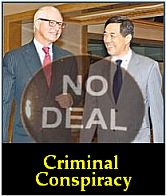
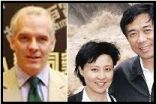
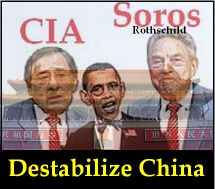
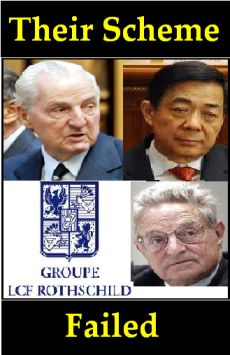 Desmarais, the Rothschilds, and Soros has also
feathered the nest of Bo's son, Bo Guagua, who attended elite preparatory
schools in the United Kingdom, as well as Oxford, a pre-requisite for what
Desmarais and the Rothschilds hoped would be the beginning of a Bilderberg
Group/Council on Foreign Relations stranglehold on China.
Desmarais, the Rothschilds, and Soros has also
feathered the nest of Bo's son, Bo Guagua, who attended elite preparatory
schools in the United Kingdom, as well as Oxford, a pre-requisite for what
Desmarais and the Rothschilds hoped would be the beginning of a Bilderberg
Group/Council on Foreign Relations stranglehold on China. 
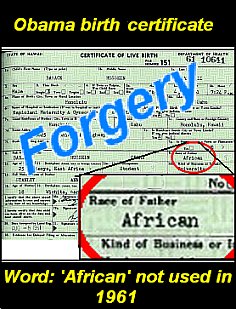


 enlarge


 was
a specialist in nanomaterials for Dupont and BHP
Minerals (
was
a specialist in nanomaterials for Dupont and BHP
Minerals (
 go
to more
go
to more go
to more
go
to more
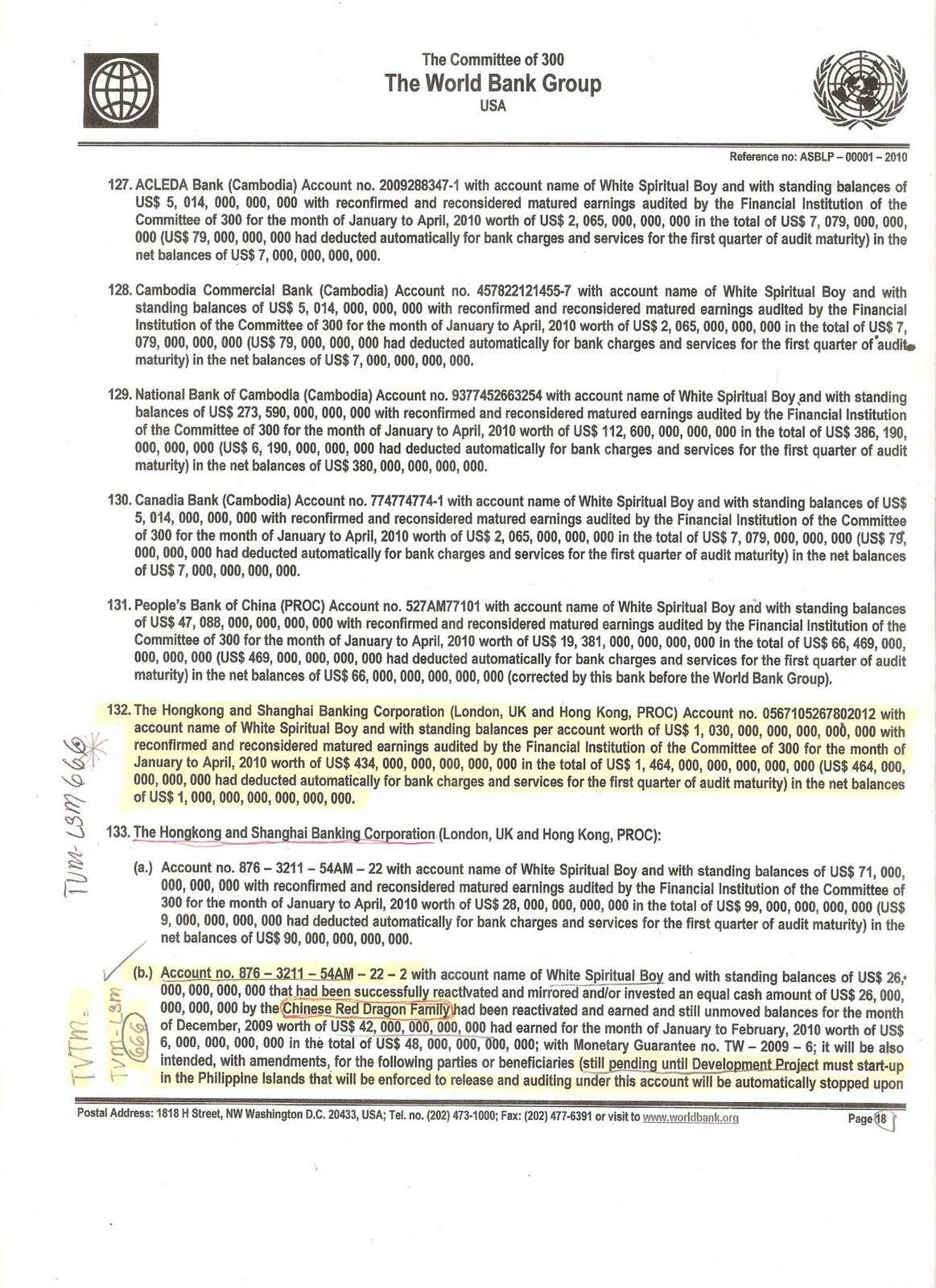
 CIA
/ Contra drugs cover-up, Hitz Report
CIA
/ Contra drugs cover-up, Hitz Report